NVIDIA surges to $5.2T valuation — far ahead of the entire crypto market. Here’s why | Credit: Hameem Sarwar
Share
Key Takeaways
NVIDIA has reached a market cap of $5.2 trillion, making it the most valuable company globally.
Its valuation is now more than double the entire crypto market, amid demand for AI infrastructure.
Analysis shows it could continue to outperform Bitcoin, ETH, and XRP, with its stock rising to $250.
NVIDIA has surged past a $5.2 trillion market capitalization after the stock price increased by 31% over the past 30 days.
As a result, the AI giant has become the most valuable company in the world, far ahead of Alphabet ($4.2 trillion) and Apple ($3.9 trillion).
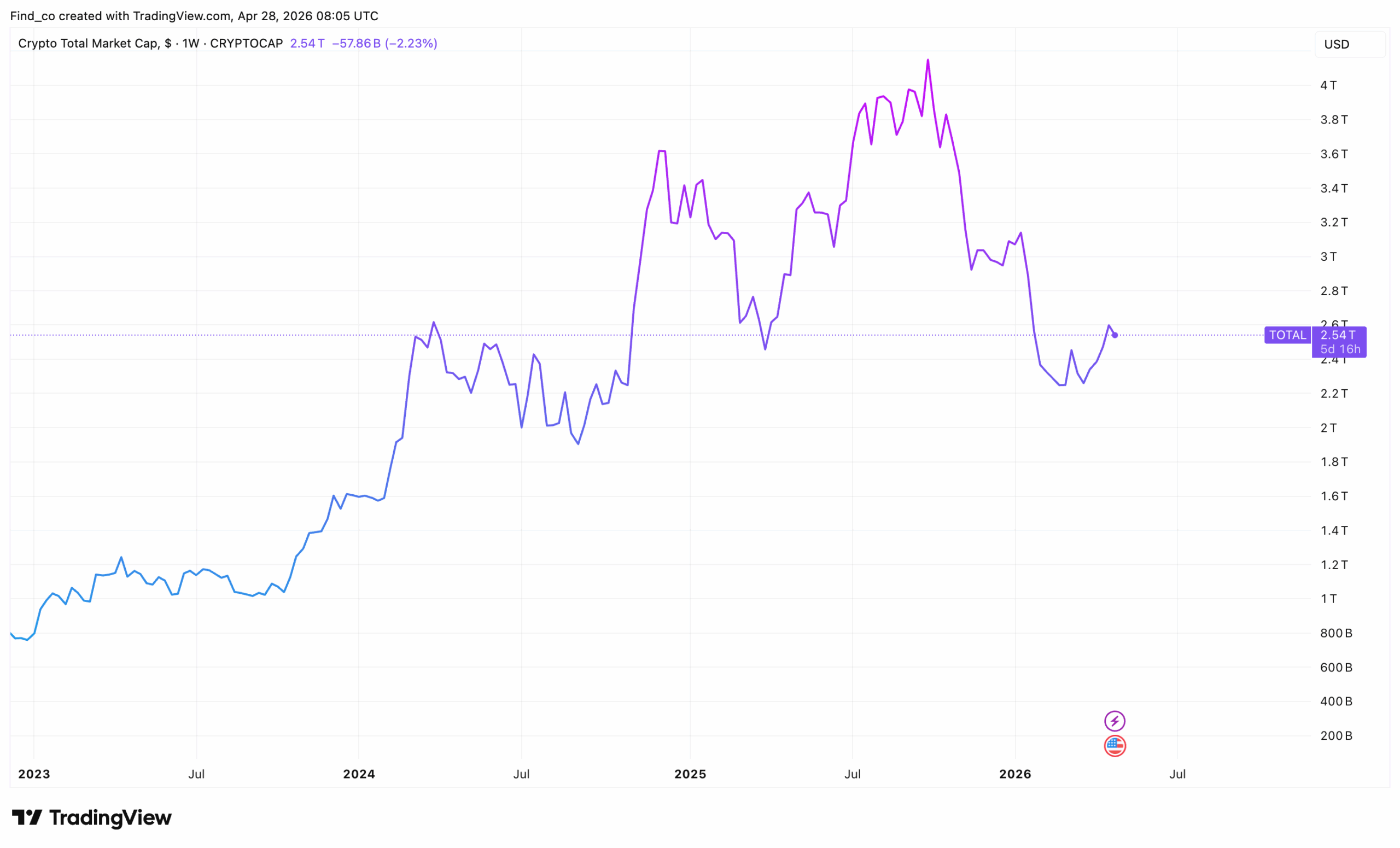
But that’s not all. At this level, NVIDIA is now worth more than double the entire crypto market.
Here is how it happened, and why it could be challenging for Bitcoin (BTC), Ethereum (ETH), or XRP to overthrow it.
The Company Is Now Bigger Than Some Nations
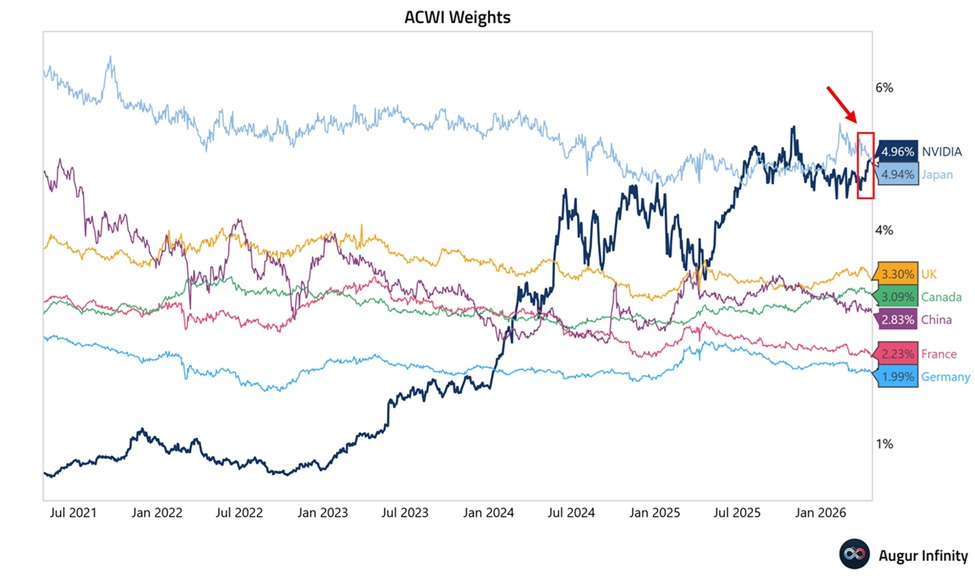
At the time of writing, NVIDIA now accounts for 4.96% of the MSCI All Country World Index (ACWI).
This means that the company holds more weight than Japan’s entire stock market allocation (4.94%), the third-largest globally.
However, it doesn’t stop there.
Get These Top Crypto Casino Offers Now!
Sponsored
Disclosure
We sometimes use affiliate links in our content, when clicking on those we might receive a commission at no extra cost to you. By using this website you agree to our terms and conditions and privacy policy.
According to CCN’s findings, the NVIDIA stock rally isn’t built on speculation. It is built on demand.
For instance, CEO Jensen Huang recently confirmed that the Blackwell NVL72 AI supercomputer is now in full production.
The result is a buying frenzy among cloud giants — AWS, Google Cloud, Microsoft Azure, and Oracle — all racing to secure next-generation AI compute power.
These chips deliver up to 30x higher inference performance, making them essential infrastructure for the AI economy.
As it stands, demand isn’t slowing. The growth story is expanding beyond data centers.
This week, a major Qualcomm–OpenAI partnership to build AI-native smartphone chips added another layer to the narrative.
While Qualcomm handles mobile hardware, the training backbone still relies heavily on NVIDIA GPUs.
That creates a multiplier effect. Every new AI device increases demand upstream, and NVIDIA sits at the center of that pipeline.
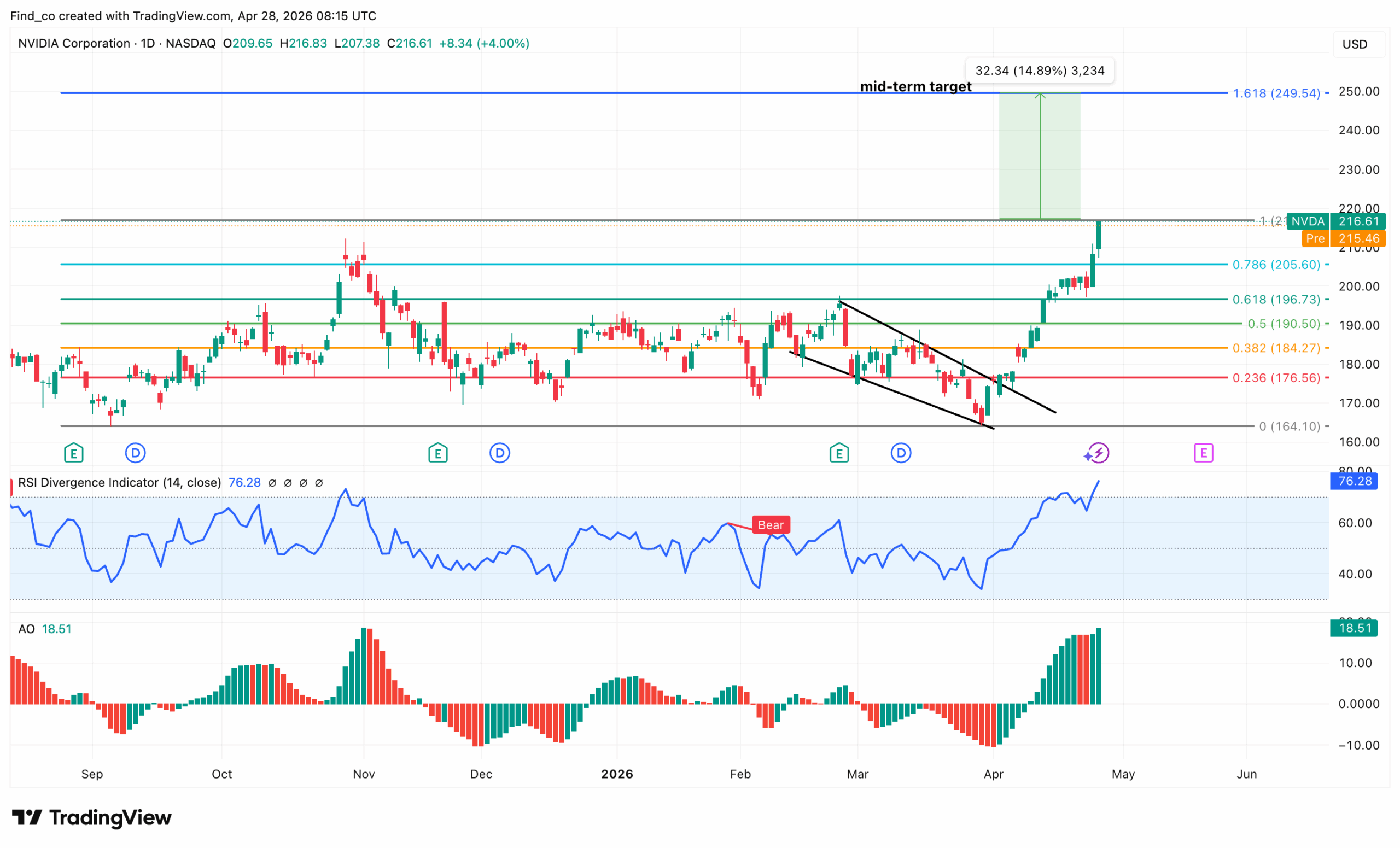
The projected move toward the 1.618 extension around $250 is technically valid, especially given the clean trend continuation and lack of major overhead supply between here and that level.
However, the key tension lies in momentum: RSI is already around 76, clearly in overbought territory, and we’ve previously seen bearish divergence signals in this range.
While this doesn’t invalidate the trend, it does mean upside from here is more likely to come with pullbacks or consolidation legs, not a straight line.
So structurally, this still looks like a bullish continuation aiming for $250 mid-term, but tactically it’s extended.
Disclaimer:
The information provided in this article is for informational purposes only. It is not intended to be, nor should it be construed as, financial advice. We do not make any warranties regarding the completeness, reliability, or accuracy of this information. All investments involve risk, and past performance does not guarantee future results. We recommend consulting a financial advisor before making any investment decisions.
Victor Olanrewaju is a crypto analyst and reporter at CCN with deep roots in on-chain research and technical analysis. His crypto journey began in 2017, but it was the 2020 Uniswap airdrop that sparked a full-time pivot into the space.
With a foundation in copywriting, Victor honed his craft creating high-converting content for leading crypto brokers — most notably an XRP price prediction that ranked #1 on Google during the 2021 bull run.
He later joined AMBCrypto in 2022, where he combined storytelling with technical and on-chain analysis to cover key market narratives.
In 2024, he expanded his expertise at BeInCrypto, collaborating with analysts and using tools like Glassnode, Santiment, and IntoTheBlock to break down Bitcoin and altcoin trends.
At CCN, Victor covers the top cryptocurrencies, memecoins, macro shifts, blending real-time insights with deep-dive metrics.
He holds a Bachelor’s degree in Physics from the University of Ibadan, equipping him to simplify complex data for a wide audience. Follow his work or connect on LinkedIn or X.