“Will answer shortly,” he wrote, before following up again. That brief interaction was enough to shift attention.
Within minutes, traders began connecting the narrative to the market.
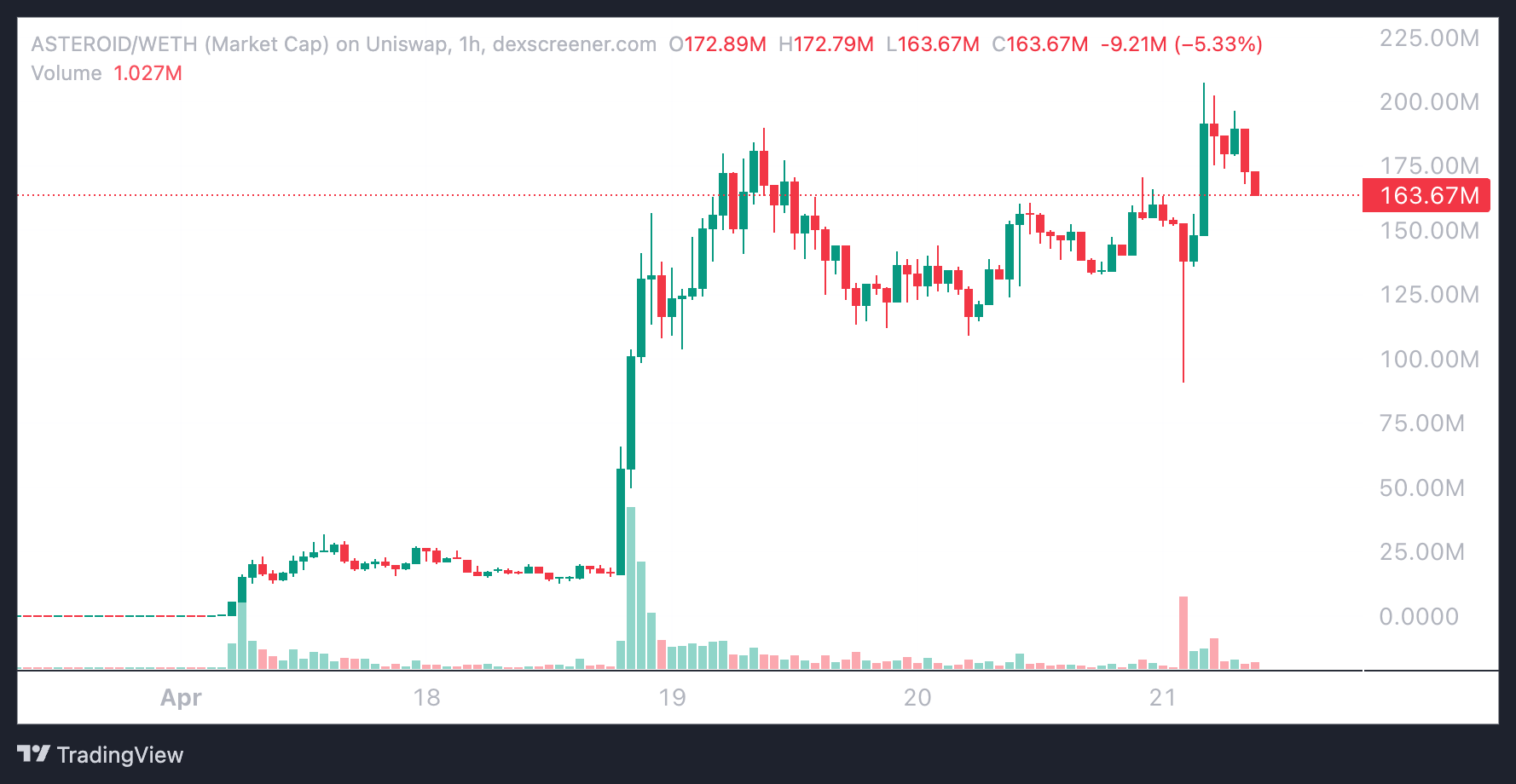
“Asteroid” moved from a human story to a tradable theme, with tokens launching on Ethereum and, shortly after, on Solana.
Get These Top Crypto Casino Offers Now!
Sponsored
Disclosure
We sometimes use affiliate links in our content, when clicking on those we might receive a commission at no extra cost to you. By using this website you agree to our terms and conditions and privacy policy.
The Ethereum-based version surged, climbing more than 800%, while Solana-based versions struggled to gain similar traction, failing to push past a $2 million market cap.
ASTEROID has a fixed supply of 420.69 billion tokens, with all of it already in circulation.
That means there’s no new supply entering the market—and so far, early holders haven’t been selling in significant size.
During the initial surge, most wallets held onto their positions. That tightened liquidity, so each new wave of buying had a bigger impact on price.
But the structure alone doesn’t tell the full story—the distribution of holders adds another layer to what’s happening.
No Pump and Dump?
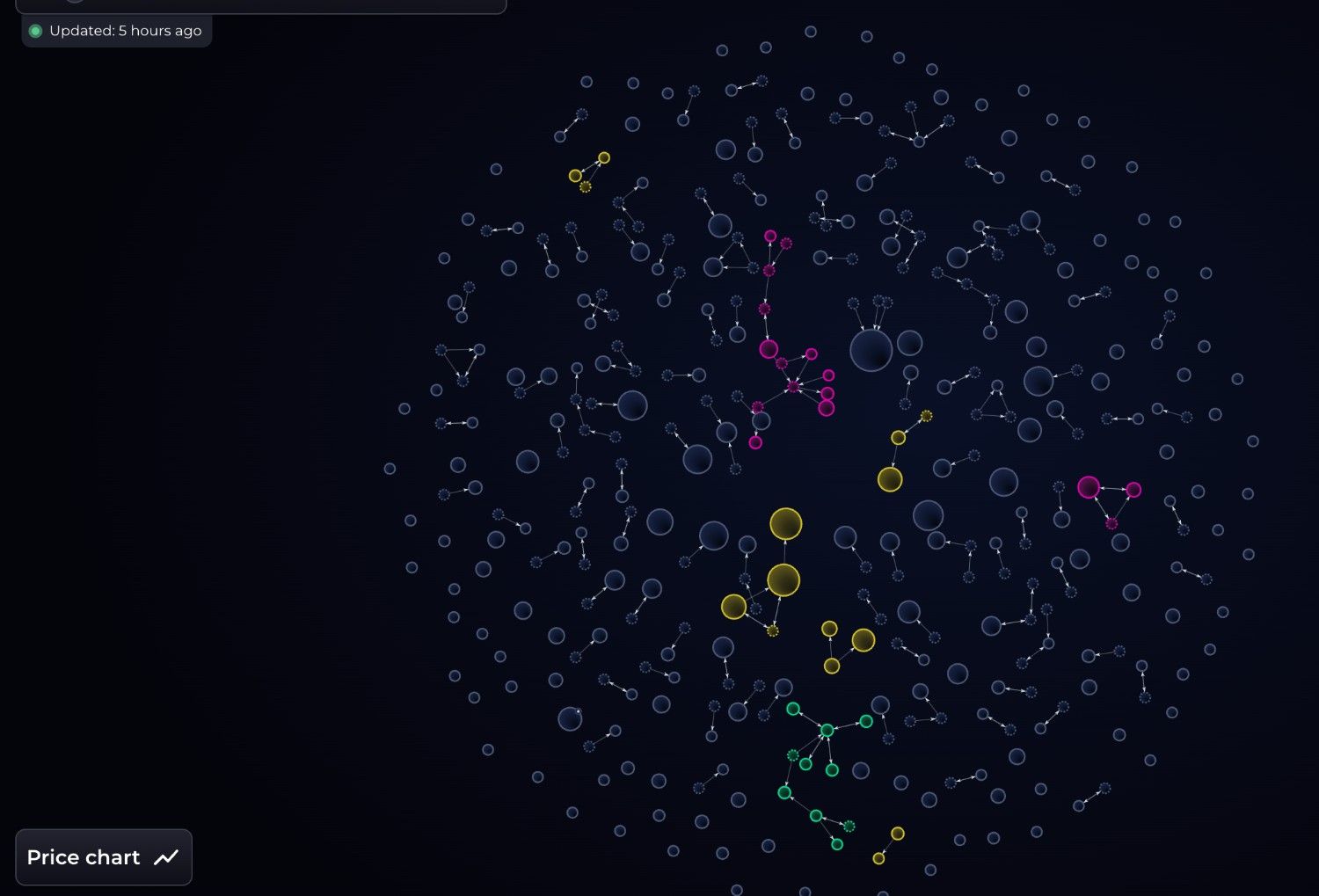
Based on Bubblemaps data, the holder distribution has been relatively fragmented, with the top wallets each controlling around 1% to 2% of supply, and no single wallet dominating the structure.
At the same time, some clustered groups (highlighted nodes) have been interacting internally, suggesting coordinated or related wallets.
However, these clusters are still not excessively large compared to the total supply.
The presence of exchange wallets (like MEXC and Uniswap) among the top holders has been common and has reflected liquidity rather than pure sell pressure.
Because of this, the structure has been leaning toward a moderately healthy distribution rather than an extreme centralization risk.
However, the presence of several mid-sized holders (0.8%–1.1%) means that coordinated selling by just a few entities could still impact the ASTEROID price in the short term.
If these clusters continue to hold or accumulate, the price could remain supported and trade higher gradually.
ASTEROID Holders Distribution | Credit: Bubblemaps
But if even a handful of these top wallets begin distributing simultaneously, it could trigger downside moves due to relatively thin liquidity around them.
Overall, the distribution has been acceptable for the continuation of the ASTEROID price rally. But it also remains vulnerable to coordinated exits rather than a single whale dump.
ASTEROID Price Prediction
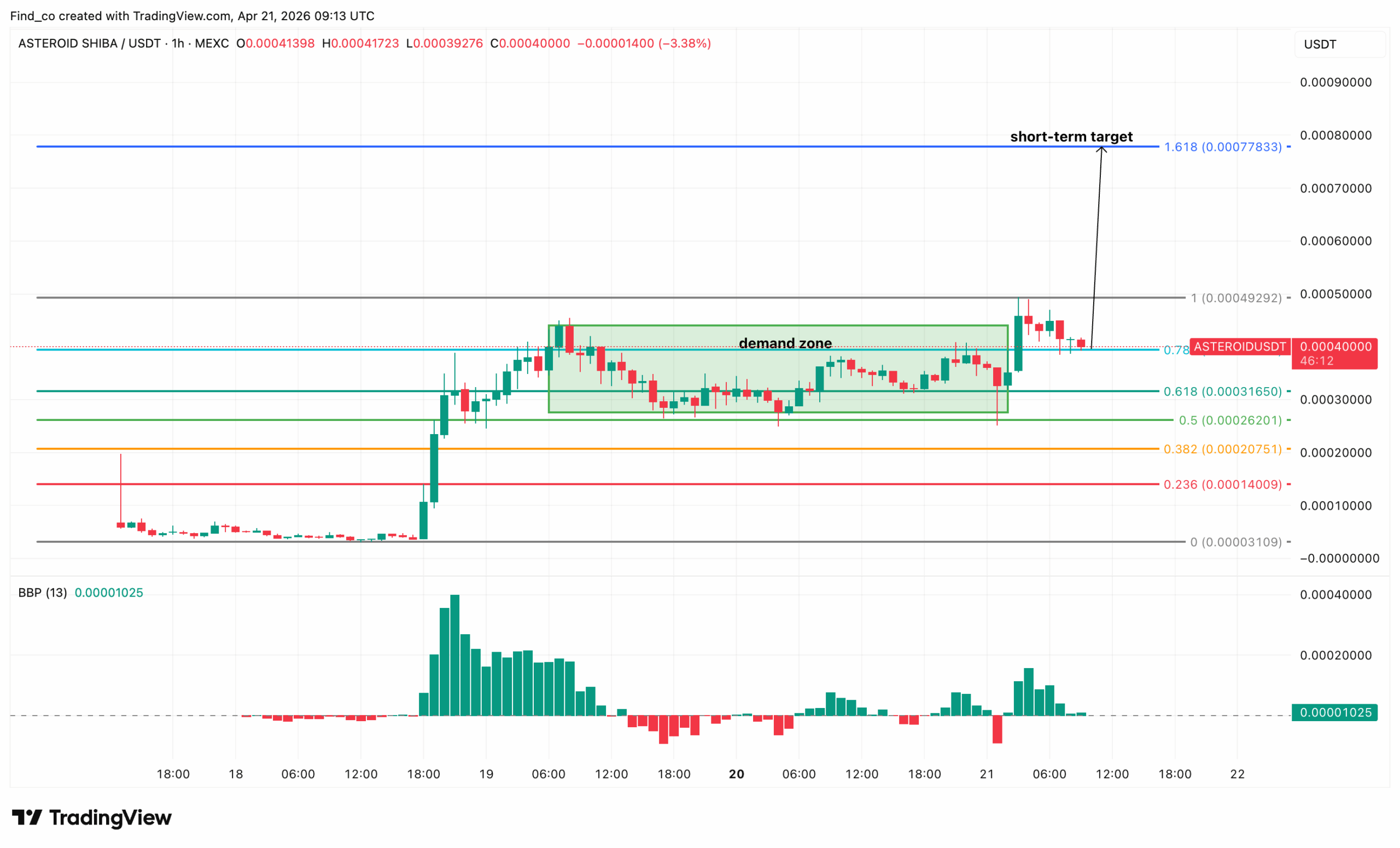
On the technical side, ASTEROID’s price has already impulsed higher and has been consolidating within a marked demand zone between roughly $0.00030 and $0.00043.
This indicates that buyers have consistently defended this region. The recent rejection near the local highs has been indicating short-term profit taking, but not a full breakdown.
At the same time, the price has been holding above the 0.618 and 0.5 retracement levels, which have been acting as key support during the consolidation.
Momentum, however, has been cooling slightly, with smaller candles and mixed volume, suggesting the market is pausing rather than continuing aggressively.
Disclaimer:
The information provided in this article is for informational purposes only. It is not intended to be, nor should it be construed as, financial advice. We do not make any warranties regarding the completeness, reliability, or accuracy of this information. All investments involve risk, and past performance does not guarantee future results. We recommend consulting a financial advisor before making any investment decisions.
Victor Olanrewaju is a crypto analyst and reporter at CCN with deep roots in on-chain research and technical analysis. His crypto journey began in 2017, but it was the 2020 Uniswap airdrop that sparked a full-time pivot into the space.
With a foundation in copywriting, Victor honed his craft creating high-converting content for leading crypto brokers — most notably an XRP price prediction that ranked #1 on Google during the 2021 bull run.
He later joined AMBCrypto in 2022, where he combined storytelling with technical and on-chain analysis to cover key market narratives.
In 2024, he expanded his expertise at BeInCrypto, collaborating with analysts and using tools like Glassnode, Santiment, and IntoTheBlock to break down Bitcoin and altcoin trends.
At CCN, Victor covers the top cryptocurrencies, memecoins, macro shifts, blending real-time insights with deep-dive metrics.
He holds a Bachelor’s degree in Physics from the University of Ibadan, equipping him to simplify complex data for a wide audience. Follow his work or connect on LinkedIn or X.