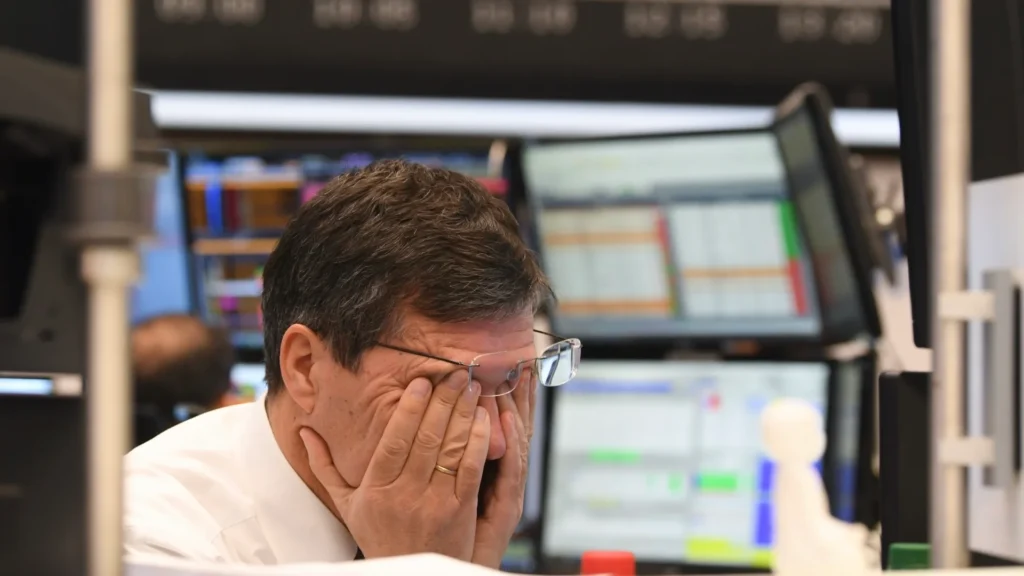
Crypto's late-night trading hours can be risky. | Credit: Arne Dedert via Getty Images.
Share
Key Takeaways
Late-night crypto market volatility is driven by Asia.
Bitcoin often experiences its largest price movements on the weekends.
Low market participation and liquidity increase weekend trading volatility.
Nothing scares a crypto trader more than waking up after a winning day, only to find that their positions and profits vanished overnight.
But there’s no mystery of spooky coincidence here.
It’s simply the nature of a 24/7, borderless market that never sleeps.
Try Our Recommended Crypto Exchanges
Sponsored
Disclosure
We sometimes use affiliate links in our content, when clicking on those we might receive a commission at no extra cost to you. By using this website you agree to our terms and conditions and privacy policy.
Since 2021, blockchain data and exchange order books have shown liquidity peaks around 9:30 AM HKT (9:30 PM ET) — when Asian traders dominate spot and futures volumes. Western traders, asleep or inactive, are often left exposed to sudden swings that liquidate open positions.
The most recent “black swan” event — a late-night liquidation cascade that erased nearly $20 billion in open interest within hours — served as yet another brutal reminder of the risks tied to overnight exposure.
Prudent traders will often opt to set up automated orders to mitigate whichever level of risk they foresee.
However, when global participation drops and liquidity thins, even moderate Asian volume can trigger outsized price swings, cascading liquidations across exchanges.
Some seasoned traders actually embrace this volatility, timing entries around midnight ET, when Western-to-Eastern trading handoffs create predictable price dislocations.
They advised beginning trading after 9 PM ET, and expect volatility spikes between midnight and 1 AM, which can offer them.
Weekend Whiplash
Then there’s the weekend — crypto’s most unpredictable stretch.
When traditional markets shut down, institutional inflows dry up, and macroeconomic catalysts disappear, the crypto market rages on throughout Saturday and Sunday, a period that poses its own set of risks.
Still, without fresh liquidity from major players, small orders can trigger oversized reactions, especially from automated trading bots or large “whale” accounts looking to exploit thin liquidity.
To begin with, there’s no major influence coming from institutional inflows, traditional exchanges, or price-driving macroeconomic news developments.
This means that price discovery is in a vacuum for these two days, which thins out the crypto markets, increases volatility, and makes the markets more prone to large price swings disconnected from typical catalysts.
These can turn minor trades into major market movers, which is compounded by automated bot or whale trades. It’s the reason why Bitcoin’s biggest price swings often happen on the weekend.
Blessing and a Curse
The global, always-on nature of crypto is both its greatest strength and its most dangerous weakness. It offers endless opportunity — but no downtime.
Whether you’re a day trader or a long-term holder, understanding the rhythm of global market sessions and their liquidity patterns can mean the difference between waking up to profits or a liquidation email.
Eddie is a gaming and crypto writer at CCN. Covering the often weird and wonderful world of Web3 with an adoring, but skeptical eye.
Prior to CCN, Eddie has spent the past seven years working his way through the crypto, finance, and technology industry. He began with PR and journalism with Bitcoin PR Buzz and BitcoinNews.com, eventually working his way to become a copywriter with a dozen firms, including the likes of Polkadot before returning to journalism in 2023.
Having studied Radio production and journalism at University in the UK, Eddie spent a few years making podcasts and presenting on a local London radio station as he built up his writing chops.
A lifelong skateboarder, Eddie can often be found at the skatepark or touring the streets looking for something new to try. That, or kicking back playing JRPGs on his original PSP.