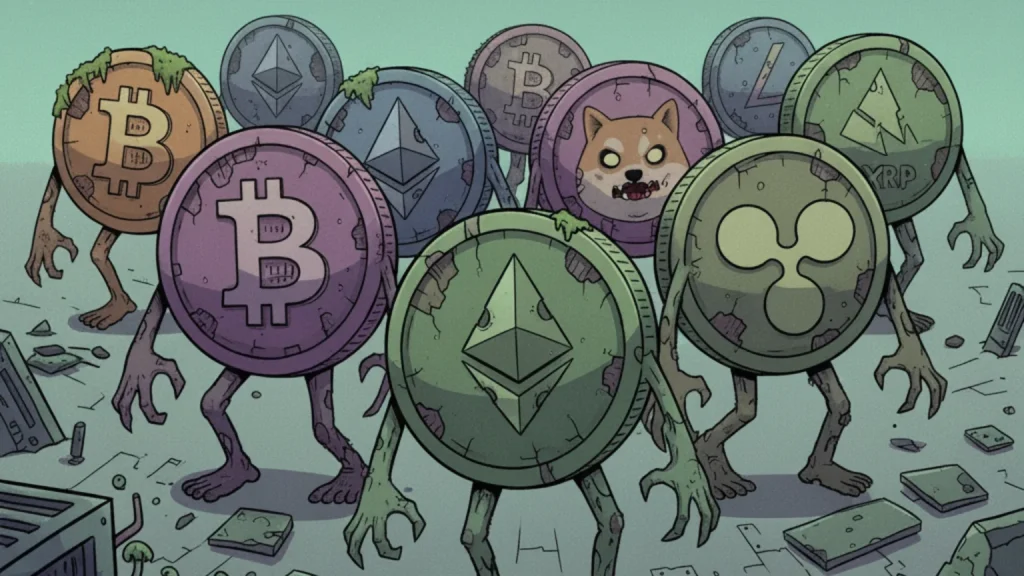
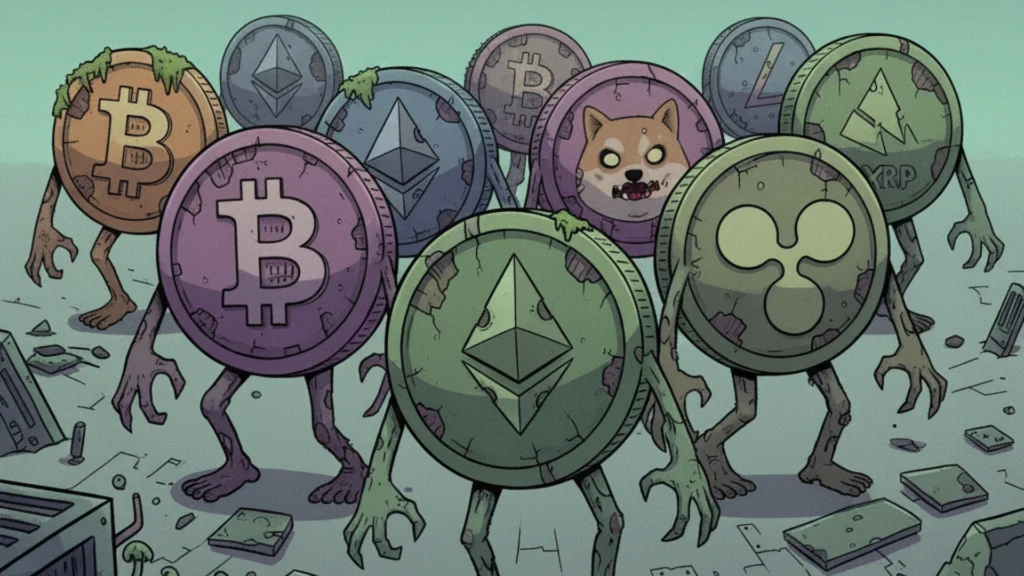
Kyle Samani declares “Web3 is dead” as the crypto industry debates its future.
He argued that only decentralized finance (DeFi) and decentralized physical infrastructure networks (DePIN) have demonstrated lasting utility.
Eli Ben-Sasson says crypto faces an “identity crisis.”
Other industry figures are making similar calls.
Crypto industry leaders are increasingly questioning the future of Web3, with crypto venture capitalist Kyle Samani declaring “Web3 is dead” amid an ongoing debate over whether the sector’s original vision has given way to a narrower focus on institutional adoption.
Samani, managing partner at crypto investment firm Multicoin Capital, made the remark on X on Sunday in response to StarkWare CEO Eli Ben-Sasson, who argued that the crypto industry was experiencing an “identity crisis.”
The comments come after several other high-profile figures in the space have claimed that “most of crypto is dead,” a sentiment that has proved troubling for many industry traders.
Try Our Recommended Crypto Exchanges
Sponsored
Disclosure
We sometimes use affiliate links in our content, when clicking on those we might receive a commission at no extra cost to you. By using this website you agree to our terms and conditions and privacy policy.
On Sunday, Ben-Sasson claimed that he believed crypto was going through an “identity crisis.”
The famed founder pointed out a contradiction that he said was confusing what crypto stands for.
“On the one hand, several long-time OGs have left, and on the other, we’re finally seeing some love from institutions and TradFi, which is everything crypto has rebelled against,” he wrote.
Generally speaking, crypto seems to be going through an identity crisis. On the one hand, several long-time OGs have left, and on the other, we're finally seeing some love from institutions and TradFi, which is everything crypto has rebelled against. It's challenging crypto's…
— Eli Ben-Sasson | Starknet.io (@EliBenSasson) May 31, 2026
Crypto’s foundational narrative, articulated by many of its early developers, positioned it as a decentralized alternative to traditional finance.
With this in mind, the new route of major banks and anything centralized arguably massively goes against that foundation.
Although adoption and capital inflows have accelerated rapidly, the sector’s early ideological distance from mainstream finance has blurred.
Is Web3 Dead?
In response to Ben-Sasson’s comments, venture capitalist Samani starkly declared that “Web3 is dead,” and only “Defi and Depin” remain.
The term Web3 emerged as a catch-all description for a decentralized version of the internet built on blockchain technology.
Under the Web3 vision, digital identities, assets, and data were all carried out on blockchain rather than relying on centralized platforms.
The concept also encompassed decentralized social networks, blockchain gaming, and digital ownership via NFTs.
Kyle Samani’s comments join a growing chorus of similar calls. | Source: X (@KyleSamani)
Web3 gained prominence during the 2020-2021 crypto bull market as investors poured capital into projects promising to reshape industries ranging from entertainment and gaming to social media.
Fast forward to 2026, and most of that has failed to materialize.
Besides a few niche winners, Web3 gaming has not broken into the mainstream, and the same can be said for decentralized social networks.
Metaverse platforms such as Decentraland and The Sandbox, which raised significant funding on the back of virtual land sales, continue to report daily active users in the low thousands.
After an initial surge, titles such as Axie Infinity saw sharp declines in player numbers and token values once initial incentives faded.
NFT trading volumes have also collapsed after the 2022 peak.
DeFi refers to blockchain-based financial applications that allow users to trade, borrow, and earn yield without traditional intermediaries such as banks.
The sector remains one of crypto’s largest categories by user activity and value locked.
Reeve Collins, co-founder of Tether and now heading up operations at WeFi, recently told CCN that he was focused on building the infrastructure layer that would allow financial institutions to integrate blockchain payments.
“We have the technology to reach everyone in the world with a smartphone in their pocket,” he said.
Meanwhile, DePIN projects use token incentives to encourage participants to deploy and operate physical infrastructure.
Samani’s venture capital firm, Multicoin Capital, has a long-standing focus on DePIN investments.
The firm’s portfolio has included projects to build decentralized wireless, compute, and data infrastructure.
Chorus of ‘Web3 and Crypto Is Dead’ Claims
Samani’s remarks are the latest in a series of high-profile declarations that large segments of the crypto industry are unlikely to survive.
Last week, Swan Bitcoin CEO Cory Klippsten said sentiment among industry executives had shifted significantly toward Bitcoin and financial infrastructure.
“Last week I spoke on a banking conference panel with three crypto execs and all three of them said there’s no thesis for altcoins to maintain value,” Klippsten wrote on X.
Last week I spoke on a banking conference panel with three crypto execs and all three of them said there’s no thesis for altcoins to maintain value. The broader industry is Bitcoin, financial infrastructure, and RWAs.
"Crypto" execs are Bitcoin maximalists now.
We're going to…
— Cory 🦢 Real Bitcoin @ Swan.com (@CorySwan) May 31, 2026
“The broader industry is Bitcoin, financial infrastructure, and RWAs,” he added. “Crypto execs are Bitcoin maximalists now.”
Meanwhile, Anthony Pompliano, a prominent Bitcoin investor and entrepreneur, delivered a similar message following the Consensus 2026 conference in Miami.
In a video posted on X, Pompliano warned that “most of the crypto industry is dead and it’s never coming back,” arguing that speculative tokens and thousands of blockchain projects are unlikely to survive.
The crypto industry is dying.
That is a good thing.
The resilient and valuable aspects of the industry need to compete on the biggest stage, not stay pigeon-holed in a boutique industry with declining capital and talent. pic.twitter.com/TlVJAG6zFz
Kurt Robson is a London-based reporter at CCN, specialising in the fast-moving worlds of crypto and emerging technology. He began his career covering local news in Cornwall after graduating from Falmouth University with First Class Honours in Journalism. There, he cut his teeth on everything from council meetings to missing swans.
He quickly rose through the ranks to become a frontline journalist at several of the UK’s leading national newspapers. Over the years, he has interviewed musicians and celebrities, reported from courtrooms and crime scenes, and secured multiple front-page exclusives.
Following the upheaval of the COVID-19 pandemic, Kurt shifted his focus to technology journalism—just ahead of the AI boom. With a natural curiosity and a trained eye for emerging trends, he has found a new rhythm in reporting on innovation.
At CCN, Kurt's work focuses on the cutting edge of crypto, blockchain, AI, and the evolving digital world. Drawing on his background in people-first reporting and his deep interest in disruptive tech, Kurt delivers stories that are insightful, entertaining, and human-centric.