Key Takeaways
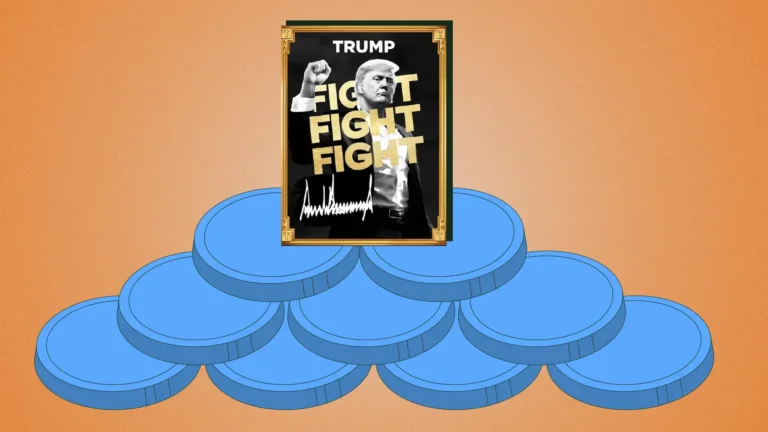
- Trump Media announced a new shareholder token set to launch in 2026.
- Previous Trump-linked crypto tokens surged significantly at launch but later crashed by over 90%.
- Unlike past Trump-linked tokens, this one focuses on utility perks rather than speculation, aiming to avoid extreme fluctuations.
On Dec. 31, 2025, Trump Media & Technology Group Corp. (TMTG), the company behind the Truth Social platform, announced plans to issue a new blockchain-based digital token to its shareholders.
Shareholders will receive one token for every whole share of DJT held, eligible to ultimate beneficial owners, excluding borrowed shares.
The New Trump Token Is Not Tradable
The newly announced shareholder token is expected to be non-transferable and non-cash-exchangeable, with no ownership rights or profit entitlements.
It will operate on the Cronos blockchain and is primarily designed as a loyalty and rewards mechanism, rather than a tradable investment asset or security.
The token also offers a range of benefits across the Trump Media ecosystem, where holders may receive periodic rewards, such as discounts or benefits on Trump Media products, including Truth Social premium features, Truth+ streaming, and Truth Predict.
Distribution is planned for 2026. The announcement caused DJT stock to rise ~3-6% in trading that day, reflecting short-term positive sentiment.
The Fate of Donald Trump-linked Tokens
Donald Trump’s team launched several tokens in 2025, many of which were structured as memecoins or governance tokens.
These tokens have generally exhibited extreme volatility, characterized by massive initial pumps driven by hype, followed by sharp declines as speculation wanes.
Aggregate losses for public holders across TRUMP, MELANIA, and related assets run into billions, while creators and insiders captured fees and early sales profits.
Case in point: Trump launched his official memecoin in January 2025, days before his second inauguration.
The token rapidly surged due to massive speculation, celebrity endorsements, and political excitement.
It reached an all-time high of around $74-$75 per token shortly, briefly pushing its market capitalization above $27 billion.
As initial hype faded amid broader crypto market pullbacks, $TRUMP crashed dramatically.
By late 2025, the memecoin was trading around $4.80-$5.00, representing a 93-95% decline from its peak.
Similarly, WLFI, the governance token of the WLFI DeFi project run by Trump’s son, attracted hundreds of millions of dollars during its early fundraising phase, helping push reported Trump family crypto gains past $800 million in the first half of 2025.
After broader access opened up, the token briefly climbed to around $0.26.
By early 2026, however, WLFI was trading closer to $0.14—roughly 46% below its peak—as phased unlocks and vesting schedules increased circulating supply.
Even so, the project still commands a sizable market capitalization of roughly $3.8–4 billion, supported by relatively strong trading activity.
A New Direction?
The new token is a clear attempt to distance Trump’s latest crypto effort from the speculative excesses and legal scrutiny surrounding earlier token launches.
By making the token non-tradable and non-transferable, the project significantly reduces regulatory risk, as it avoids many of the characteristics that trigger securities or market manipulation concerns.
If successful, the model could normalize “crypto as infrastructure” within political or brand-driven ecosystems—using blockchain for loyalty, access, and engagement rather than financial speculation. Other high-profile figures may follow a similar path, especially as regulators continue to scrutinize memecoins and insider-driven launches.
However, the trade-off is adoption. Without price upside or liquidity, user interest will depend entirely on the real-world benefits attached to the token.
If rewards feel superficial, engagement may fade quickly.
If meaningful perks are delivered, the model could quietly outperform past Trump-linked tokens—not in market value, but in durability and regulatory survivability.
Top Trending Crypto Articles

Prashant Jha is a seasoned crypto journalist based in Delhi, India, with a Bachelor’s Degree in Computer Science Engineering. Passionate about the evolving world of blockchain and cryptocurrencies, he has been a dedicated voice in the industry since 2018. Prashant’s expertise lies in regulatory reporting, where he unravels complex legal and financial developments with clarity and precision. Before joining CCN in 2024, he honed his craft at Cointelegraph, establishing himself as a trusted name in crypto journalism.
His coverage spans major industry events, including the high-profile collapses of FTX, Three Arrows Capital (3AC), and LUNA, offering readers insightful analyses of their regulatory and market implications. Prashant’s technical background enables him to bridge the gap between intricate blockchain technology and its real-world applications, making his work accessible to novices and experts.
Beyond his professional pursuits, Prashant is an avid music enthusiast, often exploring diverse genres to unwind. A sports lover, he has a particular passion for cricket and frequently engages in discussions about the game. His multifaceted interests and sharp journalistic instincts make him a valuable contributor to CCN, where he continues shaping the crypto landscape's narrative.











 Elon Musk, Trump, and No Pump: Why Did Dogecoin (DOGE) Not Deliver in 2025?