Key Takeaways
- Trump appointed Jay Clayton to lead the “Super Intelligence Force,” coordinating the federal response to AI.
- The task force has 120 days to assess AI’s opportunities and risks, as well as the government’s responsibilities.
- Clayton chaired the SEC when it sued Ripple in December 2020, making his appointment notable for crypto audiences.
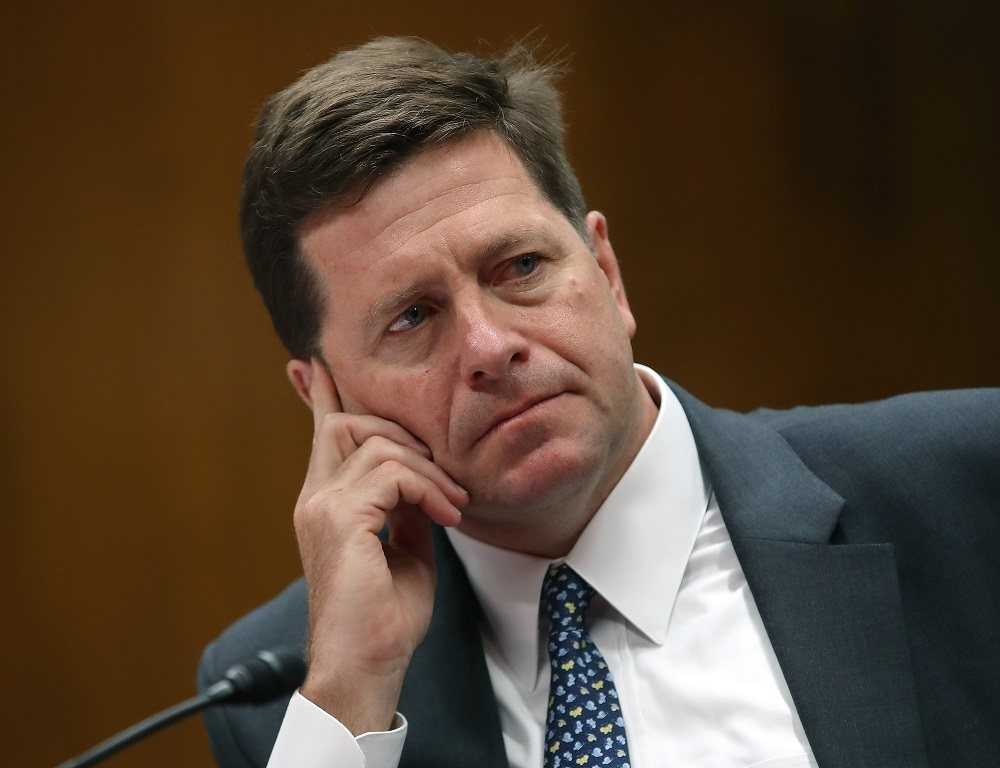
President Donald Trump has named Director of National Intelligence Jay Clayton to lead the newly created “Super Intelligence Force,” giving the former securities regulator another prominent assignment at the intersection of technology, government and risk.
The appointment puts Clayton in charge of coordinating the federal response to artificial intelligence. The task force has 120 days to assess the technology’s opportunities and threats, as well as the government’s responsibilities.
For crypto audiences, the selection carries historical significance: Clayton chaired the Securities and Exchange Commission (SEC) when it filed its landmark lawsuit against Ripple over XRP in December 2020.
Clayton Gets 120 Days to Map America’s AI Strategy
The Super Intelligence Force will report to Trump and White House Chief of Staff Susie Wiles. Its leadership includes Federal Trade Commission Chairman Andrew Ferguson, Office of Personnel Management Director Scott Kupor, and Pentagon technology chief Emil Michael.
Alongside evaluating AI’s benefits and dangers, the group will examine how the government receives information about security breaches and responds to emerging threats. Its mandate includes protecting innovation and competition while avoiding excessive regulation and regulatory capture.
The initiative follows Trump’s executive order directing federal agencies to replace “artificial intelligence” with “super intelligence” in official communications and non-statutory documents. The order also calls for a proposed federal definition of the new terminology.
The appointment gives an intelligence official a central role in technology policy, placing national security alongside economic competitiveness in the administration’s approach.
It also creates a test of implementation: the task force must translate broad ambitions into recommendations on oversight, incident reporting and government action within four months.
The XRP Lawsuit Remains Part of Clayton’s Regulatory Legacy
Clayton led the SEC during Trump’s first administration, ending his tenure on December 23, 2020.
One day earlier, the agency sued Ripple Labs and its executives, Brad Garlinghouse and Chris Larsen, alleging that they raised more than $1.3 billion through an unregistered securities offering involving XRP.
The complaint focused on whether the defendants’ offers and sales complied with federal registration requirements.
The case became a defining dispute over how securities law applies to digital assets.
In August 2025, the SEC and Ripple agreed to dismiss their appeals, resolving the enforcement action. The district court’s final judgment remained effective, including a $125 million civil penalty and an injunction against future registration violations.
The regulatory framework has since evolved. The SEC’s 2026 guidance lists XRP, Bitcoin, Ether and Solana among examples of digital commodities. Its interpretation nevertheless distinguishes an asset’s classification from the legal treatment of transactions involving it.
That history makes Clayton’s move into AI particularly notable: he returns to a policy arena where technological development is outpacing settled regulatory expectations.
Earlier Crypto Remarks Offer Clues to His AI Approach
Journalist Jacquelyn Melinek highlighted Clayton’s appointment by revisiting interviews and conference remarks from 2022 and 2023.
According to her account, Clayton argued that digital assets would become part of the global infrastructure and that tokenization, combined with smart contracts, could improve financial efficiency and broaden market access.
He also anticipated more efficient programmable assets and interoperability, even while maintaining that many crypto tokens could qualify as securities.
Those remarks suggest a distinction between recognizing a technology’s potential and determining the safeguards surrounding its use.
Melinek also recalled Clayton describing AI during his intelligence confirmation hearing as “not only an opportunity but a threat.”
His new assignment brings that dual assessment into government policy. The immediate question is how his task force will balance leadership in advanced AI with credible mechanisms to identify risks and respond when safeguards fail.
The information provided in this article is for informational purposes only. It is not intended to be, nor should it be construed as, financial advice. We do not make any warranties regarding the completeness, reliability, or accuracy of this information. All investments involve risk, and past performance does not guarantee future results. We recommend consulting a financial advisor before making any investment decisions.

Giuseppe Ciccomascolo began his career as an investigative journalist in Italy, where he contributed to both local and national newspapers, focusing on various financial sectors.
Upon relocating to London, he worked as an analyst for Fitch's CapitalStructure and later as a Senior Reporter for Alliance News. In 2017, Giuseppe transitioned to covering cryptocurrency-related news, producing documentaries and articles on Bitcoin and other emerging digital currencies. He also played a pivotal role in establishing the academy for a cryptocurrency exchange website. Crypto remained his primary area of interest throughout his tenure as a writer for ThirdFloor.