Key Takeaways
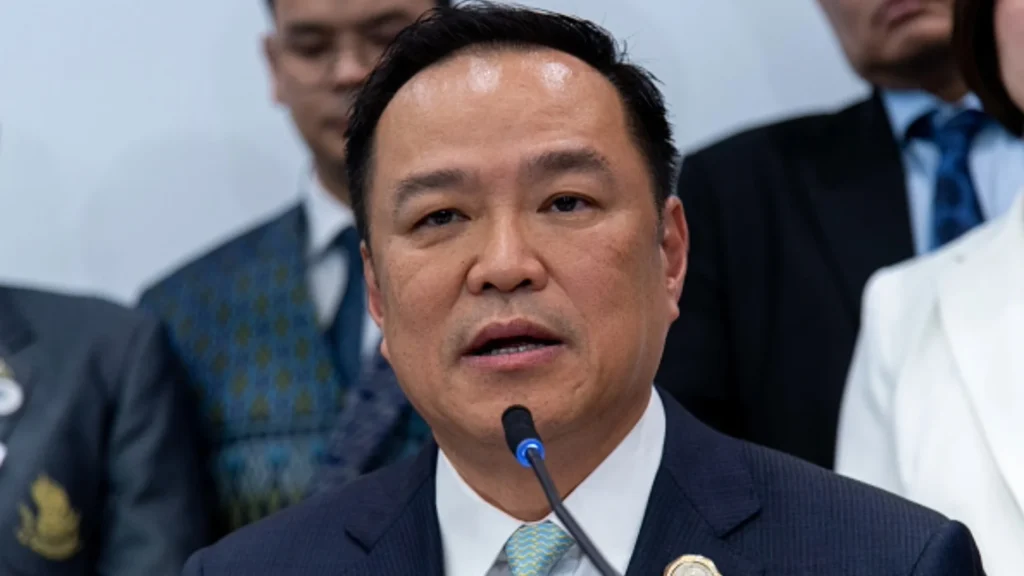
- Anutin Charnvirakul, a business tycoon with little background in fintech, has been appointed as Thailand’s 32nd prime minister.
- Crypto-friendly Paetongtarn Shinawatra was removed over ethical violations.
- Despite leadership changes, Deputy Prime Minister and Finance Minister Pichai Chunhavajira remains in office.
Thailand’s volatile political landscape shifted again this week as business magnate Anutin Charnvirakul was voted in as the country’s new prime minister, replacing crypto-friendly Paetongtarn Shinawatra.
The shake-up has cast potential doubt on whether Thailand will maintain its momentum in digital assets, a policy area championed by Shinawatra and her predecessors.
Anutin Charnvirakul Appointed
On Friday, September 5, Thailand’s parliament chose business tycoon Anutin Charnvirakul to become the 32nd Prime Minister of Thailand, marking the third leadership change in two years.
The move came after Shinawatra was removed from office last week due to ethical violations over the handling of a border dispute with Cambodia, according to the BBC.
Anutin’s rise marks a blow to the long-dominant Shinawatra family, which has been at the forefront of Thai politics since Paetongtarn’s father became Prime Minister in 2001.
The new appointment has raised questions in the crypto community about the country’s future in digital assets.
Unlike his predecessors, Anutin has little track record in the digital asset space.
Crypto-Friendly Predecessors
In August 2024, CCN covered the crypto-friendly stance of Thailand’s 30th Prime Minister, Srettha Thavisin, a former real estate tycoon with a strong history of backing blockchain projects.
His flagship policy, the 10,000-baht digital wallet scheme, served both as a poverty alleviation program and an experiment in mass adoption of digital payments.
That legacy was briefly continued by Shinawatra, who reassured voters that the government would press ahead with the policy, albeit with modifications to ensure financial sustainability.
In January, Shinawatra also announced that the government would allow the use of payment products and services through digital assets in storage areas in Phuket.
Hope for Thailand Crypto
While the removal of Paetongtarn Shinawatra has created uncertainty, Thailand’s digital finance initiatives may not be derailed entirely.
This is largely due to Pichai Chunhavajira remaining as deputy prime minister and finance minister, where he has overseen several digital asset experiments for the country.
In August, Pichai spearheaded the launch of TouristDigiPay, a flagship initiative allowing foreign visitors to convert cryptocurrencies into Thai baht for use with participating merchants.
Designed as an 18-month regulatory sandbox, the program was introduced as a bid to boost tourism revenue.
Top Trending Crypto Articles

Kurt Robson is a London-based reporter at CCN, specialising in the fast-moving worlds of crypto and emerging technology. He began his career covering local news in Cornwall after graduating from Falmouth University with First Class Honours in Journalism. There, he cut his teeth on everything from council meetings to missing swans.
He quickly rose through the ranks to become a frontline journalist at several of the UK’s leading national newspapers. Over the years, he has interviewed musicians and celebrities, reported from courtrooms and crime scenes, and secured multiple front-page exclusives.
Following the upheaval of the COVID-19 pandemic, Kurt shifted his focus to technology journalism—just ahead of the AI boom. With a natural curiosity and a trained eye for emerging trends, he has found a new rhythm in reporting on innovation.
At CCN, Kurt's work focuses on the cutting edge of crypto, blockchain, AI, and the evolving digital world. Drawing on his background in people-first reporting and his deep interest in disruptive tech, Kurt delivers stories that are insightful, entertaining, and human-centric.