Key Takeaways
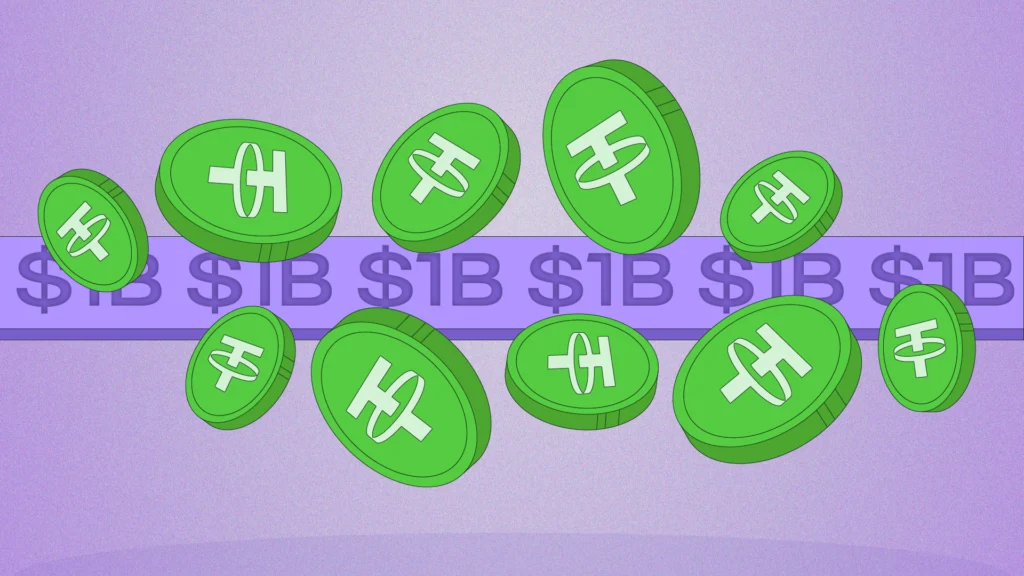
- T3 FCU, backed by Tether, TRON and TRM Labs, has frozen more than $450 million in illicit USDT on TRON.
- The funds were linked to hacks, money laundering, sanctions evasion and organized cybercrime investigations.
- The crackdown is reigniting debate over whether centralized stablecoin controls conflict with crypto’s decentralization ethos.
The T3 Financial Crime Unit (T3 FCU), a joint initiative involving Tether, TRON and blockchain analytics firm TRM Labs, says it has now frozen more than $450 million in illicit USDT tied to criminal activity on the TRON blockchain.
The milestone highlights how aggressively stablecoin issuers and blockchain firms are moving into enforcement territory as regulators and law enforcement ramp up scrutiny across the crypto industry.
It also revives one of crypto’s oldest tensions: how far should centralized companies go in policing decentralized networks?
Tether, TRON and TRM Labs Scale Up Crypto Enforcement
T3 FCU launched in late 2024 as a coordinated effort between Tether, TRON and TRM Labs to track and freeze illicit activity involving USDT on TRON, one of the largest stablecoin settlement networks in crypto.
TRM Labs handles blockchain tracing and forensic intelligence, TRON provides network-level visibility, and Tether executes freezes through USDT blacklisting functionality.
That coordination allows authorities to move far faster than traditional financial enforcement systems typically allow.
According to public statements from the companies involved, it has frozen funds tied to:
- Money laundering operations.
- Sanctions evasion.
- Organized cybercrime.
- Hacks and exploit activity.
- And illicit financial networks operating across multiple jurisdictions.
One major case involved roughly $26.4 million allegedly connected to a European money-laundering ring dismantled alongside Spain’s Guardia Civil in early 2025.
Other freezes reportedly targeted wallets linked to North Korean cyber activity and funds associated with the Bybit hack, including nearly $9 million in traced assets.
The group says it has now assisted investigations spanning five continents.
More recently, Tether confirmed a separate $344 million USDT freeze on TRON in April 2026 following intelligence-sharing with US authorities and international law enforcement agencies.
Stablecoin Issuers Are Becoming a Bigger Part of Crypto Policing
The scale of the freezes reflects a broader shift happening across the industry.
Stablecoin issuers increasingly hold a powerful position because they control assets that serve as core liquidity infrastructure across crypto markets.
Unlike decentralized cryptocurrencies such as Bitcoin, centralized stablecoins like USDT include issuer-level controls that allow wallet addresses to be frozen or blacklisted.
Supporters argue that those controls are necessary.
TRON processes billions of dollars in USDT transfers daily, particularly across emerging markets where stablecoins are heavily used for payments, remittances and trading.
Allowing illicit actors to operate freely inside those systems could expose the broader ecosystem to heavier regulatory crackdowns.
Law enforcement agencies have largely welcomed the T3 model because it dramatically reduces response times during active investigations.
Instead of waiting weeks or months for legal processes to move through traditional banking channels, authorities can work directly with issuers that can freeze funds almost immediately.
That speed matters especially during hacks and laundering attempts, where stolen crypto can move across dozens of wallets and jurisdictions within minutes.
But the Crackdown Is Reigniting Crypto’s Centralization Debate
At the same time, the enforcement push is making some crypto users uncomfortable.
Blockchain networks were originally built around the idea of permissionless finance.
Systems where transactions could not easily be censored, reversed or controlled by centralized intermediaries.
Tether’s ability to freeze USDT introduces a very different dynamic.
Critics argue that blacklisting powers effectively create centralized chokepoints within supposedly decentralized ecosystems.
Once a stablecoin issuer can freeze wallets, questions naturally follow:
- Who decides what activity qualifies for intervention?
- How transparent is the process?
- And how much power should private companies hold over digital assets?
Supporters counter that some level of intervention is unavoidable if crypto is to achieve broader mainstream adoption.
From their perspective, reducing fraud, hacks, and laundering ultimately protects users and strengthens the ecosystem’s legitimacy.
The tension has become one of the defining philosophical divides inside modern crypto: permissionless systems versus regulated financial infrastructure.
Tether’s Approach Looks Very Different From Circle’s
The contrast becomes even sharper when compared with rival stablecoin issuer Circle.
Circle has faced criticism in several recent exploit cases for refusing to proactively freeze stolen USDC without formal law enforcement requests or court orders.
One example involved the Drift Protocol exploit earlier in 2026, in which attackers reportedly moved large sums of funds before authorities could formally intervene.
Circle CEO Jeremy Allaire publicly defended the company’s approach.
He argued that private firms should not act as judge and jury outside established legal processes.
That difference highlights two very different philosophies emerging among major stablecoin issuers:
- Tether’s intelligence-driven rapid intervention model.
- Circle’s stricter legal-trigger approach.
Neither path is without controversy.
Move too aggressively, and stablecoins begin looking more like centrally controlled banking systems.
Move too slowly, and critics argue issuers become safe havens for criminal activity.
Crypto’s Future May Depend on Finding the Balance
The rise of T3 FCU shows how quickly crypto infrastructure is evolving from experimental finance into something much closer to global financial plumbing.
Stablecoins now settle enormous amounts of value daily, which means pressure to monitor illicit activity will only intensify.
For regulators and institutions, initiatives like T3 FCU signal maturity and operational seriousness.
For decentralization advocates, they raise harder questions about where crypto’s original ideals fit inside increasingly regulated systems.
The industry is now trying to balance two realities at once.
Keeping crypto open and borderless while also preventing it from becoming an unchecked financial playground for criminal networks.
That balance may ultimately define what mainstream crypto adoption looks like over the next decade.
Recommended Secure Partners

Prashant Jha is a seasoned crypto journalist based in Delhi, India, with a Bachelor’s Degree in Computer Science Engineering. Passionate about the evolving world of blockchain and cryptocurrencies, he has been a dedicated voice in the industry since 2018. Prashant’s expertise lies in regulatory reporting, where he unravels complex legal and financial developments with clarity and precision. Before joining CCN in 2024, he honed his craft at Cointelegraph, establishing himself as a trusted name in crypto journalism.
His coverage spans major industry events, including the high-profile collapses of FTX, Three Arrows Capital (3AC), and LUNA, offering readers insightful analyses of their regulatory and market implications. Prashant’s technical background enables him to bridge the gap between intricate blockchain technology and its real-world applications, making his work accessible to novices and experts.
Beyond his professional pursuits, Prashant is an avid music enthusiast, often exploring diverse genres to unwind. A sports lover, he has a particular passion for cricket and frequently engages in discussions about the game. His multifaceted interests and sharp journalistic instincts make him a valuable contributor to CCN, where he continues shaping the crypto landscape's narrative.