Key Takeaways
- L2s are fundamentally centralized, according to Steven Pu, and operate “like a single cloud server.”
- Ethereum’s support for L2s could backfire, draining liquidity and user attention from its base layer.
- Pu argues that centralization isn’t inherently bad — but misrepresenting centralized systems as decentralized is.
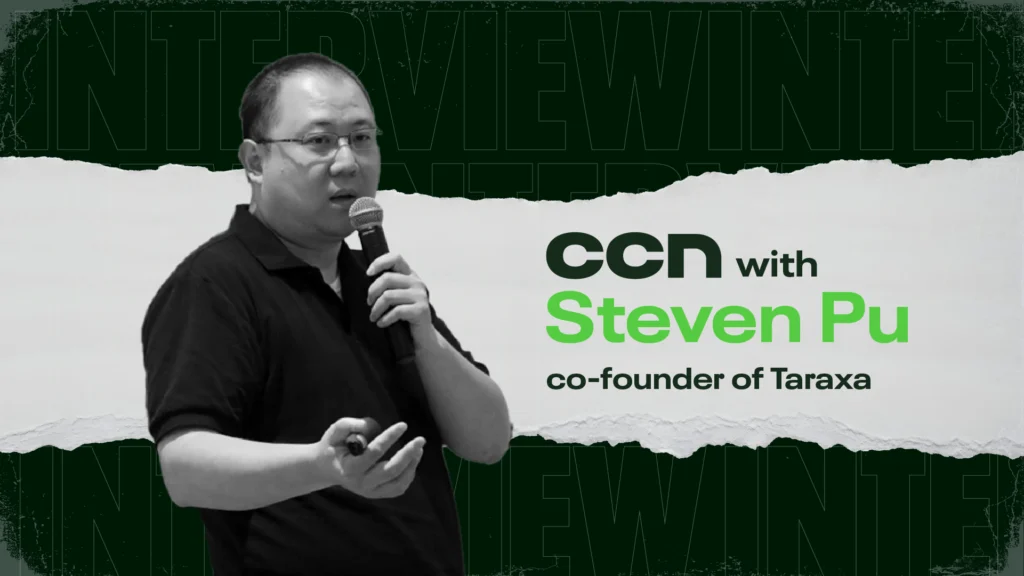
Ethereum’s full-throttle embrace of Layer-2 scaling is not just misguided — it’s dangerous, according to Steven Pu, co-founder of EVM-compatible Layer-1 blockDAG Taraxa.
In an interview with CCN, Pu accused L2 networks of masquerading as decentralized while operating like “a single cloud server.”
He also warned that they are draining liquidity and mindshare from Ethereum and argued that the blockchain is “digging its own grave“ by prioritizing growth over its own base layer.
L2s Are “Just a Centralized Server”
Steven Pu, co-founder of Taraxa, an EVM-compatible Layer-1 blockDAG, believes that Layer-2 scaling solutions compromise the principles that make blockchain unique.
“L2’s very centralized nature means it is no longer trustless, and has none of the benefits of a decentralized network,“ Pu said. “Its facade of being layered on top of an L1 like Ethereum gives users a false sense of trust.”
According to Pu, “L2s have no governance, consensus, or trust to speak of“ and are “just a centralized server run by a single entity.”
For the manager, there are “No guarantees on transaction inclusion, the absence of which makes any guarantees on execution completely worthless.“
Ethereum’s L2 Bet Is “Fundamentally Flawed”
Ethereum has made L2 scaling solutions a key pillar of its roadmap, but Pu warns the strategy is self-defeating.
“Since the L2s are fundamentally centralized mechanisms masquerading as decentralized, trustless networks, they’re eroding the users’ trust in Ethereum,“ he said.
“Not only that, but as L2s grow, they will naturally begin to drain liquidity permanently and user mindshare away from Ethereum.“
What’s worse, according to him, “If these L2s do decide to decentralize finally, they effectively become L1s themselves, directly competing against Ethereum.”
His verdict on Ethereum’s embrace of L2s is blunt: “Ethereum is digging its graves by supporting these L2s in every imaginable way.“
“It’s Fine to Be Centralized. It’s Not Fine to Lie About It.”
When asked about L2 advocates who claim their designs are “trust-minimized“ and secure for real-world use cases, Pu returned to the core principles of crypto.
“What makes crypto a unique technology is its trustlessness, and that comes directly from its decentralization,“ he said.
“If you lose that, you lose the very essence of crypto. The problem here is not that something is ‘good enough‘ or ‘secure enough’, the problem is that it’s no longer crypto, just a single cloud server like any web2 application.“
“It’s fine to be centralized,“ Pu concluded. “It’s not fine to lie about it.”
Pu also warned that the rise of L2s has already reshaped Ethereum’s development priorities.
“Ethereum’s roadmap is now dominated by how to more effectively serve L2s’ technical demands, which takes away resources that could have been dedicated to enhancing Ethereum’s own L1’s performance,“ he said.
“It’s also clear that massive liquidity and mindshare are being drained from Ethereum into these L2 networks. This is weakening Ethereum in the long term.”

Giuseppe Ciccomascolo began his career as an investigative journalist in Italy, where he contributed to both local and national newspapers, focusing on various financial sectors.
Upon relocating to London, he worked as an analyst for Fitch's CapitalStructure and later as a Senior Reporter for Alliance News. In 2017, Giuseppe transitioned to covering cryptocurrency-related news, producing documentaries and articles on Bitcoin and other emerging digital currencies. He also played a pivotal role in establishing the academy for a cryptocurrency exchange website. Crypto remained his primary area of interest throughout his tenure as a writer for ThirdFloor.