Key Takeaways
- Circle Arc is a stablecoin-powered layer-1 blockchain built for global payments, foreign exchange, and tokenized real-world assets, using USDC as its native currency.
- Stripe Tempo is an upcoming blockchain payment network that may focus on merchant-friendly integrations, but its full features remain undisclosed.
- Robinhood L2 is a layer-2 blockchain on Arbitrum bringing tokenized stocks and ETFs to retail investors, starting in the European Union.
- These three platforms signal a shift from niche crypto to mainstream finance, with blockchain becoming the backbone for payments, investing, and asset ownership.
The financial world is transforming at lightning speed. Leading fintech giants are moving beyond apps and payment gateways to build entire blockchain ecosystems.
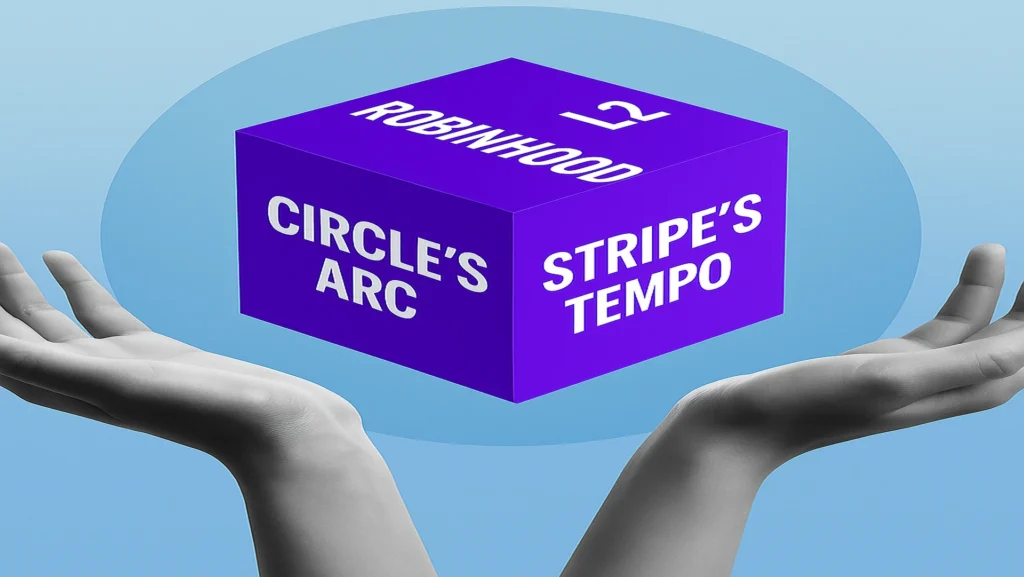
In 2025, three names dominate the conversation: Circle Arc, Stripe Tempo, and Robinhood L2. Each is aiming to shape the way money moves, assets trade, and global finance operates.
This guide breaks down what these platforms are, how they work, and why they matter.
Circle Arc: Stablecoin-Powered Blockchain for Global Finance
Circle Arc is a proposed launched layer-1 blockchain designed to power fast, secure, and cost-effective transactions worldwide.
As the company behind USDC, one of the most trusted stablecoins, Circle is building Arc around a simple but powerful idea: make the US dollar move at internet speed.
Key Features of Circle Arc
- USDC as the native currency: Every transaction fee is paid in USDC, keeping costs predictable.
- Built-in FX engine: Enables instant foreign currency exchange without relying on banks.
- Sub-second transaction finality: Payments and trades settle almost instantly.
- Optional privacy settings: Protects sensitive business transactions.
- MEV protection: Stops certain blockchain exploits to keep markets fair.
Who Benefits Most from Circle Arc?
Businesses sending cross-border payments, financial institutions trading tokenized stocks and bonds, and fintech platforms that need stable, dollar-denominated fees will likely see Arc as a game-changer.
Stripe Tempo: The Payment Giant’s Blockchain Ambition
Fortune.com reported that Stripe’s plan to launch Tempo was seen in a recent product marketing job listing spotted on the Blockchain Association’s career site. Posted on August 3, the listing describes Tempo as “a high-performance, payments-focused blockchain,” hinting at the company’s growing ambitions in the crypto and digital payments space.
It is being developed in partnership with crypto investment firm Paradigm. However, the job posting was removed after Fortune contacted both companies.
Interest in stablecoins, digital currencies tied to assets like the U.S. dollar, has surged in recent years. Supporters believe they can outperform traditional payment systems such as SWIFT or wire transfers by speeding up transactions, lowering cross-border costs, and reducing fees.
Amid this momentum, Stripe has been on a strategic acquisition streak. In June, it purchased crypto wallet developer Privy, followed by a landmark $1.1 billion deal in October to acquire Bridge, a leader in stablecoin infrastructure.
These bold moves come from a company already valued at nearly $92 billion, known worldwide for innovations like frictionless online checkout and automated invoicing tools for businesses. By combining its payment expertise with blockchain capabilities, Stripe appears ready to compete in the next era of global finance.
While Stripe has yet to share official details, industry watchers believe Tempo could focus on making blockchain payments as seamless as credit card processing.
Potential Use Cases for Stripe Tempo
- Fast, low-cost merchant settlements
- Global remittance services for small businesses
- Simple crypto-to-fiat conversion tools
- Blockchain-powered e-commerce payment rails
Given Stripe’s history of creating developer-friendly APIs and smooth checkout experiences, Tempo could be the bridge that brings millions of merchants into the blockchain era without requiring them to become crypto experts.
Visit Our Stablecoin Partners
Robinhood L2: Tokenizing Stocks and ETFs on Blockchain
Robinhood L2 takes a different route by building a layer-2 blockchain on Arbitrum, one of Ethereum’s most popular scaling solutions. The goal is bold: bring Wall Street assets onto the blockchain.
Key Highlights of Robinhood L2
- Tokenized US stocks and ETFs: Digital tokens that represent shares in real companies like Apple or Tesla.
- Dividend payouts to wallets: Income from stock holdings delivered directly on-chain.
- Zero-commission trading: Extends Robinhood’s original selling point to blockchain assets.
- 24/5 trading availability: Nearly round-the-clock markets instead of limited trading hours.
- Self-custody support: Users can hold assets in their own crypto wallets.
Robinhood is launching stock tokens in the European Union first, where regulations are more supportive. Over time, the company plans to expand globally and may eventually migrate from Arbitrum to its own dedicated network.
Comparing Circle Arc, Stripe Tempo, and Robinhood L2
Circle Arc, Stripe Tempo, and Robinhood L2 each target distinct blockchain use cases: Circle Arc will focus on ;ayer-1 payments and tokenized assets with privacy options, Stripe Tempo could emphasize payments and commerce on layer-1, while Robinhood L2 operates on Arbitrum’s layer-2 to offer tokenized stocks and ETFs with a regulatory focus.
| Features |
Circle Arc |
Stripe Tempo |
Robinhood L2 |
| Blockchain Type |
Layer-1 |
Layer-1 |
Layer-2 (on Arbitrum) |
| Main Use Case |
Payments, FX, tokenized assets |
Payments and commerce |
Tokenized stocks and ETFs |
| Privacy and Compliance |
Optional privacy, MEV mitigation |
Not yet disclosed |
Regulatory focus, EU rollout |
| Launch Status |
Testnet 2025, mainnet upcoming |
In development |
Live in EU, global expansion planned |
| Competitive Edge |
Stablecoin infrastructure + FX tools |
Stripe’s merchant network |
Stock and crypto trading in one platform |
How These Blockchain Platforms Could Change Everyday Finance
The projects from Circle, Stripe, and Robinhood aren’t just about crypto traders, they could impact everyday consumers and businesses.
- Faster cross-border payments: Sending money overseas could take seconds instead of days, without high bank fees.
- Accessible investing: Stocks, bonds, and real estate could be bought and sold on blockchain markets 24/7.
- Direct asset ownership: With self-custody options, users could control assets without relying on brokers or banks.
- Integrated finance apps: One app could handle your spending, investing, and saving without switching between services.
Challenges Facing Circle Arc, Stripe Tempo, and Robinhood L2
Even with big brands behind them, these projects could face significant hurdles:
- Regulatory uncertainty: Some jurisdictions are still creating rules for stablecoins, tokenized assets, and cross-border blockchain payments.
- Market adoption: Businesses and consumers need strong incentives to switch from traditional systems.
- Competitive pressure: Other major players like PayPal, Visa, and Coinbase also pose competition with their own blockchain and crypto-based initiatives.
Which Platform Could Lead the Next-Generation Finance Market?
Each platform plays to its strengths:
- Circle Arc could dominate in global payments and institutional finance, thanks to USDC’s stability and existing adoption.
- Stripe Tempo may become the go-to blockchain payment solution for merchants and online businesses.
- Robinhood L2 has the potential to attract millions of retail traders who want both traditional equities and crypto in one place.
The winner may not be a single platform — these networks could coexist, each serving different parts of the financial ecosystem.
The Future of Blockchain-Powered Finance
The launch of Circle Arc, the development of Stripe Tempo, and the rollout of Robinhood L2 signal a major shift: blockchain is moving from niche crypto trading to mainstream financial infrastructure.
In a few years, sending money might mean using Circle Arc instead of a bank wire. Small businesses might get paid instantly through Stripe Tempo. And trading Apple or Tesla could happen directly on Robinhood L2, with ownership recorded on the blockchain.
If you are a beginner in the space, the takeaway is simple: learning how these systems work today could give you a huge advantage as blockchain finance becomes part of everyday life.
Conclusion
The rise of Circle Arc, Stripe Tempo, and Robinhood L2 marks a turning point in the evolution of fintech.
With stablecoin-powered infrastructure, payment-focused blockchain innovation, and tokenized stock trading all moving toward mainstream adoption, the future of finance is shaping up to be faster, more accessible, and built on blockchain rails.
The real question now is not if these technologies will transform money, but how quickly they will become part of everyday life.
FAQS
Circle Arc uses USDC as its native currency, offers built-in FX capabilities, and targets institutional finance with fast, privacy-enabled transactions, making it ideal for payments and tokenized asset trading.
No. Stripe Tempo is still in development, with no official launch date. Current details suggest it will focus on blockchain payment solutions for merchants and online businesses.
Yes, but currently only in the European Union. Robinhood L2 offers tokenized versions of US stocks and ETFs, complete with dividend payouts and self-custody options.
Not necessarily. While they’re blockchain-based, the goal of all three projects is to make the experience as simple and intuitive as traditional banking or investing apps.
The information provided in this article is for informational purposes only. It is not intended to be, nor should it be construed as, financial advice. We do not make any warranties regarding the completeness, reliability, or accuracy of this information. All investments involve risk, and past performance does not guarantee future results. We recommend consulting a financial advisor before making any investment decisions.
CCN Editorial delivers comprehensive coverage of cryptocurrencies, blockchain breakthroughs, decentralized finance, and emerging fintech trends. From Bitcoin and Ethereum to stablecoins, NFTs, and global market innovation, our team provides timely news, in-depth analysis, and expert commentary. In addition to market insights, CCN Editorial is dedicated to educating readers, offering accessible guides, explainers, and learning resources to help everyone, from beginners to professionals, navigate the rapidly evolving world of digital finance and the future of money.


 Easy
Easy