Key Takeaways
- Standard Chartered’s Geoffrey Kendrick predicts a wave of consolidation among Bitcoin-focused digital asset treasuries as values fall across the industry.
- Kendrick expects the U.S. stablecoin market to expand rapidly, potentially reaching $2 trillion by 2028.
- The next major growth wave in digital assets will come from tokenized real-world assets.
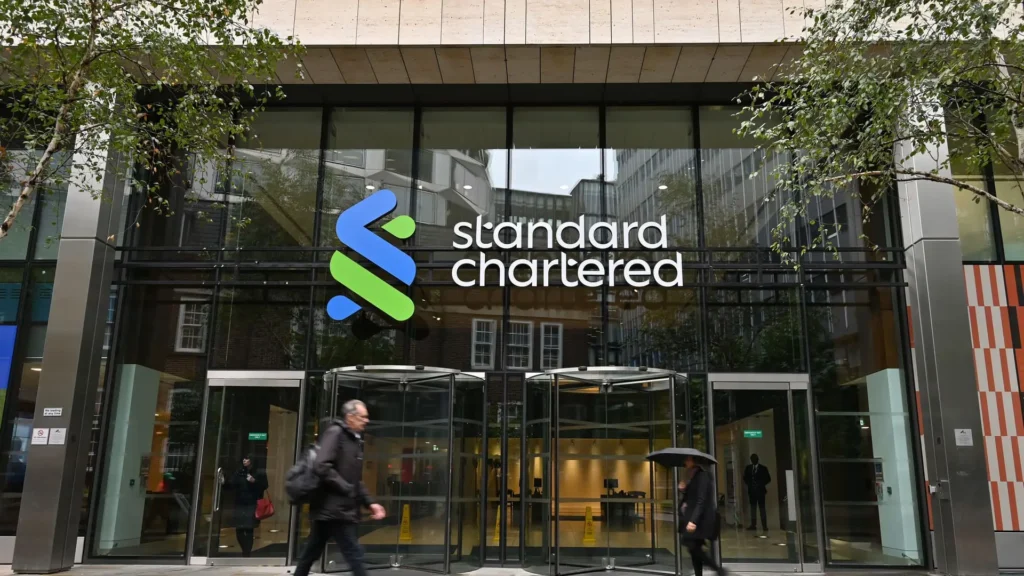
A wave of consolidation is looming over the digital asset treasury (DAT) space, according to Standard Chartered’s Geoffrey Kendrick, who believes the dynamics that once fueled Bitcoin balance sheet strategies are now shifting.
Speaking to CCN on the sidelines of the European Blockchain Convention in Barcelona, Kendrick said the London-based lender believes the future could see a proliferation of stablecoins in the U.S., with major corporations such as Walmart getting involved.
DAT Consolidation Looming
Kendrick believes the DAT model pioneered by MicroStrategy is evolving as market conditions shift and competition intensifies.
“I think digital asset treasuries have a function,” Kendrick said, pointing to MicroStrategy’s early role in providing investors access to Bitcoin when direct exposure was limited.
“So the original function by Michael Saylor was investor access was limited, right? Especially before the ETFs — and quite frankly, even today, outside the U.S., investor access is still quite limited in lots of countries.”
Kendrick noted that MicroStrategy’s market value relative to its Bitcoin holdings has remained above one, even after a pullback from last year’s highs.
But not every DAT has fared as well, the Standard Chartered research head said, as many imitators have emerged.
“Their NAVs are more questionable now,” he explained. “And I think what we’ll end up seeing in the Bitcoin DAT space will be consolidation.”
He added that ether-based DATs could become more appealing than bitcoin ones because they can capture staking yields unavailable to exchange-traded funds.
“You have a whole new buyer,” he said. “You’ll have some winners, some losers, some big, some small.”
The comments come as BitMine co-founder Tom Lee announced on Thursday that the firm will be launching a staking solution “very soon.”
Important But Confusing
Kendrick said the world’s two major regulatory blocs, Europe and the U.S., are taking essential but uncoordinated steps toward oversight of digital assets.
Europe’s Markets in Crypto-Assets (MiCA) framework is now in effect, while Washington’s Genius Act and Clarity Act are still in progress.
“What would be fabulous to see at some stage would be regulatory consistency, which obviously today we don’t have,” Kendrick said.
“MiCA went first — some of it’s good, some a little confusing.”
He added that the U.S. process remains stalled amid political gridlock.
“Once we can get the U.S. government reopened, it’d be quite handy as a first step to try and get the Clarity Act out the door,” he said.
Kendrick suggested that meaningful alignment may emerge not through legislation, but through “industry body-style” collaboration that bridges the two approaches.
“You almost end up in this midpoint,” he said, “where European regulation sits on one hand, U.S. on the other, and industry bodies get together to create more practical rules of engagement.”
He also pointed to capital rules from the Bank for International Settlements (BIS) as another factor restricting banks’ ability to operate in crypto markets.
Adjustments there, he said, “would be helpful” in supporting further institutional participation.
Banks Are Here To Stay
For Kendrick, the presence of traditional finance in digital assets is now irreversible.
“Institutions are now here to stay,” he said.
Standard Chartered, he noted, offers spot bitcoin products, custody solutions, and a ventures arm in Singapore focused on blockchain startups.
The bank is now looking to build “strategic partnerships” with crypto-native firms to import technical expertise that “banking doesn’t normally have.”
“Our mission as an organization is to get in front of this technology, use it to create new opportunities for clients and for the bank more broadly,” he told CCN.
“I think that’s what these types of initiatives are signaling now,” he added.
Dollar Stablecoins Remain Dominant
Kendrick said the U.S. is likely to see an explosion in the number of dollar-pegged stablecoins over the next few years as new entrants, including major corporates, move into the market.
“In the U.S. case, I’m sure you’ll get a proliferation of dollar stablecoins — maybe too many, for a while,” he said. “And then that’ll circle back a couple years later.”
He predicted that beyond the current dominant issuers, Circle and Tether, the market will attract both banks and large consumer brands such as Walmart.
Kendrick believes that the total stablecoin market could grow to $2 trillion by the end of 2028, expanding rapidly before consolidating again as liquidity and use cases determine which coins endure.
“You’ll probably see a proliferation,” he said. “You’ll then eventually say some are liquid, some are not, some are used more than others.”
“And then over time, you’ll see that consolidate — in the same way we see in all new technologies. It expands and then contracts again,” he added.
Despite the expected surge in issuers, Kendrick dismissed fears of systemic risk, citing new U.S. regulations under the Genius Act, which require stablecoins to be fully backed by U.S. Treasury bills.
“Because everything is backed 100% under the Genius Act by T-bills, it’s much safer,” he said.
“If a stablecoin gets to a reasonable size and people stop using it, they’ll just redeem and sell T-bills — that liquidity will flow into another one. So no dramatic outcomes on the back of that.”
Tokenized RWAs To Lead Next Wave
Beyond stablecoins, Kendrick said tokenized real-world assets (RWAs), from money market funds to equities, will define the next phase of digital asset growth.
“The next thing that’s coming is tokenized real-world assets more broadly,” he said.
He expects upcoming U.S. regulations to “unleash DeFi,” enabling investors to borrow and lend against tokenized instruments.
“The average person will end up with something in their phone that gives access to digital cash, digital versions of Apple stock, digital versions of money market funds,” Kendrick said.
“Most people won’t even know this is on blockchain technology,” he added.
“It’ll just be faster, more efficient, 24/7, and with this extra default yield.”

Kurt Robson is a London-based reporter at CCN, specialising in the fast-moving worlds of crypto and emerging technology. He began his career covering local news in Cornwall after graduating from Falmouth University with First Class Honours in Journalism. There, he cut his teeth on everything from council meetings to missing swans.
He quickly rose through the ranks to become a frontline journalist at several of the UK’s leading national newspapers. Over the years, he has interviewed musicians and celebrities, reported from courtrooms and crime scenes, and secured multiple front-page exclusives.
Following the upheaval of the COVID-19 pandemic, Kurt shifted his focus to technology journalism—just ahead of the AI boom. With a natural curiosity and a trained eye for emerging trends, he has found a new rhythm in reporting on innovation.
At CCN, Kurt's work focuses on the cutting edge of crypto, blockchain, AI, and the evolving digital world. Drawing on his background in people-first reporting and his deep interest in disruptive tech, Kurt delivers stories that are insightful, entertaining, and human-centric.