Key Takeaways
- USDT and USDC control 85%+ of the stablecoin market, but Dragonfly says the duopoly won’t last.
- New regulations are opening the door for licensed competitors.
- Bank-backed stablecoins, PYUSD, and RLUSD are targeting markets beyond crypto trading.
Tether’s USDT and Circle’s USDC together control more than 85% of the $217 billion stablecoin market, a concentration so entrenched that most of the industry treats it as a permanent fixture.
Rob Hadick, general partner at crypto venture firm Dragonfly, disagrees, and his argument is gaining traction at a moment when the regulatory environment, distribution dynamics, and the arrival of bank-backed issuers are all shifting simultaneously.
Hadick’s core contention is that stablecoins as a technology and market infrastructure are approximately 5% developed, meaning the duopoly reflects where the market started rather than where it is going.
The use cases that built USDT and USDC, crypto trading collateral, DeFi settlement, and exchange liquidity, represent a narrow slice of the total addressable market that stablecoins could eventually serve across cross-border payments, business-to-business settlement, payroll in emerging markets, and micropayment infrastructure for AI agents.
Built for Traders, Not for Payments
Tether launched in 2014 as a mechanism for crypto traders to hold dollar exposure on exchanges that lacked conventional banking access. Circle’s USDC followed in 2018 with a compliance-oriented pitch targeting institutional traders and DeFi protocols.
Both achieved dominant market share by becoming the default collateral and settlement asset inside crypto markets, where their users already held wallets and already understood the utility of a dollar on a blockchain.
That foundation is real and durable, but it is also narrow.
The corridors where stablecoins have the greatest potential, remittances running through sub-Saharan Africa, Southeast Asia, and Latin America, business settlement across supply chains still routed through correspondent banking networks, and payroll for remote workers in countries where receiving a dollar wire takes days and costs a meaningful share of the payment, are markets where neither Tether nor Circle has meaningful distribution infrastructure.
Regulatory Shift Favors New Entrants
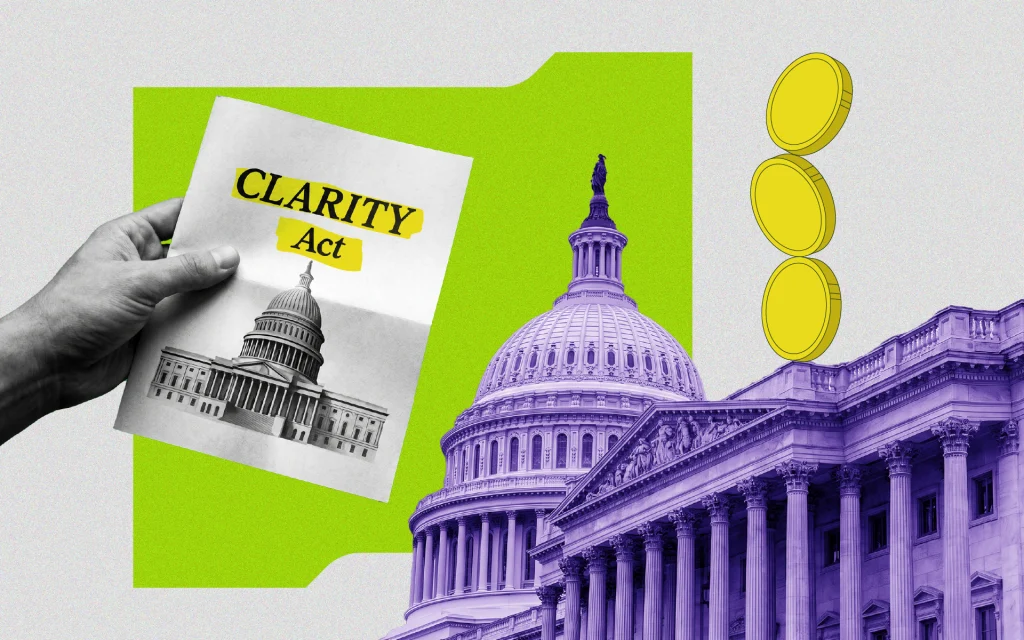
The GENIUS Act, signed into law by President Trump in July 2025, established the first federal licensing framework for payment stablecoin issuers in the United States, with implementing regulations due by mid-2026 and full compliance deadlines running through 2027.
Tether, which operates without a US federal license and has historically operated outside American regulatory jurisdiction, faces a structural disadvantage in any market where a licensed issuer is required as the counterparty for institutional settlement.
Circle holds a stronger compliance position than Tether but is not universally licensed across the jurisdictions now building their own stablecoin frameworks, including the European Union under MiCA, the United Kingdom, Singapore, Hong Kong, and the UAE.
Each of those frameworks creates discrete licensing requirements that favor issuers designed for regulatory engagement from launch rather than those that built scale in an earlier, less regulated environment.
Bank-Backed Challengers Approaching
The current generation of challengers is not attempting to compete with Tether and USDC on their home ground inside crypto trading markets, a strategy that has failed repeatedly over the past five years. Instead, new entrants are targeting the distribution channels the incumbents do not own. PayPal’s PYUSD has access to 430 million existing PayPal accounts.
Ripple’s RLUSD is positioned specifically within cross-border settlement corridors where RippleNet has established bank relationships. A growing cohort of bank-affiliated issuers is moving toward launching stablecoins under the GENIUS Act framework with existing depositor bases and correspondent banking relationships that neither Tether nor Circle can replicate.
USDT and USDC are not disappearing. Liquidity in settlement assets compounds over time, and the network effects built into the existing duopoly are among the most durable dynamics in financial markets.
But Hadick’s argument rests on the observation that a market at 5% of its potential development has substantially more room for new entrants than a mature market, and that the challengers best positioned to take share are those building for the use cases the incumbents were never designed to serve.
Whether that thesis holds will depend on how quickly the regulatory frameworks now taking shape translate into licensed issuers with real distribution competing in corridors where USDT and USDC have never been the answer.
The information provided in this article is for informational purposes only. It is not intended to be, nor should it be construed as, financial advice. We do not make any warranties regarding the completeness, reliability, or accuracy of this information. All investments involve risk, and past performance does not guarantee future results. We recommend consulting a financial advisor before making any investment decisions.

Dr. Guneet Kaur is a senior editor at CCN.com and a Science Fellow at Exponential Science. She is a fintech and blockchain expert with extensive experience in digital finance education, blockchain ecosystems, and cryptocurrency markets. She has worked with global media such as Cointelegraph, as well as education and blockchain platforms, to design and lead strategic content and learning initiatives. As an educator and assessor for top-tier executive programs, she bridges real-world fintech trends with academic insight.
Dr. Kaur is also a published researcher and peer reviewer across fintech and data science journals, including Financial Innovation Journal and International Journal of Big Data Intelligence and Applications. Her work spans data-driven analysis, Web3 innovation, and technical content development. With a strong foundation in both industry and academia, she translates complex financial technologies into practical applications, empowering learners, professionals, and institutions across the rapidly evolving digital finance landscape.