While its builders and capital waited in limbo, Europe talked a big game about being a leader in crypto for years. National regimes differed widely across countries, passporting was limited, and substantial institutional money frequently sought other opportunities.
Then came Markets in Crypto Assets Regulation (MiCA). It brought a purposeful, yet delayed, shift toward full integration. With an EU-wide deadline of July 1, 2026, MiCA transitional periods are coming to an end, and the framework is changing business models, liquidity, and conversation.
Regulatory inaction and the cost of waiting
Prior to MiCA, Europe’s crypto market was subject to a patchwork of national regulations. While some nations depended on simple AML registrations, others had official licenses. To serve the bloc, firms frequently required several approvals and lacked seamless passporting. This resulted in hesitation: delayed recruiting, postponed launches, and cautious financial allocation.
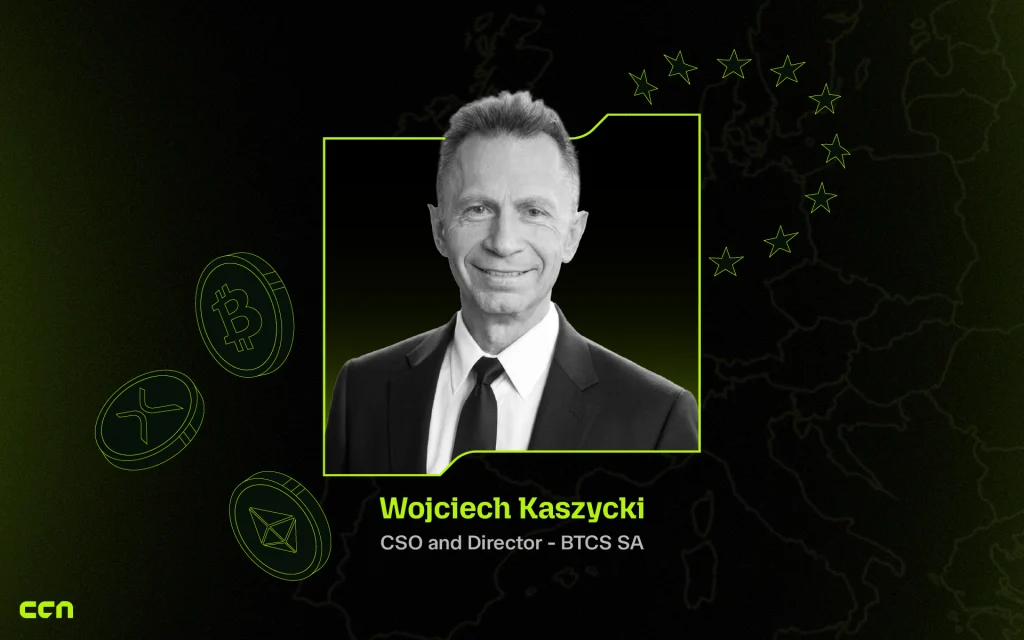
“The highest cost wasn’t legal uncertainty; it was the lost time. In crypto and digital assets, time matters greatly,” BTCS SA CSO and Director Wojciech Kaszycki told CCN.
Builders refrained from expanding locally, leading to fewer successes in the public market and a decline in institutional trust. The European Securities and Markets Authority (ESMA) itself recognized that the mixed national regimes and interim MiCA application resulted in varied protections across the EU.
As a result of this fragmented reality, some countries were crypto-friendly, while others were opaque. As Kaszycki puts it:
“Europe did not lose because it was too strict. Europe lost ground because, for too long, it was too slow.”
MiCA’s Arrival: From Fragmentation to (Imperfect) Harmonization
Stablecoin regulations went into effect in the middle of 2024, followed by more comprehensive Crypto-asset Service Provider (CASP) standards by the end of the same year. It establishes a passporting system that operates in 27 member countries but is only permitted in one. However, fragmentation continues to exist in practice due to national implementations and transitional periods (which vary by country and expire on July 1, 2026).
Reports from April 2026 showed that there were dozens of stablecoin issuers and between 185 and 199 authorized CASPs spread across several nations. Unlicensed entities that provide services to EU clients after July 2026 will violate the regulations. Kaszycki notes the practical reality:
“You build it by being more flexible than the framework… In practice, you need to think country by country, supervisor by supervisor,” Kaszycki said.
Although passporting may seem simple on paper, deadlines and supervisors differ. The long-term approach prioritizes market realities above legal theory, cautious base selection, and conservative compliance.
Yet, MiCA does not completely eliminate dangers or discrepancies. This helps institutions overcome psychological and compliance barriers.
How Policy Shapes Liquidity
Major platforms implementing MiCA presented a clear example. In early 2025, Binance deleted USDT from EEA spot trading pairs and Coinbase planned to delist it in Europe. As liquidity shifted toward more framework-aligned assets, USDC volumes in Europe reportedly increased in the first half of 2025.
Kaszycki views this less as a Tether-specific issue and more as market structure in action: “When a regulator changes the rules, liquidity does not disappear. It moves.”
Regulation does more than just control flows. It also influences listings, institutional comfort, and concentration. To protect consumers and monetary sovereignty, MiCA contains regulations such as reserve rules, like portions in EU credit institutions for certain stablecoins, and limits on interest-bearing features. Critics, notably Oxford scholars, have warned that this could hurt euro stablecoins’ chances against worldwide USD domination.
Active Treasuries and the Transition from Passive Holding
More complex financial management is quickly replacing the corporate approach of merely buying digital assets to keep them passively on a balance sheet. Since traditional financial officers saw the underlying technology as an experimental store of value rather than an operational tool, corporate adoption of digital assets was historically characterized by a stagnant “buy and hold” approach.
Today, macroeconomic forces and institutional-grade infrastructure are pushing a transition to an active treasury model, in which digital assets are used to produce yield and cover operational costs.
What does this yield layer look like?
- Staking rewards: Earning protocol-level yield from proof-of-stake assets.
- Validator operations: supplying the security and hardware needed to run the networks.
- Treasury management: Active rebalancing to mitigate volatility.
For these operations, MiCA offers the ‘institutional comfort’ required. While it does not eliminate the dangers of smart contracts or counterparties, it does offer service providers a recognizable legal framework.
“Capital likes a rulebook, even an imperfect one,” Kaszycki observes.
Europe’s regulatory leadership in 2026 and beyond
These days, rivalry is part of the story. The United States moved on with the GENIUS Act for payment stablecoins (enacted in 2025, with implementation rules in 2026). Hong Kong issued licenses under the Stablecoin Ordinance. Singapore kept improving its structure.
Kaszycki emphasizes execution over paperwork: “Leadership is not about who publishes the nicest PDF. It is about who attracts builders, balance sheets, liquidity, and serious long-term capital.”
On stablecoins, Kaszycki advises that Europe soften its defensiveness by treating them as infrastructure as well, balancing safety with commercial viability for euro relevance. Being the first regulated DATCO came with costs like education, execution risk, and no templates but it also provided narrative leadership and opened opportunities that money alone could not.
Can Europe catch up? As the market consolidates, companies who combine treasury operations with extensive infrastructure and compliance will triumph. It is likely that the ‘pure passive’ stories, like those that simply hold Bitcoin without a yield strategy, will face difficulties.
“In three years, I think the market will be more concentrated and more serious,” Kaszycki concludes.
Innovation should be viewed as the vital infrastructure of the future rather than as a threat if Europe is to take the lead.
The information provided in this article is for informational purposes only. It is not intended to be, nor should it be construed as, financial advice. We do not make any warranties regarding the completeness, reliability, or accuracy of this information. All investments involve risk, and past performance does not guarantee future results. We recommend consulting a financial advisor before making any investment decisions.

Curious about how technology and crypto reshape global finance, Elizaveta Savenko explores blockchain, AI, decentralized systems, their applications, and regulatory requirements. She contributes to research, educational initiatives, and industry collaborations, examining trends in digital assets and fintech innovation, increasing awareness of the crypto space and its impact on financial systems.


 Intermediate