Key Takeaways
- The Philippines’ central bank is considering a 12-month pause on new payment system operator registrations.
- Existing operators would be allowed to continue operating, while pending applications could remain unresolved during the freeze.
- Crypto businesses would face enhanced due diligence, transaction monitoring, and tighter controls on payment relationships.
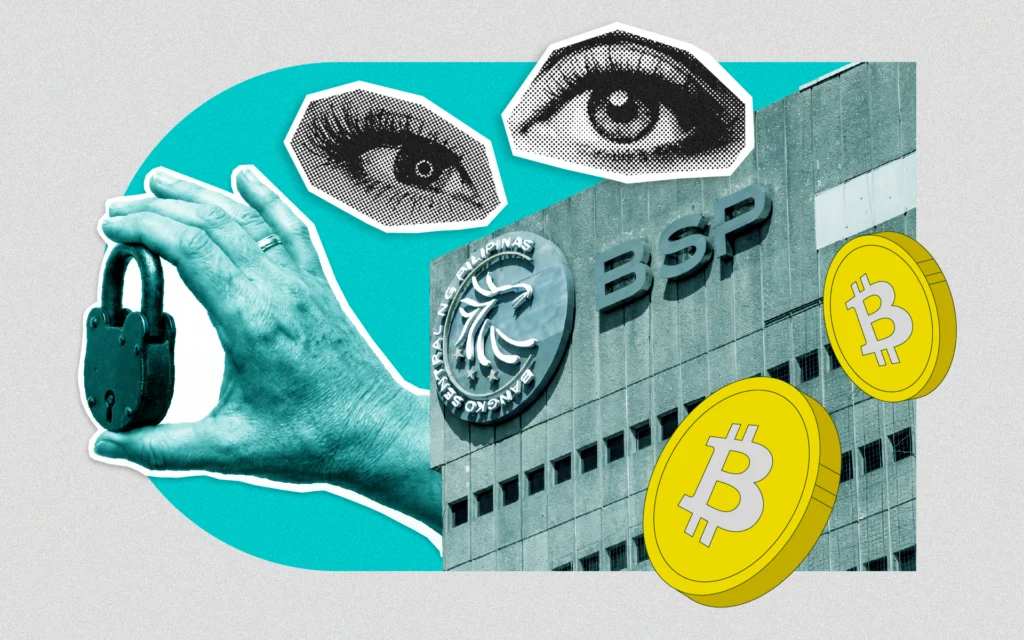
The Philippines’ central bank is considering freezing new payment system operator registrations for 12 months as it moves to tighten oversight of the country’s payments industry, including businesses handling crypto-related transactions.
Under a draft circular, the Bangko Sentral ng Pilipinas (BSP) would temporarily suspend the acceptance and processing of applications to register as an Operator of Payment System (OPS).
The proposed suspension would give the regulator time to conduct a broader review of its payment operator classifications and regulatory framework as digital payment services continue to expand.
The measure remains a proposal and has not yet taken effect.
Pending Applications Could Face a 12-Month Wait
The freeze would not only affect companies planning to apply after the rules take effect.
Applications submitted before the suspension could continue to be assessed by the BSP, but the central bank would hold off on making a final decision until the 12-month period ends.
Existing registered operators, however, would be able to continue their activities.
The BSP regulates payment systems under the Philippines’ National Payment Systems Act, which gives the central bank authority to oversee operators and address risks that could affect the safety, efficiency and stability of the country’s payment infrastructure.
The regulator is also proposing a centralized database for merchants using the country’s national QR payment system. The measure could give supervised financial institutions greater visibility into merchants and the transactions passing through payment networks.
Crypto Firms Face Tighter Payment Controls
Crypto businesses would face additional scrutiny under the proposed framework.
BSP-supervised institutions providing merchant acquisition services would generally be expected to establish direct relationships with regulated virtual asset service providers rather than allowing crypto businesses to operate through multiple layers of payment facilitators or aggregators.
Those relationships would be subject to enhanced due diligence and closer transaction monitoring. Financial institutions would also be expected to introduce risk-based controls, including limits based on transaction values and settlement arrangements.
The requirements could apply to virtual asset businesses supervised by the BSP, the Philippine Securities and Exchange Commission, or other relevant regulators.
The proposal follows a broader regulatory push to restrict unauthorized crypto platforms’ access to the Philippine financial system.
Earlier in 2026, the BSP instructed supervised financial institutions to deal only with appropriately authorized virtual asset businesses and restricted direct retail access to offshore crypto service providers that are not registered with Philippine regulators.
Existing payment arrangements would not escape the new scrutiny. Institutions would be given six months to review affected merchant relationships and another six months to address identified deficiencies.
The proposed licensing pause and tighter merchant rules suggest the BSP is focusing not only on crypto exchanges themselves but also on the payment infrastructure connecting digital asset businesses with Philippine customers.
Top Trending Crypto Articles
The information provided in this article is for informational purposes only. It is not intended to be, nor should it be construed as, financial advice. We do not make any warranties regarding the completeness, reliability, or accuracy of this information. All investments involve risk, and past performance does not guarantee future results. We recommend consulting a financial advisor before making any investment decisions.

Dr. Guneet Kaur is a senior editor at CCN.com and a Science Fellow at Exponential Science. She is a fintech and blockchain expert with extensive experience in digital finance education, blockchain ecosystems, and cryptocurrency markets. She has worked with global media such as Cointelegraph, as well as education and blockchain platforms, to design and lead strategic content and learning initiatives. As an educator and assessor for top-tier executive programs, she bridges real-world fintech trends with academic insight.
Dr. Kaur is also a published researcher and peer reviewer across fintech and data science journals, including Financial Innovation Journal and International Journal of Big Data Intelligence and Applications. Her work spans data-driven analysis, Web3 innovation, and technical content development. With a strong foundation in both industry and academia, she translates complex financial technologies into practical applications, empowering learners, professionals, and institutions across the rapidly evolving digital finance landscape.