Key Takeaways
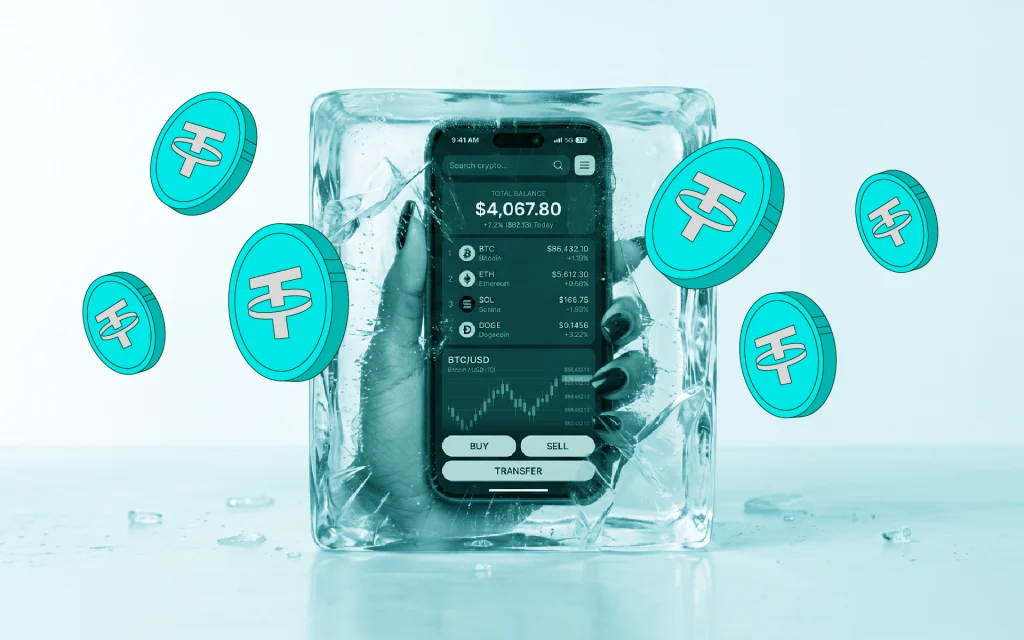
- Crypto users reported receiving unsolicited USDT transfers from addresses labeled as HTX, including one Coinbase user who said a 7.5 USDT deposit triggered a source-of-funds review and threat of account closure.
- HTX denies sending the transactions and says incorrect wallet attribution could explain why some transfers appeared to originate from the exchange.
- The timing is critical: HTX is already subject to UK financial sanctions, while an EU transaction ban takes effect Aug. 23, creating genuine compliance risks around HTX-linked funds.
Could someone send $7 worth of crypto to your exchange deposit address without permission and leave you fighting to keep your account open?
That fear swept through crypto circles on Aug. 18 after users reported receiving unexpected small USDT transfers from addresses identified by blockchain services as belonging to HTX.
One trader, 0xZiye, posted that his Coinbase account had received 7.5 USDT, which he attributed to HTX. He claimed Coinbase subsequently asked him to explain the source of the funds or face account closure.
Wu Blockchain later amplified reports of mass small transfers and claims that some exchange accounts had been frozen.
But an examination of what is publicly available leaves a messier picture.
$7.5 Coinbase Case Is Not Proof of a Permanent Freeze
There is currently no public confirmation from Coinbase that receiving 7.5 USDT from an HTX-linked address caused the account to be permanently frozen.
Coinbase says it can freeze funds when required by sanctions laws or orders from authorities. Automated compliance systems can also request information about suspicious transfers without permanently locking customer assets.
0xZiye’s account was subsequently restored to normal after the issue was escalated to Coinbase, but Coinbase itself has not publicly commented on the specific incident.
No verified list of affected users, transaction hashes or complete exchange notices showing widespread permanent account freezes has surfaced.
That makes claims of a coordinated wave of frozen accounts impossible to independently verify for now.
Why Would Exchanges Care About Just $7?
The amount is almost irrelevant. The problem is where the money appears to have come from.
The UK designated Huobi Global S.A. on May 26 for alleged support for Russia’s financial sector. Britain’s Office of Financial Sanctions Implementation later explicitly clarified that it considers HTX subject to those financial sanctions because of its ownership by Huobi.
In July, the EU went further, adding “HTX (HUOBI GLOBAL SA)” to a list of non-EU crypto and financial entities accused of significantly frustrating Russia-related sanctions. The transaction prohibition becomes applicable on Aug. 23, 2026.
ICIJ previously reported another complication: after the UK sanctions, HTX began generating hundreds of fresh central accounts, according to blockchain experts, making its flows harder for investigators and compliance teams to track.
That creates a difficult environment for automated blockchain screening. A tiny payment to a wallet classified as HTX could potentially trigger enhanced checks, even if the recipient never requested it.
Is This Really a ‘Dusting Attack’?
Not in the traditional sense.
Coinbase defines crypto dusting as sending tiny amounts to wallets and tracking how those funds move, often in an attempt to identify the people controlling the addresses.
Address poisoning is different again. It usually involves placing a lookalike address in someone’s transaction history, hoping they later copy the wrong address.
What users are alleging here is closer to compliance poisoning: sending funds associated with a sanctioned or restricted counterparty to innocent addresses in the hope that automated AML systems flag them.
There is currently no verified evidence identifying who sent the disputed transfers or proving that this was their intention.
HTX Says It Wasn’t Them
HTX said its internal investigation found that the exchange had not carried out the disputed transfers or any related testing.
The company said it was investigating several possibilities, including incorrect address labels and errors in identifying the true source of onchain transfers.
Justin Sun went further, reportedly calling the accusations fabricated.
That explanation cannot yet be independently verified either.
Blockchain explorer labels are not ownership certificates. They are produced using clustering, transaction patterns, and known wallet information, so a wallet being tagged “HTX” does not by itself prove that HTX deliberately initiated a transaction.
For now, the sanctions risk is confirmed, but the alleged dusting campaign is not.
And with the EU’s HTX transaction ban arriving on Aug. 23, a $7 transfer has exposed a much larger problem: in an era of automated sanctions screening, receiving crypto you never asked for can potentially become a compliance problem you never created.
Top Trending Crypto Articles
The information provided in this article is for informational purposes only. It is not intended to be, nor should it be construed as, financial advice. We do not make any warranties regarding the completeness, reliability, or accuracy of this information. All investments involve risk, and past performance does not guarantee future results. We recommend consulting a financial advisor before making any investment decisions.

Dr. Guneet Kaur is a senior editor at CCN.com and a Science Fellow at Exponential Science. She is a fintech and blockchain expert with extensive experience in digital finance education, blockchain ecosystems, and cryptocurrency markets. She has worked with global media such as Cointelegraph, as well as education and blockchain platforms, to design and lead strategic content and learning initiatives. As an educator and assessor for top-tier executive programs, she bridges real-world fintech trends with academic insight.
Dr. Kaur is also a published researcher and peer reviewer across fintech and data science journals, including Financial Innovation Journal and International Journal of Big Data Intelligence and Applications. Her work spans data-driven analysis, Web3 innovation, and technical content development. With a strong foundation in both industry and academia, she translates complex financial technologies into practical applications, empowering learners, professionals, and institutions across the rapidly evolving digital finance landscape.