Key Takeaways
- MARA posted a $611.3 million Q2 net loss as revenue fell 27% to $174.9 million.
- Bitcoin holdings declined 29% year over year to 35,577 BTC, largely due to significant first-quarter sales.
- MARA pledged 18,750 BTC after the quarter to secure $600 million in additional borrowing capacity.
MARA Holdings reported a sharp deterioration in its second-quarter financial results as weaker Bitcoin prices and digital asset valuation losses outweighed improvements in mining output.
The Nasdaq-listed Bitcoin miner recorded a net loss of $611.3 million for the quarter, reversing an $808.2 million profit in the same period last year.
Revenue declined 27% year over year to $174.9 million, while adjusted earnings before interest, taxes, depreciation and amortization fell to negative $360.9 million.
MARA ended June with 35,577 BTC, down 29% from 49,951 BTC a year earlier. Its shares closed August 6 at $10.65, falling 5.25% during the regular trading session.
Bitcoin Sales Drive Annual Decline in Holdings
The reduction in MARA’s Bitcoin treasury primarily reflected significant sales during the first half of 2026 rather than lower mining production.
MARA sold 20,880 BTC for approximately $1.5 billion during the first quarter to fund operations, repurchase debt and support infrastructure investments. The sales reduced its holdings from 53,822 BTC at the end of 2025 to 35,303 BTC by March 31.
During the second quarter, the company sold another 2,213 BTC at an average price of $73,078. However, it produced 2,422 BTC over the same period, allowing total holdings to increase slightly on a sequential basis.
At the end of June, MARA had loaned 4,742 BTC and pledged 4,528 BTC as collateral, leaving 26,307 BTC unrestricted. Following the quarter, the company pledged an additional 18,750 BTC to secure two Bitcoin-backed credit facilities.
The financing arrangements provide $600 million in additional borrowing capacity, demonstrating how MARA increasingly views its Bitcoin treasury as both a long-term asset and a source of liquidity.
Mining Output Rises as Bitcoin Economics Weaken
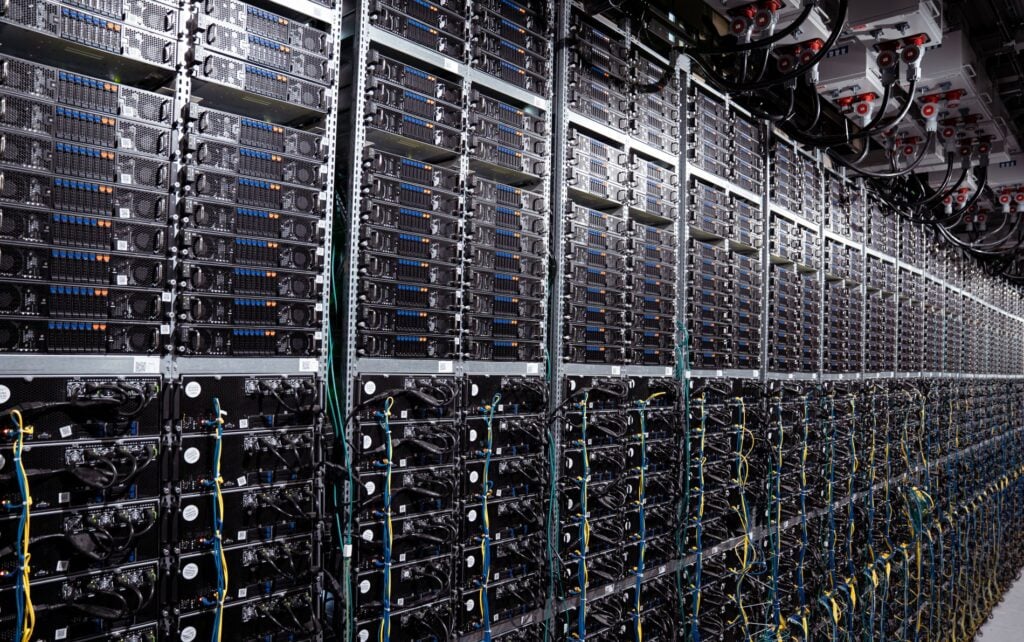
MARA delivered several operational improvements despite its weaker financial performance. Energized hashrate increased 22% year over year to 70.3 exahashes per second, while Bitcoin production rose 3% to 2,422 BTC.
The company won 700 blocks during the quarter, up 1%, while its cost per petahash per day improved 4% to $27.70.
Those gains were insufficient to offset weaker Bitcoin economics. The average Bitcoin price associated with mining revenue fell to approximately $71,325 from $98,975 in the second quarter of 2025. Purchased energy costs per Bitcoin at MARA-owned sites also increased.
The loss was further amplified by approximately $343 million in fair-value declines related to digital assets and receivables. The accounting charge contrasted with substantial valuation gains that supported the company’s earnings a year earlier.
MARA reported approximately $2.5 billion in combined cash and Bitcoin holdings at quarter-end.
MARA Uses Bitcoin Treasury to Support AI Expansion
The miner is directing more capital toward artificial intelligence and high-performance computing infrastructure as it seeks revenue beyond Bitcoin mining.
Its planned $1.5 billion acquisition of Long Ridge includes a 505-megawatt gas-fired power plant in Ohio and a computing campus with potential capacity exceeding one gigawatt. The transaction remains subject to regulatory approval.
The company is also developing a 1,200-acre site in Texas that could eventually provide up to two gigawatts of grid capacity. Management estimates that MARA’s total potential power portfolio could reach approximately 4.8 gigawatts.
Investors will now watch whether MARA continues selling or pledging Bitcoin to finance its expansion. The coming quarters will test whether AI infrastructure can provide steadier revenue without significantly reducing the company’s exposure to a future recovery in Bitcoin mining economics.
Top Trending Crypto Articles
The information provided in this article is for informational purposes only. It is not intended to be, nor should it be construed as, financial advice. We do not make any warranties regarding the completeness, reliability, or accuracy of this information. All investments involve risk, and past performance does not guarantee future results. We recommend consulting a financial advisor before making any investment decisions.

Giuseppe Ciccomascolo began his career as an investigative journalist in Italy, where he contributed to both local and national newspapers, focusing on various financial sectors.
Upon relocating to London, he worked as an analyst for Fitch's CapitalStructure and later as a Senior Reporter for Alliance News. In 2017, Giuseppe transitioned to covering cryptocurrency-related news, producing documentaries and articles on Bitcoin and other emerging digital currencies. He also played a pivotal role in establishing the academy for a cryptocurrency exchange website. Crypto remained his primary area of interest throughout his tenure as a writer for ThirdFloor.