Key Takeaways
- FTX’s ex-general counsel says the exchange was insolvent when it filed for bankruptcy.
- Ryne Miller dismissed claims by Sam Bankman-Fried that customer assets were recoverable.
- SBF’s appeal hinges on the argument that FTX was solvent and mishandled, not fraudulent.
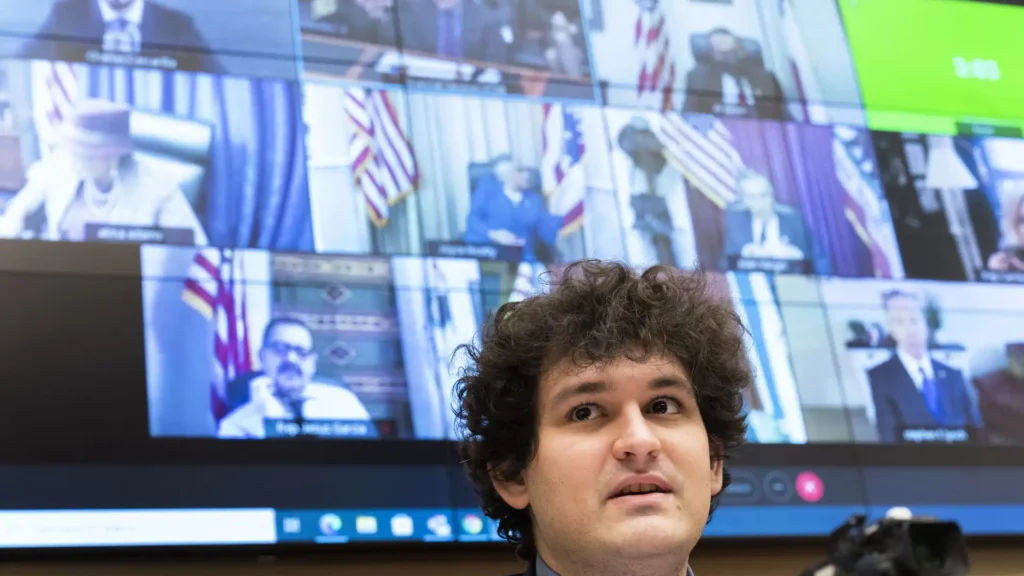
Almost three years after FTX’s spectacular collapse, Sam Bankman-Fried (SBF) is preparing for an appeal built around a bold claim — that the exchange wasn’t truly insolvent when it went under.
As the November hearing draws closer, SBF and his legal team have doubled down on the argument that FTX had the assets to cover customer deposits and that bankruptcy was rushed.
The claim has divided opinion in the crypto world — and now one of FTX’s own former top lawyers is pushing back hard.
“The Coins Were Gone”
Ryne Miller, who served as FTX’s general counsel, took to X on Oct. 16 to dismiss the solvency claims outright.
He said that when he was briefed on the situation in November 2022, it was clear the company’s assets had already vanished.
“That week in November 2022, assets on hand were nothing near adequate, and the founders were fabricating asset lists (and desperately chasing new investors),” Miller wrote. “The coins were gone, folks. Your coins were gone. That’s why bankruptcy happened.”
Miller acknowledged that parts of FTX’s portfolio later regained value, but stressed that such hindsight is irrelevant.
Bankruptcy law fixes claims at the time of filing, he said, and the speculative assets that survived were built on misappropriated customer funds.
SBF’s Appeal Strategy
SBF’s legal team has filed a 102-page brief with the Second Circuit Court of Appeals, seeking either acquittal or a new trial.
The solvency argument is at the center of that effort, with his attorneys insisting FTX had roughly $15 billion in net assets at the time of collapse.
They argue the crisis was a liquidity squeeze — customers withdrawing more quickly than assets could be liquidated — not insolvency.
Among the holdings cited is FTX’s $500 million investment in AI firm Anthropic, which has since soared in value to an estimated $60 billion.
During his 2023 trial, Judge Lewis Kaplan barred the defense from presenting such evidence, ruling that whether assets could eventually be recovered was immaterial to the fraud charges.
A jury convicted SBF on all counts after just four hours of deliberation.
Reality of FTX’s Bankruptcy
Miller, meanwhile, credited FTX’s restructuring team, led by CEO John J. Ray III, with clawing back billions since the bankruptcy.
The FTX Recovery Trust has already returned over $8.1 billion to creditors, with most small claimants receiving full — and in some cases greater-than-full — repayment.
Still, Miller insisted this does not prove FTX was solvent at the time. “If anyone wants to indulge in this fresh narrative construct, please demand at least a bit of intellectual honesty,” he wrote.
What Comes Next
Oral arguments in SBF’s appeal are scheduled for Nov. 4 in Manhattan.
Legal experts note that appeals in major financial fraud cases rarely succeed — federal acquittal rates are historically below 1%.
Even so, the solvency debate ensures that the collapse of FTX, once valued at $32 billion, remains one of the most contested episodes in crypto history.
As the courtroom battle resumes, the question of whether the exchange was bankrupt or merely broken will once again take center stage.
Top Trending Crypto Articles

Prashant Jha is a seasoned crypto journalist based in Delhi, India, with a Bachelor’s Degree in Computer Science Engineering. Passionate about the evolving world of blockchain and cryptocurrencies, he has been a dedicated voice in the industry since 2018. Prashant’s expertise lies in regulatory reporting, where he unravels complex legal and financial developments with clarity and precision. Before joining CCN in 2024, he honed his craft at Cointelegraph, establishing himself as a trusted name in crypto journalism.
His coverage spans major industry events, including the high-profile collapses of FTX, Three Arrows Capital (3AC), and LUNA, offering readers insightful analyses of their regulatory and market implications. Prashant’s technical background enables him to bridge the gap between intricate blockchain technology and its real-world applications, making his work accessible to novices and experts.
Beyond his professional pursuits, Prashant is an avid music enthusiast, often exploring diverse genres to unwind. A sports lover, he has a particular passion for cricket and frequently engages in discussions about the game. His multifaceted interests and sharp journalistic instincts make him a valuable contributor to CCN, where he continues shaping the crypto landscape's narrative.