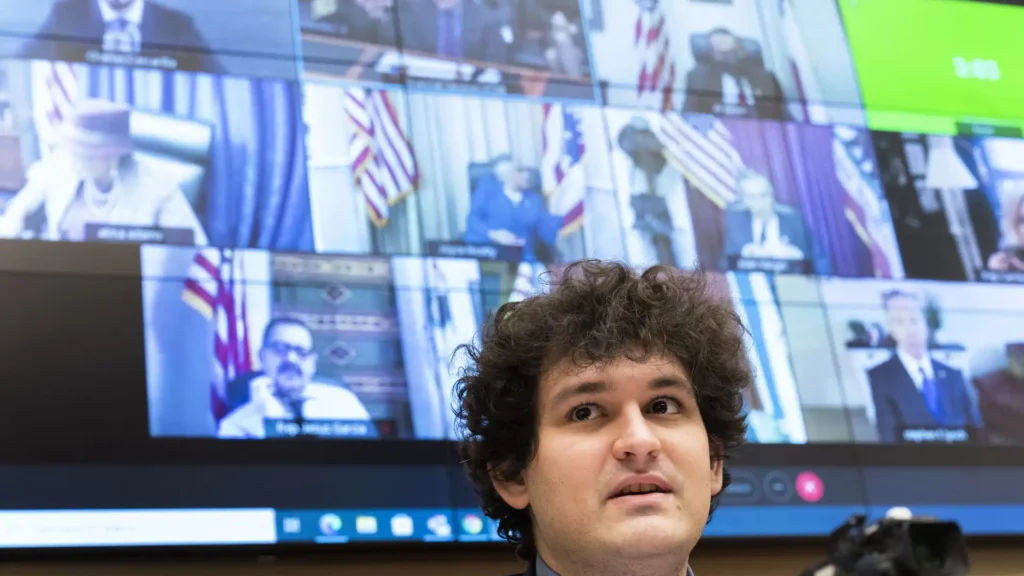
FTX's withdrawal represents a rare win for small investors in a case that has often felt stacked against them. | Credit: Getty Images.
Share
Key Takeaways
The FTX Recovery Trust has withdrawn its motion blocking distributions to restricted regions.
The move frees roughly $500 million in locked funds owed to creditors in 49 countries.
China leads with 82% of claims, followed by Russia, Iran, and Ukraine.
After nearly two years of legal gridlock, FTX creditors in restricted regions — including China, Russia, and Iran — have just scored a major breakthrough.
The reversal marks the first major victory against FTX’s bankruptcy lawyers, who had sought to block payouts to creditors based in countries with crypto restrictions or sanctions.
Credit goes to one determined creditor — Weiwei Ji, a Chinese-born, Singapore-based investor — who challenged FTX’s classification system head-on.
Earn Crypto with These Top Mining Apps
Sponsored
Disclosure
We sometimes use affiliate links in our content, when clicking on those we might receive a commission at no extra cost to you. By using this website you agree to our terms and conditions and privacy policy.
FTX had labeled Ji as a “Chinese creditor” despite his Singaporean residency, leaving his family’s four verified accounts — worth more than $15 million — out of distribution eligibility.
Ji pushed back, rallying support from other creditors and exposing inconsistencies in the Trust’s legal approach.
On Nov. 3, the FTX Recovery Trust quietly filed to withdraw its “Restricted Jurisdiction Procedures” motion after facing mounting opposition from creditors and scrutiny from U.S.
Bankruptcy Judge John Owens, who questioned why the Trust was deviating from precedent.
Owens noted that other major bankruptcies — including BlockFi and Celsius — had successfully repaid Chinese creditors without similar restrictions.
His remarks, combined with Ji’s persistence, set the stage for a reversal.
FTX trust withdraws motion. Source: Kroll.
Who Benefits From FTX’s Withdrawal
The ruling now unlocks payouts to creditors across 49 countries, many of whom were previously excluded due to KYC or jurisdictional barriers.
These restricted jurisdictions collectively account for about 5% of total allowed FTX claims, valued between $500 million and $800 million.
China alone accounts for 82% of the claims, followed by Russia, Ukraine, Iran, and other regions where crypto access remains legally complex.
In total, the FTX estate has recovered between $14.7 billion and $16.5 billion, with $6.2 billion already distributed in earlier rounds.
The unfreezing of these restricted claims adds new complexity — and new hope — for nearly 400,000 creditors who had been left in limbo.
Prashant Jha is a seasoned crypto journalist based in Delhi, India, with a Bachelor’s Degree in Computer Science Engineering. Passionate about the evolving world of blockchain and cryptocurrencies, he has been a dedicated voice in the industry since 2018. Prashant’s expertise lies in regulatory reporting, where he unravels complex legal and financial developments with clarity and precision. Before joining CCN in 2024, he honed his craft at Cointelegraph, establishing himself as a trusted name in crypto journalism.
His coverage spans major industry events, including the high-profile collapses of FTX, Three Arrows Capital (3AC), and LUNA, offering readers insightful analyses of their regulatory and market implications. Prashant’s technical background enables him to bridge the gap between intricate blockchain technology and its real-world applications, making his work accessible to novices and experts.
Beyond his professional pursuits, Prashant is an avid music enthusiast, often exploring diverse genres to unwind. A sports lover, he has a particular passion for cricket and frequently engages in discussions about the game. His multifaceted interests and sharp journalistic instincts make him a valuable contributor to CCN, where he continues shaping the crypto landscape's narrative.