Key Takeaways
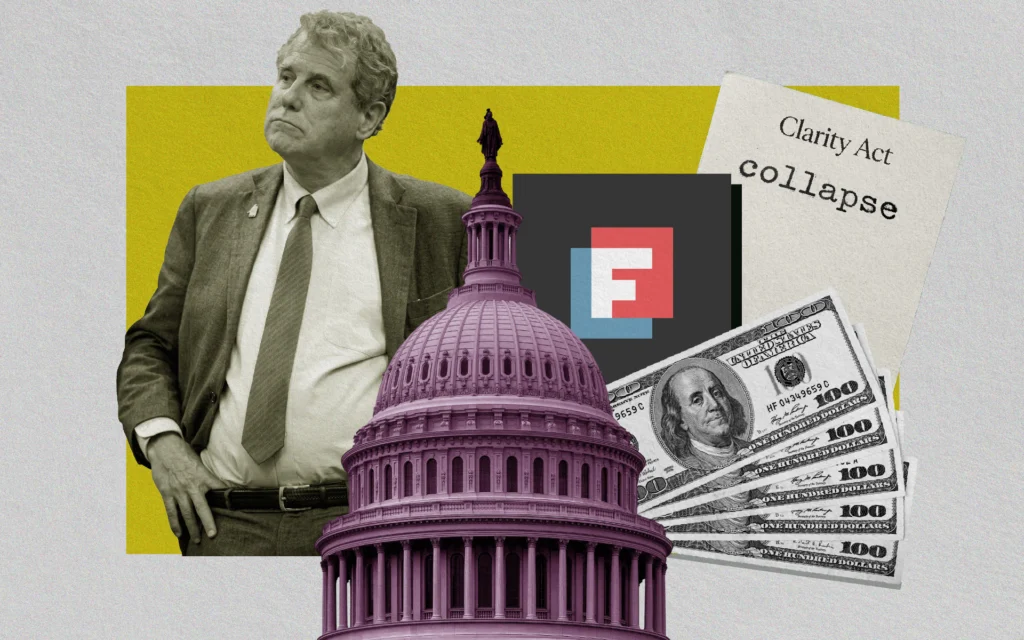
- Crypto super PAC Fairshake has committed at least $30 million to opposing Sherrod Brown’s attempt to return to the US Senate in Ohio.
- The move comes six days after the Senate failed to advance the CLARITY Act, which received 50 votes in favor but needed 60.
- Fairshake’s network spent roughly $40 million against Brown in 2024, when he lost his Senate seat to Bernie Moreno.
The crypto industry is preparing another multimillion-dollar campaign against former Ohio Senator Sherrod Brown, just days after its biggest legislative priority stalled in Washington.
Fairshake will spend at least $30 million opposing Brown’s 2026 Senate campaign, spokesperson Geoff Vetter confirmed Monday. The commitment is Fairshake’s largest against a single candidate this midterm cycle, with additional spending decisions expected in the coming weeks.
Brown is challenging Republican Senator Jon Husted for the Ohio seat previously held by JD Vance.
The timing puts the announcement directly into the fallout from the CLARITY Act fight, although Fairshake has not said the failed vote alone triggered its decision.
CLARITY Act Failure Raises the Stakes
On Sept. 15, the Senate failed to advance the Digital Asset Market Clarity Act.
The procedural vote produced a 50-49 majority in favor, according to Reuters, but the legislation needed 60 votes.
Republicans Susan Collins, Josh Hawley and Jerry Moran joined Democrats in opposing advancement, while Thom Tillis switched his vote to no for procedural reasons that preserve the possibility of reconsideration.
The bill would establish a federal market structure for digital assets and clarify responsibilities between the SEC and CFTC.
Democrats raised several objections, including demands for stronger restrictions involving President Donald Trump’s crypto businesses. Stablecoin rewards were another sticking point, with banks warning they could pull deposits away from traditional lenders.
Brown was not in the Senate for that vote, but his history with the industry makes him a familiar target for Fairshake.
Crypto Already Spent $40M Against Brown
Brown chaired the Senate Banking Committee before losing his seat in 2024 and frequently clashed with crypto companies over regulation and consumer protection.
Fairshake’s network spent roughly $40 million during that election to help defeat him. Republican Bernie Moreno ultimately won with approximately 50% of the vote to Brown’s 47%.
Now the industry is returning with another $30 million.
Brown has adopted a somewhat different tone during his comeback campaign, telling the New York Times last month that crypto has a place in the economy while maintaining that the industry should not be allowed to write its own rules.
$30M Enters an Already Expensive Ohio Race
Fairshake’s money arrives in a race already flooded with outside spending.
Before the new crypto commitment, roughly $298 million in advertising had already been reserved or spent in the Ohio contest, according to Reuters. Brown had raised $38.6 million compared with Husted’s $14.3 million as of the latest figures cited by the outlet.
Fairshake is backed by major crypto companies, including Coinbase, Ripple, and Andreessen Horowitz. The PAC and its affiliates still have substantial funds available for other races; recent federal filings put their remaining resources above $100 million.
The $30 million commitment does not guarantee an outcome in Ohio. It does show that after failing to secure enough Senate votes for CLARITY, the crypto industry is again prepared to spend heavily on the lawmakers who will shape the next Congress.
[fo
Top Trending Crypto Articles
The information provided in this article is for informational purposes only. It is not intended to be, nor should it be construed as, financial advice. We do not make any warranties regarding the completeness, reliability, or accuracy of this information. All investments involve risk, and past performance does not guarantee future results. We recommend consulting a financial advisor before making any investment decisions.

Dr. Guneet Kaur is a senior editor at CCN.com and a Science Fellow at Exponential Science. She is a fintech and blockchain expert with extensive experience in digital finance education, blockchain ecosystems, and cryptocurrency markets. She has worked with global media such as Cointelegraph, as well as education and blockchain platforms, to design and lead strategic content and learning initiatives. As an educator and assessor for top-tier executive programs, she bridges real-world fintech trends with academic insight.
Dr. Kaur is also a published researcher and peer reviewer across fintech and data science journals, including Financial Innovation Journal and International Journal of Big Data Intelligence and Applications. Her work spans data-driven analysis, Web3 innovation, and technical content development. With a strong foundation in both industry and academia, she translates complex financial technologies into practical applications, empowering learners, professionals, and institutions across the rapidly evolving digital finance landscape.