Key Takeaways
- Binance founder Changpeng Zhao said tokenized gold is a “trust me bro” token.
- Peter Schiff said he intends to launch his own gold-backed token.
- Custodial risk and unclear regulation have kept gold-backed tokens from breaking out.
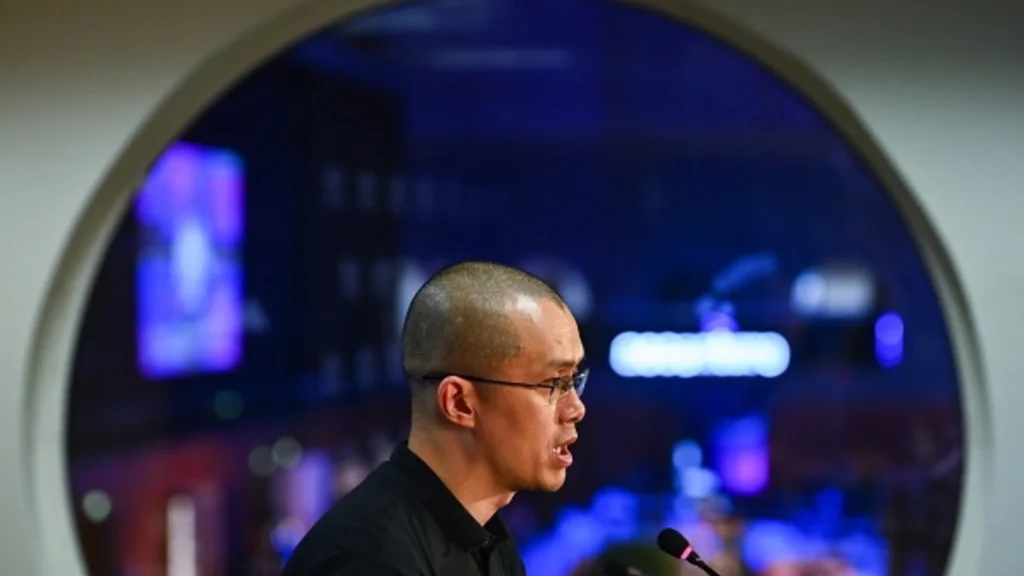
Binance founder Changpeng Zhao (CZ) has dismissed the growing hype around tokenized gold projects, calling them “trust me bro” tokens and arguing that so-called “on-chain gold” undermines the principles of decentralization.
His remarks followed comments from gold advocate Peter Schiff, who revealed plans to launch his own gold-backed token while criticizing the dominance of U.S. dollar-pegged stablecoins.
Peter Schiff Pushes for Gold-Backed Tokens
In July, Peter Schiff, a long-time critic of crypto and supporter of gold, said he planned to issue a gold-backed digital token.
Schiff, who has frequently criticized Bitcoin and dollar-linked stablecoins, previously said that he did not understand stablecoins.
Writing on X in June: “If you’re going to introduce a third-party custodian, why settle for a token backed by a flawed fiat currency like the dollar, when you can own one backed by gold?”
Last week, Gold’s market cap surged to $30 trillion for the first time, as people flocked to a more stable currency amid economic uncertainty.
Gold-backed tokens, however, remain a tiny piece of the overall market, despite growing to almost $3 billion in value.
Meanwhile, the global stablecoin market has expanded to over $260 billion, led by dollar-pegged tokens such as Tether’s USDT.
CZ: Tokenized Gold Still Depends on Trust
CZ, who has long championed fully decentralized systems, argued that tokenized gold defeated the core purpose of blockchain by reintroducing middlemen.
He claimed that wrapping physical gold in a digital token doesn’t make it “on-chain” but just shifts trust from banks to private custodians.
Quoting a post about the planned gold product on X, Zhao wrote:
“Tokenizing gold is NOT ‘on chain’ gold.”
He explained that such systems depend on the promise that a third party will deliver the physical gold at a later date.
“It’s tokenizing that you trust some third party will give you gold at some later date, even after their management changes, maybe decades later, during a war, etc,” he wrote.
The Binance founder dismissed the concept as little more than a faith-based investment, calling it “a ‘trust me bro’ token.”
Zhao added that this reliance on intermediaries is the main reason “no ‘gold coins’ have really took off.”
Why On-Chain Gold Has Struggled
Attempts to merge blockchain with physical assets like gold have repeatedly fallen short of mainstream success.
While tokenized gold products aim to combine the stability of precious metals with digital efficiency, they reintroduce the same trust dependencies that decentralized systems seek to remove.
Things such as custodial risk and the logistical challenge of storing and redeeming physical metal have limited its adoption potential.
According to CCN analyst Valdrin Tahiri, accessibility and fragmentation have played a major role in slowing adoption.
“One major reason tokenized gold hasn’t gained widespread traction is its limited accessibility and lack of a single dominant product, unlike the stablecoin market, where USDT and USDC set the standard,” Tahiri said.
He pointed to PAX Gold (PAXG) as the closest contender, noting that the token is actively traded on decentralized exchanges.
“The closest contender is PAX Gold (PAXG), a gold-backed token that even trades on decentralized exchanges like Uniswap, though its liquidity remains relatively low, creating slippage during trades,” he said.
Tahiri added that some centralized exchanges, including Bybit and Kraken, have launched their own gold-linked products, but the market remains fragmented.
“Meanwhile, centralized exchanges such as Bybit and Kraken have their own gold-linked products,” he said.
Adding: “Until a unified, widely adopted standard emerges or liquidity deepens across multiple networks, tokenized gold will likely remain a niche asset class rather than a mainstream on-chain commodity.”
Top Trending Crypto Articles

Kurt Robson is a London-based reporter at CCN, specialising in the fast-moving worlds of crypto and emerging technology. He began his career covering local news in Cornwall after graduating from Falmouth University with First Class Honours in Journalism. There, he cut his teeth on everything from council meetings to missing swans.
He quickly rose through the ranks to become a frontline journalist at several of the UK’s leading national newspapers. Over the years, he has interviewed musicians and celebrities, reported from courtrooms and crime scenes, and secured multiple front-page exclusives.
Following the upheaval of the COVID-19 pandemic, Kurt shifted his focus to technology journalism—just ahead of the AI boom. With a natural curiosity and a trained eye for emerging trends, he has found a new rhythm in reporting on innovation.
At CCN, Kurt's work focuses on the cutting edge of crypto, blockchain, AI, and the evolving digital world. Drawing on his background in people-first reporting and his deep interest in disruptive tech, Kurt delivers stories that are insightful, entertaining, and human-centric.