Key Takeaways
- Scammers allegedly gained access to an 82-year-old man’s computer and convinced him that he owed money over an erroneous refund.
- Charles Schwab processed three transfers totaling nearly $1.7 million to crypto exchange Okcoin, according to the family’s attorney.
- A FINRA arbitration panel ordered Schwab to pay $1.34 million, although the firm said it disagreed with the decision.
An 82-year-old father lost nearly $1.7 million after scammers allegedly gained access to his computer and convinced him that he needed to return money sent through an erroneous refund.
Over three days, Charles Schwab processed three transfers from his account to crypto exchange Okcoin, according to an attorney representing his family.
The man’s sons later accused Schwab of failing to respond to warning signs that their father was being exploited.
Scammers Used an Erroneous Refund Story
The late David Morthland was 82 when the scammers targeted him.
Fraudsters allegedly told Morthland that he had received a refund by mistake and needed to return the money.
They also gained access to his computer, family attorney Scott Greco told Barron’s.
However, the precise mechanics of the scam remain unclear.
Greco said it was not known whether Morthland personally submitted the transfer instructions while being manipulated or whether the scammers initiated them after taking control of his computer.
Schwab processed three wire transfers totaling nearly $1.7 million to Okcoin over three days, according to Greco, who argued that the requests contained multiple warning signs.
Investigators subsequently recovered approximately $350,000, he added.
That left an alleged outstanding loss of $1,339,822.11.
Sons Accused Schwab of Missing Warning Signs
Morthland’s sons, Cameron and Bryce, filed the case in 2024 as trustees of family trusts.
They accused Schwab of negligence and breaching its fiduciary duty.
After considering the pleadings and evidence, the panel ordered Schwab to pay $1,339,822 in compensatory damages.
Two arbitrators approved the award.
The third, Hector Diaz-Olmo, dissented because he believed the family should also receive attorneys’ fees and costs.
The FINRA award, served on Sept. 10, ordered Schwab to pay $1,339,822 in compensatory damages.
Schwab Denies Responsibility for the Loss
Schwab acknowledged that criminals had victimized Morthland but rejected the argument that it should reimburse his family.
“We disagree with the decision,” the company told Barron’s, claiming that the award disregarded basic legal principles.
The brokerage said preventing fraud requires customers to protect their personal information and approach financial transactions skeptically.
Greco, however, disputed Schwab’s position.
He argued that registered broker-dealers must maintain reasonable systems to detect and respond to suspected financial exploitation of elderly customers.
Crypto Scam Victims Target the Companies That Moved Their Money
The Morthland dispute follows another crypto-fraud case recently reported by CCN, in which a Texas mother sued Bitcoin ATM operator Athena Bitcoin after losing $23,700.
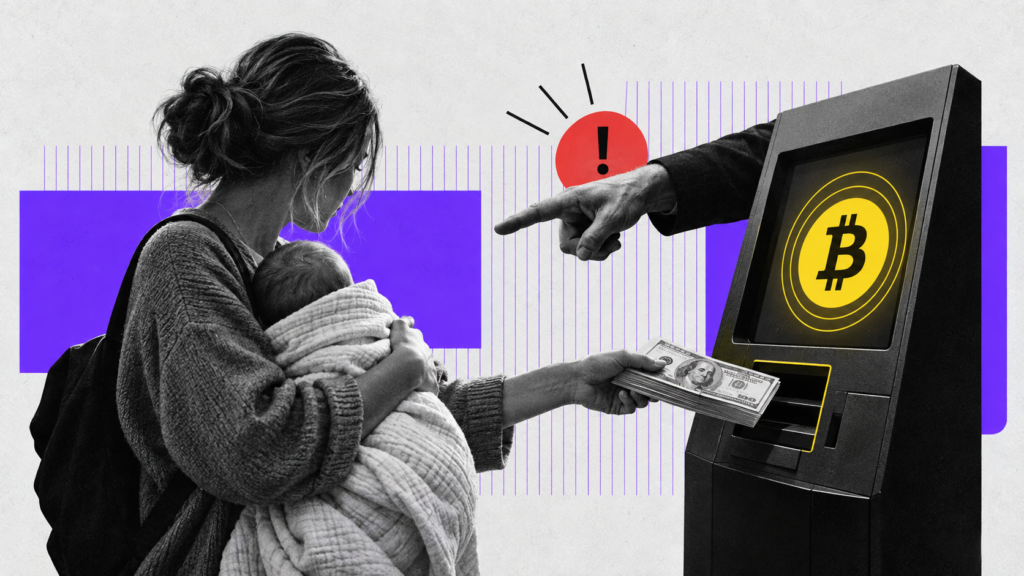
Meagan Venable alleges that scammers threatened her with arrest and pressured her into depositing cash at two Bitcoin kiosks while she held her infant.
She reportedly recovered only around 12% of the money.
Her lawsuit claims Athena’s safeguards failed to identify or stop the suspicious deposits.
Athena has issued scam warnings and says larger transactions receive additional scrutiny, while the allegations against the company have not yet been decided by a court.
Older Americans Lost $4.35B in Crypto-Linked Crime
The dispute comes as criminals increasingly target older Americans through scams involving crypto.
People aged 60 and over reported $7.75 billion in cybercrime losses during 2025, according to the FBI’s Internet Crime Report.
Approximately $4.35 billion of those reported losses involved crypto, while more than 12,000 older complainants lost over $100,000 each.
For Morthland’s family, the FINRA award covers the money investigators reportedly could not recover.
After legal fees and other costs, however, even a $1.34 million victory may not restore the full amount taken from their father.
Top Trending Crypto Articles

Kurt Robson is a London-based reporter at CCN, specialising in the fast-moving worlds of crypto and emerging technology. He began his career covering local news in Cornwall after graduating from Falmouth University with First Class Honours in Journalism. There, he cut his teeth on everything from council meetings to missing swans.
He quickly rose through the ranks to become a frontline journalist at several of the UK’s leading national newspapers. Over the years, he has interviewed musicians and celebrities, reported from courtrooms and crime scenes, and secured multiple front-page exclusives.
Following the upheaval of the COVID-19 pandemic, Kurt shifted his focus to technology journalism—just ahead of the AI boom. With a natural curiosity and a trained eye for emerging trends, he has found a new rhythm in reporting on innovation.
At CCN, Kurt's work focuses on the cutting edge of crypto, blockchain, AI, and the evolving digital world. Drawing on his background in people-first reporting and his deep interest in disruptive tech, Kurt delivers stories that are insightful, entertaining, and human-centric.