Key Takeaways
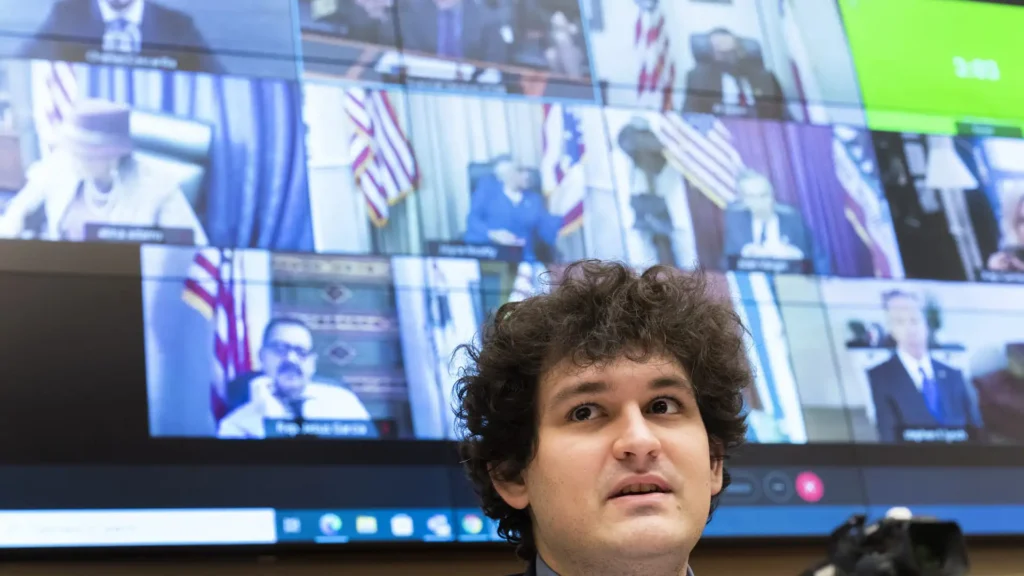
More than three years after FTX collapsed, Sam Bankman-Fried (SBF) is still trying to rewrite the ending.
From prison, the former CEO has put forward a striking claim.
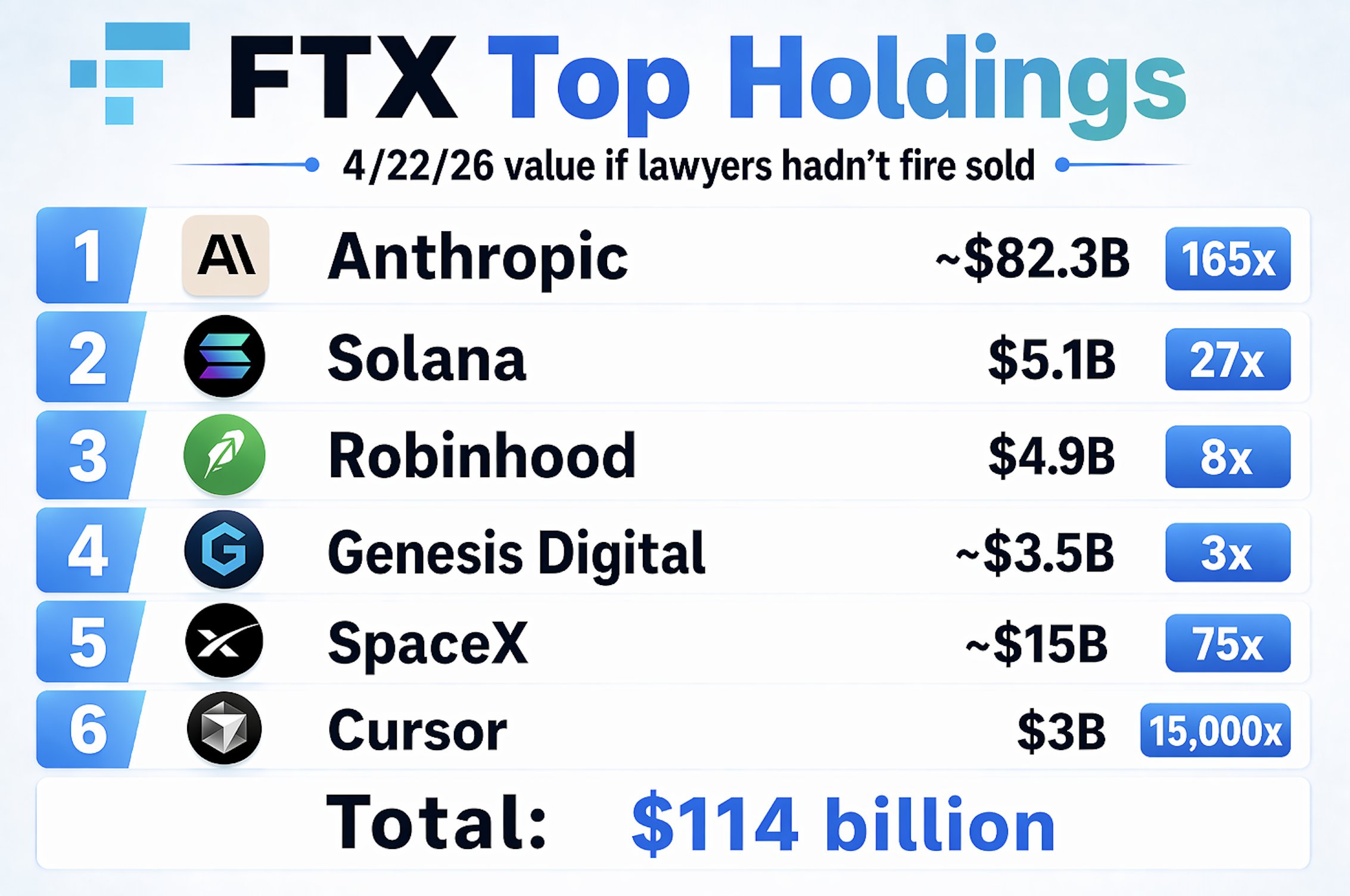
If FTX’s bankruptcy team had simply held onto its venture bets and crypto positions instead of selling them, the estate could now be worth as much as $114 billion.
It’s a headline-grabbing number—and one that taps into a familiar frustration in crypto markets: selling too early.
But behind the claim lies a more complicated story about risk, timing, and the original decisions that brought FTX down in the first place.
+76
Bitcoin
Ethereum
Tether
USD Coin
Solana
Ripple
Dogecoin
Cardano
Toncoin
Shiba Inu
Avalanche
TRON
Chainlink
Polygon Matic
Polkadot
Wrapped Bitcoin
Litecoin
Dai
NEAR Protocol
Bitcoin Cash
Stellar
Cosmos
Filecoin
Ethereum Classic
Aptos
Hedera Hashgraph
Immutable
Optimism
Arbitrum
VeChain
The Sandbox
Decentraland
Axie Infinity
Injective Protocol
Render
The Graph
Aave
Chiliz
Helium
PAX Gold
Compound
Lido DAO Token
Sui
Conflux Network
Lido Staked ETH
OKB
Uniswap
Pepe
Ondo
Mantle
First Digital USD
XDC Network
Artificial Superintelligence Alliance
Jupiter
Quant
Worldcoin
Bonk
Tether Gold
JITO
JasmyCoin
Core
Floki Inu
Ethereum Name Service
SushiSwap
1inch Network
Tezos
Algorand
Flow
Trust Wallet Token
Curve DAO Token
MultiversX
Basic Attention Token
Enjin Coin
Ethena
Ethena Staked USDe
Build'N'Build
Kava.io
Celestia
Sei
IOTA
Frax
+162
Ethereum
Tether
USD Coin
Solana
Ripple
Dogecoin
Cardano
Toncoin
Shiba Inu
Avalanche
TRON
Chainlink
Polygon Matic
Polkadot
Litecoin
NEAR Protocol
Bitcoin Cash
Stellar
Cosmos
Filecoin
Ethereum Classic
Aptos
Immutable
Optimism
Arbitrum
VeChain
The Sandbox
Decentraland
Axie Infinity
Injective Protocol
The Graph
Hedera Hashgraph
Render Token
Aave
Chiliz
PAX Gold
Compound
Lido DAO Token
THORChain
Stacks
Arweave
Sui
Conflux Network
Uniswap
Pepe
Ondo
Mantle
First Digital USD
Bittensor
Kaspa
Celestia
Artificial Superintelligence Alliance
Jupiter
Quant
Worldcoin
PayPal USD
Bonk
Rocket Pool ETH
Tether Gold
Sei
JITO
JasmyCoin
PancakeSwap
Floki Inu
Ethereum Name Service
SushiSwap
1inch Network
Algorand
Flow
Trust Wallet Token
Curve DAO Token
Basic Attention Token
Enjin Coin
Ethena
Ethena USDe
Pi Network
Adventure Gold
Audius
Acala Token
Alchemy Pay
Arkham
API3
Bounce Token
Altlayer
Amp
Aevo
ARPA Chain
Ankr
Blur
Biconomy
Chromia
Celer Network
Celo
Civic
Convex Finance
Cartesi
COTI
DigiByte
DIA
Dymension
dYdX
ether.fi
FUNToken
FLUX
Ampleforth
Golem
GMX
Holo
IoTex
Illuvium
JUST
Liquity
Livepeer
Memecoin
Manta Network
Treasure
Mask Network
NKN
Neutron
Ocean Protocol
Origin Protocol
ORDI
Osmosis
Powerledger
Phala Network
Pendle
Portal
Pyth Network
ConstitutionDAO
iExec RLC
Rocket Pool
Reserve Rights
Storj
Starknet
Spell Token
Sun (New)
Saga
SuperVerse
Toko Token
Tellor
LayerZero
Usual
Cetus Protocol
Eigenlayer
Hamster Kombat
Catizen
Berachain
KAITO
Pudgy Penguins
Solayer
Alchemix
Bitcoin
Bitcoin SV
Movement
Nexo
Hyperliquid
Nervos Network
TrueUSD
Mina
STEPN
Synthetix
APEcoin
Gala
Cronos
Internet Computer
Build'N'Build
+217
Bitcoin
Ethereum
Tether
Build'N'Build
USD Coin
Solana
Ripple
Dogecoin
Cardano
Toncoin
Shiba Inu
Avalanche
TRON
Chainlink
Polkadot
Polygon Matic
Wrapped Bitcoin
Litecoin
Dai
NEAR Protocol
Bitcoin Cash
Monero
Stellar
Cosmos
Filecoin
Ethereum Classic
Aptos
Hedera Hashgraph
Immutable
Optimism
Arbitrum
VeChain
The Sandbox
Decentraland
Axie Infinity
Injective Protocol
Render Token
The Graph
Maker
Aave
Chiliz
Helium
PAX Gold
Compound
Lido DAO Token
THORChain
Stacks
Arweave
Sui
Conflux Network
Lido Staked ETH
Bitget Token
Wrapped Ethereum
OKB
Uniswap
Pepe
Ondo
Mantle
First Digital USD
Bittensor
Kaspa
Celestia
XDC Network
Artificial Superintelligence Alliance
Jupiter
Quant
Worldcoin
PayPal USD
Bonk
Flare
Tether Gold
Sei
JITO
JasmyCoin
PancakeSwap
Core
Floki Inu
Ethereum Name Service
SushiSwap
Kava.io
1inch Network
Tezos
Algorand
Flow
Trust Wallet Token
Curve DAO Token
KuCoin Token
MultiversX
Gitcoin
Zcash
IOTA
Basic Attention Token
Frax
Ethena
Ethena USDe
Fasttoken
Pi Network
SATS
Adventure Gold
Audius
Alchemy Pay
Arkham
API3
Bounce Token
Altlayer
Aergo
Amp
Aevo
ARPA Chain
Astar
Ark
Ankr
AirSwap
Alpaca Finance
Blur
Badger DAO
Bancor
BakeryToken
Biconomy
Chromia
Celer Network
Celo
Shentu
Civic
Convex Finance
Cartesi
Cyber
COTI
DigiByte
DIA
ether.fi
FUNToken
FLUX
Firo
Ampleforth
Golem
GMX
Gnosis
Moonbeam
Holo
IoTex
ICON
Illuvium
JUST
Kadena
Liquity
Livepeer
Lisk
Memecoin
Manta Network
Treasure
Mask Network
MetisDAO
Origin Protocol
ORDI
Ontology
Osmosis
Powerledger
Phala Network
Pendle
Portal
Pyth Network
ConstitutionDAO
Polkastarter
Qtum
iExec RLC
Rocket Pool
Reserve Rights
Ronin
Ravencoin
Starknet
Storj
Status
Spell Token
Sun (New)
SuperVerse
Toko Token
Theta Fuel
Tellor
Tensor
LayerZero
Usual
Eigenlayer
Hamster Kombat
Catizen
Berachain
KAITO
Pudgy Penguins
Solayer
Bio Protocol
ChainGPT
Cookie DAO
Solv Protocol
Alchemix
Bitcoin SV
Movement
DeXe
Binance Staked SOL
Nexo
Wrapped eETH
Hyperliquid
Casper
Zilliqa
Secret
Nervos Network
TrueUSD
BitTorrent
Mina
Dash
STEPN
Gemini Dollar
UNUS SED LEO
Synthetix
APEcoin
Gala
Theta Network
Fantom
Cronos
Internet Computer
Binance USD
SBF’s argument hinges on a simple idea: FTX’s early investments proved extraordinarily valuable, yet the bankruptcy process failed to capture that upside.
He points to a portfolio that included stakes in Anthropic, Solana, Robinhood, Genesis Digital Assets, SpaceX, and the AI coding startup Cursor.
Using current valuations, the combined total reaches roughly $114 billion.

The numbers, on paper, are striking.
Anthropic alone accounts for the bulk, now valued at about $82.3 billion—representing a roughly 165x return on FTX’s original investment.
SpaceX, based on updated private-market valuations, contributes an estimated $15 billion.
Solana’s recovery pushes its position to around $5.1 billion, while Robinhood and Genesis Digital add several billion more.
Even smaller bets tell the same story. Cursor, once a negligible seed investment, now carries a multi-billion-dollar valuation.
Taken together, the figures suggest enormous upside—if, and only if, those assets had been held through years of volatility.
The reality unfolded very differently.
FTX filed for Chapter 11 protection on Nov. 11, 2022, freezing customer claims at that moment in time.
The new leadership team, led by restructuring veteran John J. Ray III, faced a clear mandate: stabilize the estate, reduce risk, and return funds to creditors as quickly as possible.
That meant selling.
Major holdings were gradually liquidated throughout 2023 and 2024.
The Anthropic stake, originally around $500 million for an 8% position, was sold in two stages for a total of roughly $1.3 billion to $1.4 billion.
At the time, it represented a solid return—well before the AI boom dramatically inflated valuations.
Solana holdings followed a structured over-the-counter process.
More than 41 million locked tokens were sold in tranches, often at discounted prices to avoid disrupting the market.
During those sales, SOL traded between $20 and $60—far below today’s levels.
Other positions, including Robinhood shares, Genesis Digital Assets exposure, and smaller venture bets, were also liquidated at prevailing market prices.
By mid-2024, most of the estate’s volatile assets had been converted into cash.
The result: billions returned to creditors, with projections indicating full repayment plus interest by mid-2026.
SBF’s $114 billion figure relies on a version of events where everything goes right.
Markets recover. Private valuations surge. Illiquid assets become liquid at peak prices. And, crucially, creditors are willing to wait through years of uncertainty.
That wasn’t the situation facing the bankruptcy team.
At the time of the collapse, crypto markets were still falling.
Confidence was low, regulatory pressure was high, and holding large, concentrated positions in volatile or illiquid assets posed significant risks.
A prolonged downturn could have erased much of the estate’s value.
Bankruptcy law doesn’t reward speculation. It prioritizes certainty.
Advisors are tasked with preserving value, not chasing it.
Selling early may have capped potential upside, but it also avoided the possibility of deeper losses.
In that context, the liquidation strategy followed standard practice.
The debate over missed gains risks overlooking a more fundamental point.
The assets in question were built using customer funds that were never meant to be deployed that way.
FTX marketed itself as a platform where user deposits were secure and segregated.
In reality, billions flowed into Alameda Research and venture investments, funding high-risk bets without customer consent or transparency.
That commingling of funds became the foundation of the case against SBF.
Prosecutors argued—and a jury agreed—that he directed the misuse of customer money, leading to convictions on multiple counts of fraud and conspiracy.
In that light, the $114 billion scenario becomes less about missed opportunity and more about misplaced responsibility.
Today, FTX creditors are recovering more than their original account balances, largely because of the liquidation strategy SBF now criticizes.
The irony is hard to ignore.
The same sales that capped potential upside also ensured FTX repaid victims.
Without them, recoveries could have depended on unpredictable market swings and illiquid assets.
The $114 billion figure makes for a compelling narrative. It taps into the universal instinct to ask what might have been.
But it doesn’t change the underlying reality.
FTX didn’t fail because the estate sold its assets too early.
It failed because it used customer funds to make those bets in the first place.
Prashant Jha is a seasoned crypto journalist based in Delhi, India, with a Bachelor’s Degree in Computer Science Engineering. Passionate about the evolving world of blockchain and cryptocurrencies, he has been a dedicated voice in the industry since 2018. Prashant’s expertise lies in regulatory reporting, where he unravels complex legal and financial developments with clarity and precision. Before joining CCN in 2024, he honed his craft at Cointelegraph, establishing himself as a trusted name in crypto journalism.
His coverage spans major industry events, including the high-profile collapses of FTX, Three Arrows Capital (3AC), and LUNA, offering readers insightful analyses of their regulatory and market implications. Prashant’s technical background enables him to bridge the gap between intricate blockchain technology and its real-world applications, making his work accessible to novices and experts.
Beyond his professional pursuits, Prashant is an avid music enthusiast, often exploring diverse genres to unwind. A sports lover, he has a particular passion for cricket and frequently engages in discussions about the game. His multifaceted interests and sharp journalistic instincts make him a valuable contributor to CCN, where he continues shaping the crypto landscape's narrative.
You’re All Set!
Thanks for signing up. We’ll be in touch soon with the latest insights.