Key Takeaways
- CLARITY Act faces growing timing risk in the Senate.
- Crypto industry fears another major delay.
- Elizabeth Warren intensifies opposition to the bill.
Senate scheduling pressures and renewed criticism from Senator Elizabeth Warren are raising fresh doubts about whether the CLARITY Act, Congress’s most closely watched crypto market-structure bill, can clear the Senate before the August recess.
The legislation, formally known as the Digital Asset Market Clarity Act, has emerged as a centerpiece of Washington’s broader push to establish rules for the crypto industry.
But lawmakers are now confronting a narrowing legislative calendar as competing priorities pile up ahead of the summer break.
CLARITY Act Faces Intensifying Scheduling Pressure
Crypto journalist Eleanor Terrett said the stalled reconciliation process could significantly complicate the path forward for the CLARITY Act in June.
“This means the Clarity Act will now be competing for floor time in June with reconciliation, FISA, as well as the housing bill that passed the House this week,” Terrett wrote on X on May 21.
“The reality of whether the Senate can get two major pieces of legislation done amid time constraints and competing priorities is beginning to set in, and the question of whether one will inevitably slip into July is now being asked,” she added.
According to congressional schedules, lawmakers have roughly four working weeks in June and only three in July before the August recess begins, leaving limited time for several high-profile legislative battles.
Potential Delay Could Weigh on Crypto Industry Sentiment
A delay beyond August could further frustrate an industry that has already spent years lobbying for comprehensive federal crypto legislation.
Crypto investors and executives view the CLARITY Act as one of the best opportunities in years for Congress to create a formal market structure framework for digital assets.
Any postponement into the fall — or potentially closer to the 2026 midterm election cycle — risks reviving concerns that political divisions could once again derail efforts.
Some crypto supporters on social media have already expressed growing skepticism about whether lawmakers can move the legislation through the Senate in time.
One X user wrote: “I think we can all face the fact that Clarity won’t pass until after the midterms.”
Another wrote: “The fact these people take ‘recess’ says everything you need to know about their level of competence.”
Others pointed out that Congress is juggling national security issues, spending fights, and other bipartisan priorities.
Warren Warns CLARITY Act Could Create “Tokenization Loophole”
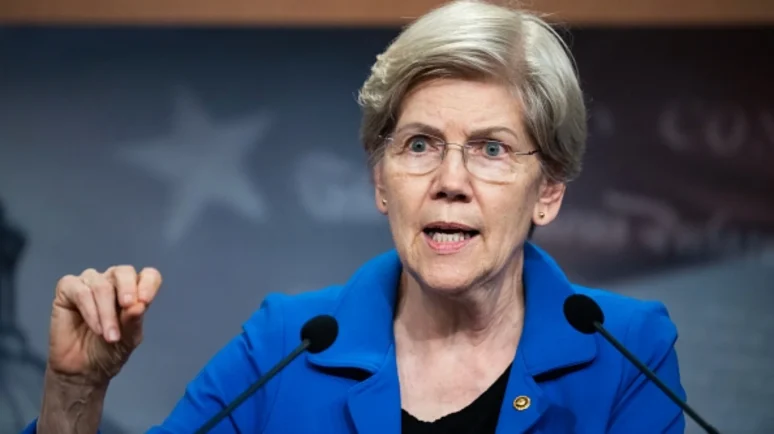
At the same time, the legislation has faced intensifying scrutiny from Democratic critics led by Senator Elizabeth Warren, who warned last week that the bill could weaken investor protections.
During a Senate Banking Committee hearing, Warren argued the CLARITY Act could allow companies to bypass traditional securities regulations by issuing tokenized versions of financial products on blockchain networks.
“Fails to address one of the biggest concerns that retirees face,” Warren said while criticizing the current draft of the legislation.
Warren warned that retirement accounts and pension funds could gain exposure to risky tokenized products without adequate safeguards.
She described the issue as “a catastrophic problem” and argued the legislation could weaken federal and state enforcement powers against crypto fraud.
“My amendment would require investment advisors and other entities in the financial system to develop and implement processes to protect investors from the heightened risk posed by crypto,” Warren said.
Her proposal sought to require financial advisers to adopt additional risk-management procedures before recommending crypto-related investments to clients.
Senator Cynthia Lummis, one of Congress’s strongest crypto advocates, opposed the amendment, arguing it unfairly targeted digital assets.
“This amendment would single out digital assets for a special presumption of noncompliance and create unnecessary litigation risk,” Lummis said during the hearing.
Top Trending Crypto Articles

Kurt Robson is a London-based reporter at CCN, specialising in the fast-moving worlds of crypto and emerging technology. He began his career covering local news in Cornwall after graduating from Falmouth University with First Class Honours in Journalism. There, he cut his teeth on everything from council meetings to missing swans.
He quickly rose through the ranks to become a frontline journalist at several of the UK’s leading national newspapers. Over the years, he has interviewed musicians and celebrities, reported from courtrooms and crime scenes, and secured multiple front-page exclusives.
Following the upheaval of the COVID-19 pandemic, Kurt shifted his focus to technology journalism—just ahead of the AI boom. With a natural curiosity and a trained eye for emerging trends, he has found a new rhythm in reporting on innovation.
At CCN, Kurt's work focuses on the cutting edge of crypto, blockchain, AI, and the evolving digital world. Drawing on his background in people-first reporting and his deep interest in disruptive tech, Kurt delivers stories that are insightful, entertaining, and human-centric.












 CLARITY Act ‘Sets Up Investors To Be Defrauded’: Elizabeth Warren’s Crypto Amendment Fails Senate Vote