Key Takeaways
- BRICS leaders ended their 2026 summit without a proposal for a common currency, instead backing greater interoperability between national payment systems and more settlement in local currencies.
- BRICS Pay and potential CBDC links could create cross-border payment routes that reduce reliance on the dollar without requiring an entirely new currency.
- The strategy targets some of the same problems addressed by FedNow, XRP, and Stellar, but there is currently no evidence that BRICS plans to integrate XRP or XLM.
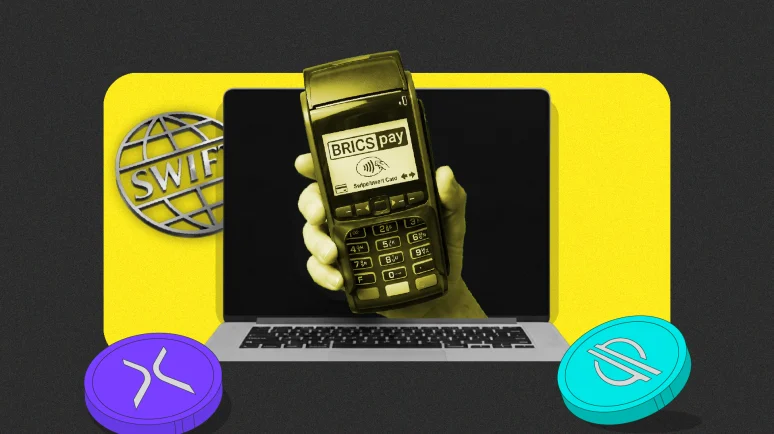
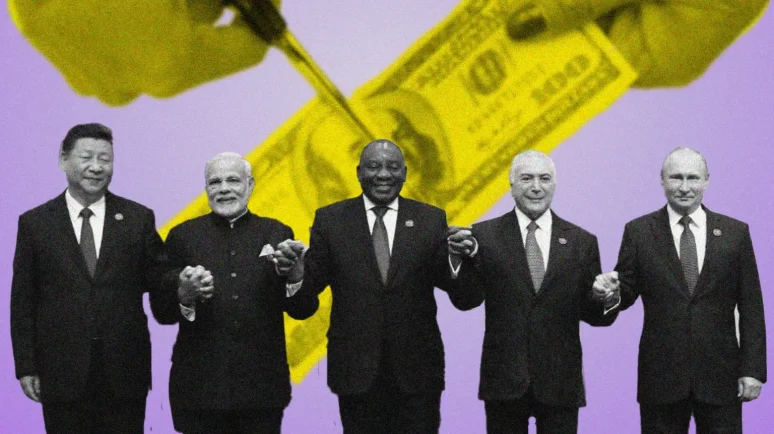
BRICS has moved past years of speculation about creating a common currency and is pursuing something potentially more practical: connecting existing payment systems so members can settle more cross-border transactions directly in national currencies.
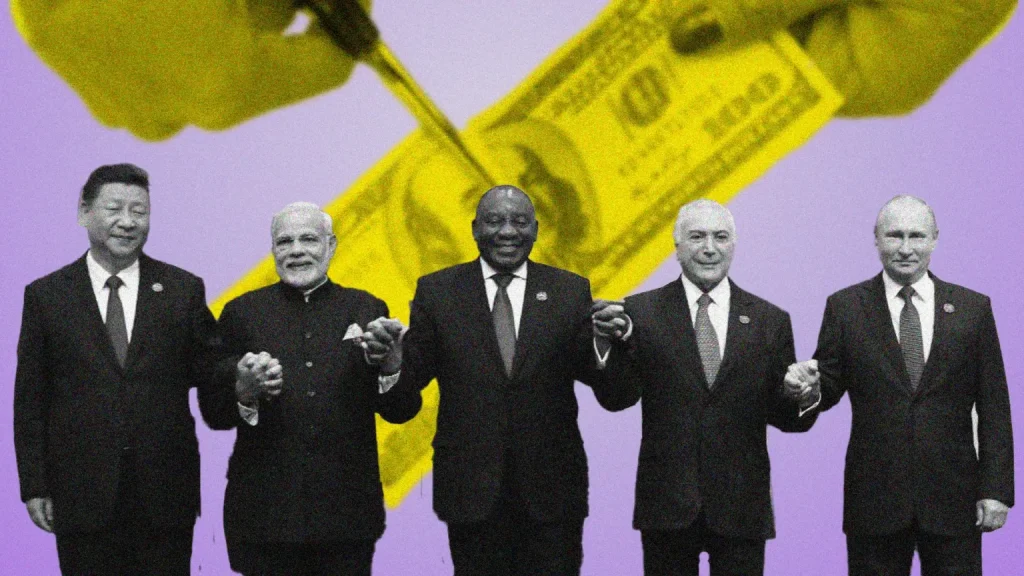
The shift was formalized at the Sept. 12-13 BRICS summit in New Delhi.
India’s Ministry of External Affairs said there was “no proposal in the BRICS for a BRICS currency, as of now.” Instead, the summit declaration instructed the BRICS Payment Task Force to continue studying interoperability between payment and messaging networks and settlements using members’ local currencies.
That changes the mechanics of BRICS’ payment ambitions. Rather than replacing the dollar with a single rival currency, members are trying to reduce the number of transactions that need the dollar in the first place.
BRICS Pay Could Connect a $10T Payments Base
Systems already operating inside BRICS are enormous.
India’s UPI and Brazil’s Pix processed more than $10 trillion combined over the past 18 months, according to the Financial Times. UPI has more than 550 million users, while Pix has over 170 million.
The next step is connecting domestic rails across borders.
BRICS Pay is being developed as an interoperable ecosystem that links national payment infrastructures rather than replacing them. It remains in pilot and phased rollout stages and is not yet a fully operational payment network across all 11 BRICS members.
CBDCs could eventually become another layer. India pushed ahead of the summit for BRICS countries to explore linking their central bank digital currencies for cross-border payments, although technical differences, limited CBDC adoption, and geopolitical tensions remain obstacles.
FedNow Is Moving Toward the Same Cross-Border Problem
The US is also upgrading its payment infrastructure.
The Federal Reserve launched FedNow domestically in 2023, but in 2026 proposed regulatory changes that would allow participating banks to use intermediaries for international transactions, with FedNow handling the US domestic leg.
That would not make FedNow a BRICS Pay equivalent. But both developments point toward a broader shift: domestic instant-payment systems increasingly need ways to communicate across borders.
Where Do XRP and XLM Fit?
This is also the market that XRP and Stellar’s XLM were designed to address.
Ripple positions XRP as a bridge asset that can move value between currencies without requiring institutions to pre-fund every destination. Ripple says XRP-based cross-border transactions can settle in seconds.
Stellar approaches the same problem through its network of anchors and tokenized assets, allowing value to enter in one currency and exit in another. Stellar says its network processed $55.6 billion in payment volume during 2025.
There is, however, no official evidence that BRICS Pay will use XRP, XLM or either blockchain.
In fact, direct interoperability between UPI, Pix, CBDCs and other national systems could reduce the need for an independent bridge asset in some corridors.
The competition is therefore not simply a future BRICS currency versus the dollar. It is increasingly about which infrastructure can connect currencies fastest and cheapest without forcing countries to surrender control over their own money.
fo
Top Trending Crypto Articles
The information provided in this article is for informational purposes only. It is not intended to be, nor should it be construed as, financial advice. We do not make any warranties regarding the completeness, reliability, or accuracy of this information. All investments involve risk, and past performance does not guarantee future results. We recommend consulting a financial advisor before making any investment decisions.

Dr. Guneet Kaur is a senior editor at CCN.com and a Science Fellow at Exponential Science. She is a fintech and blockchain expert with extensive experience in digital finance education, blockchain ecosystems, and cryptocurrency markets. She has worked with global media such as Cointelegraph, as well as education and blockchain platforms, to design and lead strategic content and learning initiatives. As an educator and assessor for top-tier executive programs, she bridges real-world fintech trends with academic insight.
Dr. Kaur is also a published researcher and peer reviewer across fintech and data science journals, including Financial Innovation Journal and International Journal of Big Data Intelligence and Applications. Her work spans data-driven analysis, Web3 innovation, and technical content development. With a strong foundation in both industry and academia, she translates complex financial technologies into practical applications, empowering learners, professionals, and institutions across the rapidly evolving digital finance landscape.












 BRICS Pay Links a Bloc Covering 41% of Global GDP — Is XRP Still Needed for Cross-Border Payments?