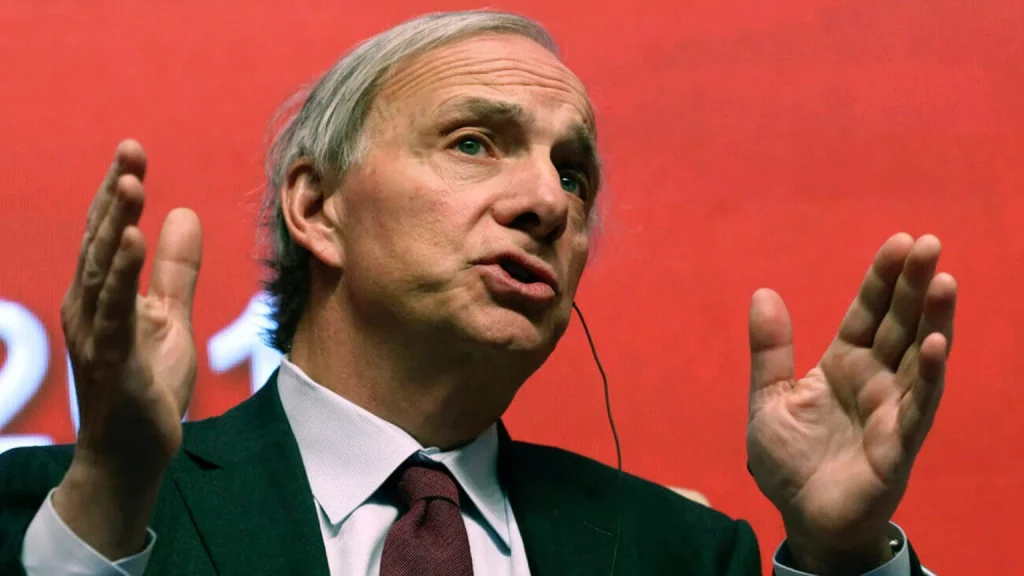
As well as believing a complete financial reset is coming by the end of the decade, researcher Porter Stansberry believes Bitcoin is underpriced. | Source: CCN.
Share
Key Takeaways
Porter Stansberry says Bitcoin is significantly undervalued, claiming his model places fair value near $134,000.
The investor believes mounting debt, inflation, and unsustainable government obligations could trigger a major “monetary reset”.
Stansberry argues that Bitcoin and gold are among the strongest long-term assets.
Bitcoin may be entering its strongest setup in more than a decade, according to researcher Porter Stansberry, who has warned of a large “financial reset” in 2029.
Speaking in a recent interview, Stansberry, author and founder of Stansberry Research, argued that Bitcoin is deeply undervalued relative to global liquidity conditions and could outperform as governments struggle with debt.
Bitcoin Price Undervalued as Capital Floods Into AI Stocks
“My Bitcoin model has an average price of Bitcoin today at $134,000,” Stansberry said on Anthony Pomilano’s podcast.
Adding: “The mispricing today in Bitcoin is as large as I’ve ever seen before in the model.”
At the time of reporting, Bitcoin’s price was $73,390, suggesting significant upside if his framework proves correct.
Stansberry said Bitcoin’s current price weakness relative to AI-linked equities has created what he views as a rare long-term buying opportunity.
“I think we’re seeing a great opportunity today in Bitcoin, certainly the best opportunity I’ve seen in Bitcoin in a decade,” he said.
According to Stansberry, speculative capital that would historically rotate into crypto markets has instead concentrated in large-cap technology stocks.
“All of the fast money has gone into tech stocks, and it had to come out of somewhere,” he said
He pointed to Nvidia and memory-chip companies as examples of where hedge fund positioning has become crowded.
Stansberry argued that Bitcoin’s price behaves differently from gold’s because the cryptocurrency is more closely tied to monetary liquidity.
“Bitcoin will react faster to monetary intervention.”
He contrasted that with gold, which he said is more closely linked to total global credit expansion.
“What are all the central banks buying in the last four years? They’re all buying gold,” he said.
“Clearly the global financial system still is anchored to gold, whereas Bitcoin has largely become a speculative asset that’s very correlated to money.”
However, Stansberry said Bitcoin and gold prices could both benefit from the next phase of the global financial cycle.
“If you’re interested in an asset that will definitely survive the reset, my two top choices would be gold and Bitcoin — and timber,” he said.
Why Stansberry Thinks a 2029 Financial Reset Is Coming
A major part of Stansberry’s thesis centers around what he calls a coming “Fourth Turning.”
This historical theory, popularized by authors William Strauss and Neil Howe, argues that societies move through roughly 80-year cycles culminating in periods of crisis and restructuring.
“All of human history rolls in 80-year cycles,” Stansberry said.
Adding: “These fourth turnings typically take 20 years, and unfortunately these fourth turnings tend to end in an ultimate crisis where everything gets reset.”
He argued the US and broader Western economies are approaching a breaking point driven by excessive debt.
“It just occurs to me that all the Western democracies are going to need a massive monetary reset, because we can’t afford all the promises that we’ve made,” he said.
“This fourth turning is going to evolve and then ultimately culminate in a giant global financial monetary reset.”
Stansberry specifically pointed to Social Security and government deficits as catalysts that could force policymakers into drastic action by the end of the decade.
“My prediction is that whether Social Security runs out of money by 2031 or by 2033, by 2029 it will be so obvious that it is going to happen that that will lead to this climactic situation where the government has to decide that it’s going to default.”
Stansberry said he believed that default will lead to a “restructuring of the entire Western economy.”
The Case for Hard Assets
As well as claiming Bitcoin’s price was undervalued, Stansberry repeatedly argued that official inflation figures significantly understate the real erosion in purchasing power experienced by households.
“Inflation for the last decade on average in American cities has been 11%,” he said.
He said this dynamic has incentivized leveraged speculation while penalizing wage earners and savers.
“If you know that the real underlying rate of inflation in US cities is between 8% and 12% a year, and you know that you can borrow large amounts of money for 5%, what’s the rational economic actor do?” Stansberry said.
Adding: “You borrow as much money as you can, and you buy the assets that are inflating.”
The author argued that years of monetary expansion have distorted financial markets and social behavior.
“If you use their money, you will be their slave,” he said.
Adding: “They’re not using money, they’re using currency, and they print it… they’re going to abuse it until they collapse the system.”
Stansberry added that the current environment resembles historic turning points in the global monetary order.
“We are approaching a crisis that is the most obvious crisis we’ve had in America since 1971, and everyone should see it coming — and no one does,” he said.
Bitcoin, Gold and the ‘Permanent Portfolio’
Alongside Bitcoin and gold, Stansberry said investors should focus on long-duration assets capable of surviving inflationary cycles.
He described a modernized version of the so-called “permanent portfolio,” originally popularized by libertarian investor Harry Browne, which spreads capital across stocks and hard assets.
Rather than holding long-dated government bonds, however, Stansberry said he now favors property-and-casualty insurers because they actively manage fixed-income exposure.
On equities, he said investors should prioritize “Lindy” businesses — long-standing companies that have survived multiple economic cycles.
“Who’s the oldest semiconductor company in the United States? Texas Instruments,” he said.
“Who’s the oldest pharmaceutical company? Merck.”
But despite his broader macro concerns, Stansberry reserved some of his strongest conviction for Bitcoin.
Kurt Robson is a London-based reporter at CCN, specialising in the fast-moving worlds of crypto and emerging technology. He began his career covering local news in Cornwall after graduating from Falmouth University with First Class Honours in Journalism. There, he cut his teeth on everything from council meetings to missing swans.
He quickly rose through the ranks to become a frontline journalist at several of the UK’s leading national newspapers. Over the years, he has interviewed musicians and celebrities, reported from courtrooms and crime scenes, and secured multiple front-page exclusives.
Following the upheaval of the COVID-19 pandemic, Kurt shifted his focus to technology journalism—just ahead of the AI boom. With a natural curiosity and a trained eye for emerging trends, he has found a new rhythm in reporting on innovation.
At CCN, Kurt's work focuses on the cutting edge of crypto, blockchain, AI, and the evolving digital world. Drawing on his background in people-first reporting and his deep interest in disruptive tech, Kurt delivers stories that are insightful, entertaining, and human-centric.