Key Takeaways
- BlackRock has cut the minimum Bitcoin-to-IBIT in-kind conversion from $25 million to $1 million, a 96% reduction.
- IBIT has already processed more than $5 billion of direct Bitcoin-to-ETF conversions, but those swaps are not the same as fresh ETF inflows.
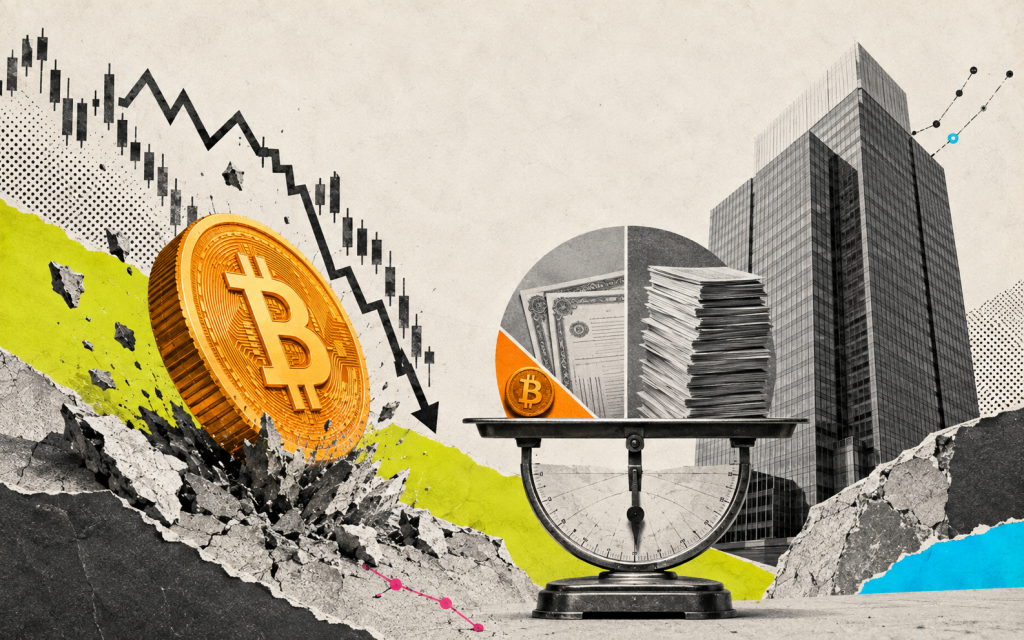
- Bitcoin has rebounded toward $78,000–$80,000 after falling more than 50% from its 2025 peak, making the investment case stronger on some measures but far from risk-free.
BlackRock has made it dramatically easier for wealthy Bitcoin holders to move their coins into Wall Street’s largest spot Bitcoin ETF.
The asset manager lowered the minimum size for an in-kind Bitcoin conversion into its iShares Bitcoin Trust (IBIT) from $25 million to just $1 million, a 96% reduction.
BlackRock Head of Digital Assets Robbie Mitchnick said IBIT has already processed more than $5 billion of Bitcoin-to-ETF swaps, up from around $3 billion in October.
But does BlackRock’s move mean Bitcoin (BTC) itself is a buy?
Not necessarily.
BlackRock’s $1M Change Is Not a Bitcoin Buy Signal
The first investment principle is to separate market infrastructure from valuation.
BlackRock has not lowered the price investors need to pay for IBIT shares. Retail investors can still buy a single share through a brokerage account.
Instead, the $1 million threshold applies to in-kind conversions, in which eligible large holders transfer Bitcoin into the ETF structure and receive IBIT shares, rather than selling BTC for cash first. The SEC allowed spot crypto ETFs to use in-kind creations and redemptions in July 2025.
The change makes ETF custody available to a much wider pool of large holders and institutions, but it does not mean BlackRock expects Bitcoin to rise.
It is also important not to treat the $5 billion in conversions as $5 billion of new demand. Much of that Bitcoin was already owned. The holder is changing how the exposure is held rather than necessarily buying additional BTC.
Is Bitcoin Cheap After Falling From $126K?
The second principle is price versus risk.
Bitcoin recently traded in the $78,000–$80,000 range after briefly crossing $81,000. That remains roughly 38% below its October 2025 record above $126,000, even after a rally of more than 20% in a week.
Buying an asset after a 38% drawdown gives an investor a considerably lower entry price than buying at the peak, but a lower price does not automatically mean it is undervalued.
Bitcoin previously fell more than 50% from that record, showing how much volatility investors may need to tolerate.
Bernstein Eyes $150K Bitcoin by Mid-2027, But Trims Strategy Stock Target
Bernstein analysts expect Bitcoin to reach approximately $125,000 by the end of 2026, set a new high of $150,000 by mid-2027, and hit a cycle peak of around $300,000 in 2029 under their base-case outlook.
Under a bull-case scenario where accelerating currency debasement drives stronger institutional inflows, the firm projects that Bitcoin could surge to $200,000 by mid-2027 and $500,000 by 2029, while maintaining its long-term prediction of $1 million by the end of 2033.
Alongside its updated crypto roadmap, Bernstein maintained its “Outperform” rating on Strategy (MSTR) but trimmed its price target from $450 to $350, citing a revised timeline for the Bitcoin cycle and increased equity dilution from recent share s
Bitcoin ETF Demand Is Improving Again
There is, however, a stronger fundamental argument than BlackRock’s threshold change alone.
US spot Bitcoin ETFs recorded nearly $2 billion of inflows across five consecutive trading days last week, their strongest run in months. BlackRock’s IBIT alone attracted roughly $1 billion during the period.
IBIT now holds about $60.5 billion in net assets, according to BlackRock, despite remaining down 9.7% for 2026 as of Aug. 25.
That combination tells a more useful story: institutional demand is recovering while Bitcoin remains well below its record high.
So, Is Bitcoin (BTC) a Buy Right Now?
For a long-term investor, the stronger approach is not to ask whether $79,000 is the perfect entry price, because that cannot be known in advance.
The more useful questions are whether the investor can tolerate another 30%–50% decline, whether Bitcoin fits within a diversified portfolio, and whether the holding period is measured in years rather than weeks.
After a 20%-plus weekly rally, putting an entire allocation into Bitcoin at once carries obvious timing risk. Dollar-cost averaging and predetermined position sizing reduce the importance of getting today’s price exactly right.
BlackRock cutting its threshold from $25 million to $1 million strengthens Bitcoin’s institutional infrastructure. Combined with returning ETF inflows and a price still far below the 2025 peak, it improves the investment case.
But it is not BlackRock telling investors to buy Bitcoin at $79,000. The investment decision still comes down to expected return, downside tolerance, position size, and time horizon.
Top Trending Crypto Articles
The information provided in this article is for informational purposes only. It is not intended to be, nor should it be construed as, financial advice. We do not make any warranties regarding the completeness, reliability, or accuracy of this information. All investments involve risk, and past performance does not guarantee future results. We recommend consulting a financial advisor before making any investment decisions.

Dr. Guneet Kaur is a senior editor at CCN.com and a Science Fellow at Exponential Science. She is a fintech and blockchain expert with extensive experience in digital finance education, blockchain ecosystems, and cryptocurrency markets. She has worked with global media such as Cointelegraph, as well as education and blockchain platforms, to design and lead strategic content and learning initiatives. As an educator and assessor for top-tier executive programs, she bridges real-world fintech trends with academic insight.
Dr. Kaur is also a published researcher and peer reviewer across fintech and data science journals, including Financial Innovation Journal and International Journal of Big Data Intelligence and Applications. Her work spans data-driven analysis, Web3 innovation, and technical content development. With a strong foundation in both industry and academia, she translates complex financial technologies into practical applications, empowering learners, professionals, and institutions across the rapidly evolving digital finance landscape.