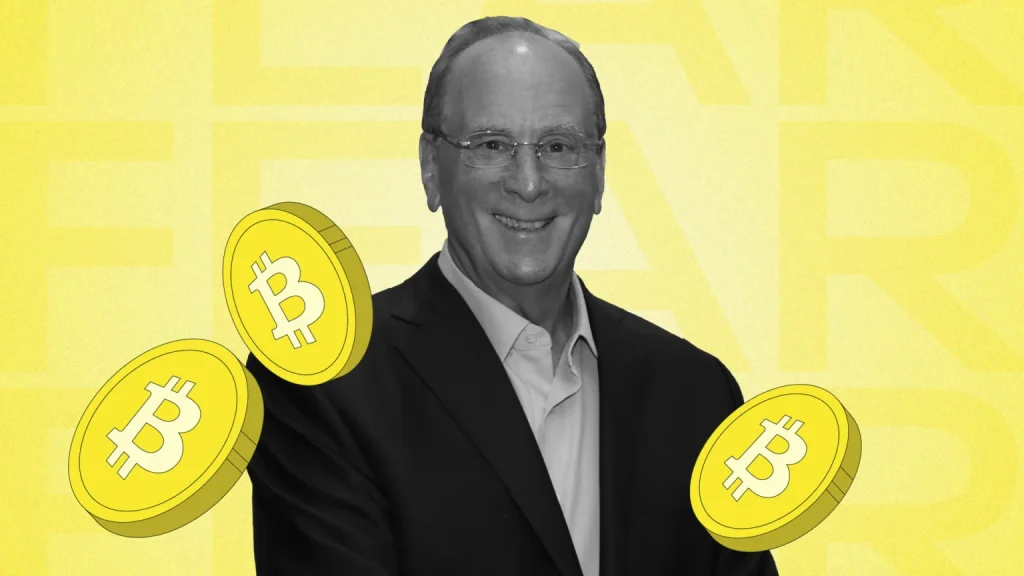
Is Bitcoin a 'Buy' Right Now? BlackRock Slashes ETF Swap Minimum 96% From $25M to $1M
Share
Key Takeaways
BlackRock’s IBIT has processed more than $5 billion of direct Bitcoin-to-ETF conversions after lowering the minimum transaction size from $25 million to $1 million.
Separate spot ETF inflows have strengthened the bullish institutional-demand argument.
Ran Neuner said Bitcoin’s short-squeeze-driven jump had developed into a healthier rally.
BlackRock has helped move more than $5 billion of directly held Bitcoin into its iShares Bitcoin Trust (IBIT), strengthening Wall Street’s grip on an asset originally designed to operate outside the traditional financial system.
The shift allows large holders to exchange BTC for ETF shares without first selling their coins for cash.
Bitcoin was trading near $79,000 on Wednesday after briefly reaching a three-month high above $81,000.
The move comes as analysts have predicted that Bitcoin could reach $100,000 or more if several bullish catalysts continue.
Try Our Recommended Crypto Exchanges
Sponsored
Disclosure
We sometimes use affiliate links in our content, when clicking on those we might receive a commission at no extra cost to you. By using this website you agree to our terms and conditions and privacy policy.
BlackRock is increasingly targeting investors who already own Bitcoin, rather than limiting IBIT’s growth to customers purchasing exposure with cash.
According to Bloomberg, holders have converted more than $5 billion of BTC into shares of BlackRock’s spot Bitcoin ETF.
That total has climbed from over $3 billion in October 2025, while BlackRock lowered the minimum transaction size from $25 million to $1 million in July.
The change allows a wider group of wealthy individuals, family offices and institutional investors to place existing Bitcoin holdings inside a traditional investment product.
Rather than selling their coins and subsequently buying IBIT, eligible holders can contribute BTC through an authorized participant and receive a corresponding value of ETF shares.
Before the decision, US spot Bitcoin and Ethereum funds were generally required to use cash to create shares.
For investors, the transaction changes how their Bitcoin exposure is held without necessarily changing its value at the point of conversion.
It may also delay an immediate capital gains charge because the BTC is exchanged rather than sold for cash.
However, the precise tax consequences depend on the investor and jurisdiction, meaning the process should not automatically be described as tax-free.
“It’s going to keep growing because we keep expanding the access,” BlackRock digital assets chief Robbie Mitchnick told Bloomberg.
Mitchnick said kidnappings and failures involving crypto custody had made some large holders reconsider the risks of personally controlling their coins.
BlackRock markets IBIT partly on its ability to reduce the operational difficulties associated with holding Bitcoin directly.
The fund had more than $60 billion in net assets as of Aug. 25.
Could BlackRock’s Bitcoin Shift Help BTC Reach $100K?
Industry commentators have presented BlackRock’s $5 billion milestone as evidence that Bitcoin whales are moving deeper into Wall Street without liquidating their exposure.
Coin Bureau described the development as a route through which major holders could enter IBIT “without selling a single coin.”
Meanwhile, Bloomberg ETF analyst Eric Balchunas highlighted the $5 billion total and BlackRock’s lower conversion threshold.
Balchunas also pointed to a broader change in ETF trading.
He said State Street’s SPDR Gold Shares (GLD) and BlackRock’s IBIT had returned to the 10 most-traded US ETFs, ranking third and seventh, respectively.
This pushed some semiconductor funds down the list after they dominated during the summer.
He described the move as another indication that the “debasement trade” was beginning to replace some of the market’s AI enthusiasm.
GLD is not a BlackRock product. State Street operates it, while BlackRock’s principal gold ETF is the iShares Gold Trust (IAU).
Could Bitcoin’s Q4 Record Push It to $100K?
Beyond BlackRock’s Bitcoin ETF push, Motley Fool analyst Dominic Basulto has outlined two additional catalysts that could send Bitcoin back above $100,000 before the end of 2026.
In a recent analysis, Basulto pointed first to Bitcoin’s historically strong fourth-quarter performance.
Data dating back to 2013 show that Bitcoin has returned an average of 77% in the final three months of the year.
If Bitcoin entered October near $70,000 and matched that median return, it would finish the year at approximately $103,600.
From its current price near $79,000, BTC needs a roughly 27% gain to reclaim $100,000.
However, the historical figures offer no guarantee that the pattern will repeat.
Bitcoin fell 23% during the fourth quarter of 2025, one of its weakest year-end performances on record.
Basulto’s second potential catalyst involves capital rotating away from AI investments.
Citing longtime crypto investor Arthur Hayes, the analyst argued that the bursting of an AI bubble could redirect investor attention and money toward Bitcoin.
That theory broadly supports Eric Balchunas’ observation that the gold-and-Bitcoin “debasement trade” is beginning to challenge AI-focused investments.
Ran Neuner Says Bitcoin Rally Could Go Higher
In a Crypto Banter video, Neuner argued that Bitcoin’s rally had begun as a short squeeze but was developing into a more sustainable advance.
The analyst said open interest and leverage had fallen after bearish positions were liquidated.
“What started off as a short squeeze is now a healthy rally,” Neuner said.
The analyst cited historical performance following Bitcoin weekly candles of at least 20%.
According to the figures shown during the broadcast, BTC rose by an average of 3.5% after one day, 8.3% after seven days, and 36.5% after eight weeks.
Applying that final figure mechanically to a Bitcoin price of roughly $79,000 would produce a price near $108,000.
However, Neuner did not issue a direct $100,000 forecast.
Neuner instead highlighted Bitcoin’s move above its 200-day moving average, a bullish moving average convergence divergence (MACD) crossover.
Neuner also linked the wider “debasement trade” to Treasury Secretary Scott Bessent’s discussion of using the Treasury General Account to support additional long-dated bond buybacks.
He said the prospect of greater liquidity and a weaker dollar will dramatically help both Bitcoin and gold.
Disclaimer:
The information provided in this article is for informational purposes only. It is not intended to be, nor should it be construed as, financial advice. We do not make any warranties regarding the completeness, reliability, or accuracy of this information. All investments involve risk, and past performance does not guarantee future results. We recommend consulting a financial advisor before making any investment decisions.
Kurt Robson is a London-based reporter at CCN, specialising in the fast-moving worlds of crypto and emerging technology. He began his career covering local news in Cornwall after graduating from Falmouth University with First Class Honours in Journalism. There, he cut his teeth on everything from council meetings to missing swans.
He quickly rose through the ranks to become a frontline journalist at several of the UK’s leading national newspapers. Over the years, he has interviewed musicians and celebrities, reported from courtrooms and crime scenes, and secured multiple front-page exclusives.
Following the upheaval of the COVID-19 pandemic, Kurt shifted his focus to technology journalism—just ahead of the AI boom. With a natural curiosity and a trained eye for emerging trends, he has found a new rhythm in reporting on innovation.
At CCN, Kurt's work focuses on the cutting edge of crypto, blockchain, AI, and the evolving digital world. Drawing on his background in people-first reporting and his deep interest in disruptive tech, Kurt delivers stories that are insightful, entertaining, and human-centric.