Key Takeaways
- Ant Group filed several Web3 and blockchain-related trademarks in Hong Kong in June 2025.
- The filings, revealed this month, include “Antcoin,” prompting speculation of a token-related project.
- The news comes weeks after Beijing halted stablecoin initiatives by Ant Group and JD.com.
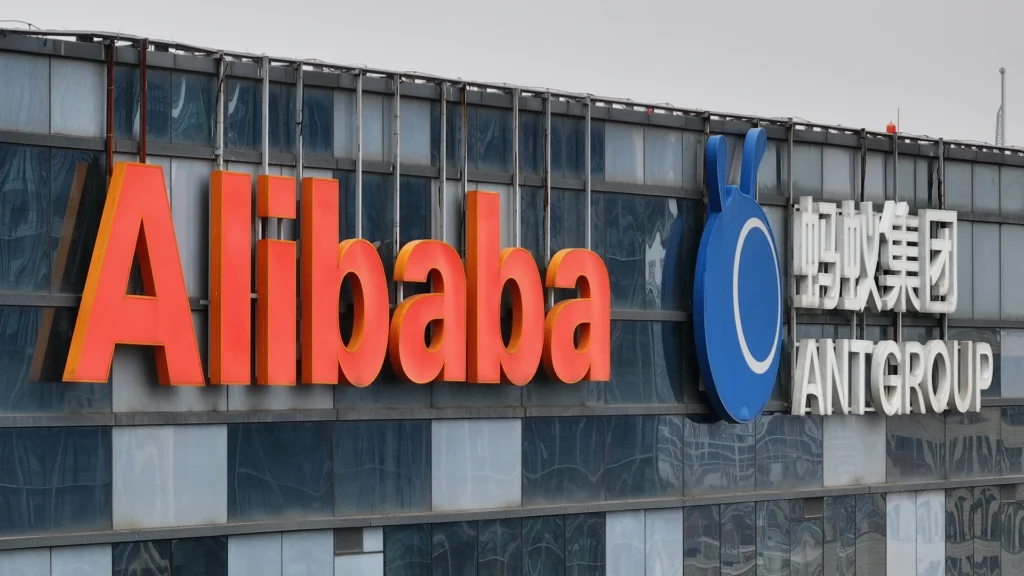
Ant Group, the Alibaba-owned fintech giant—long synonymous with China’s financial innovation—seems to be tiptoeing back into Web3 through a series of trademarks in Hong Kong tied to blockchain, stablecoins, and digital assets.
Among them, one name immediately drew attention: “Antcoin.”
Antcoin Filings Surface
Ant Group’s “Antcoin” trademark filing — made quietly in June 2025 but only spotted recently in Hong Kong’s Intellectual Property Department database — is drawing fresh attention across the region’s fintech and crypto circles.
The filing covers a wide scope, from digital asset issuance and stablecoin services to custody and settlement systems, prompting speculation that the Alibaba-backed financial giant may be laying early groundwork for a tokenized ecosystem.
While Ant Group has not confirmed any plans for a token, the “Antcoin” trademark has triggered widespread curiosity across Chinese tech and crypto circles.
The application is part of a series of moves by other mainland fintechs — including JD.com — that have been testing stablecoin pilots in Hong Kong, which launched its new digital asset licensing framework in August.
Whether those plans will advance is another matter. With Beijing tightening control over private digital money, it’s unclear if “Antcoin” will ever progress beyond a trademark.
Beijing’s Hardline
In early October, as U.S.–China trade tensions flared, Chinese regulators moved to stop the country’s biggest tech firms, including Ant International, from wading any deeper into digital currency.
The People’s Bank of China (PBoC) and the Cyberspace Administration of China (CAC) ordered Ant Group and JD.com to suspend their stablecoin initiatives in Hong Kong, according to Financial Times.
Both firms had been preparing to participate in the city’s new stablecoin pilot program — part of its broader plan to position itself as Asia’s regulated crypto hub.
Beijing’s concern was straightforward: if major private companies began issuing tokens that acted like money, it could undermine the central bank’s authority and complicate the rollout of the digital yuan (e-CNY).
Hong Kong’s Monetary Authority (HKMA) had just rolled out the licensing framework for fiat-backed stablecoins, creating space for token issuers to operate legally.
But Beijing’s message was unmistakable — monetary sovereignty stops for no pilot program.
To some observers, that context makes the “Antcoin” filing look less like a coincidence and more like a snapshot of a moment when China’s fintech giants were still testing boundaries, just before the state stepped in to draw them again.
Ant Group’s Web3 Timeline
Ant Group’s blockchain ambitions aren’t new.
The company began exploring distributed ledger technology back in 2016, when it launched AntChain, its enterprise-focused blockchain network.
By 2020, AntChain was processing billions in cross-border trade settlements — all without a native token, in compliance with mainland policy.
In 2021, Ant briefly entered the NFT market through Alipay’s “digital collectibles”, a workaround to avoid calling them crypto assets.
By 2023, Ant had evolved into real-world asset tokenization, unveiling ZAN, a suite that let financial institutions issue and manage tokenized RWAs.
Its progress continued through 2025, with $8.4 billion in Chinese renewable energy assets tokenized via AntChain, powering over 15 million devices and raising $42 million for energy infrastructure projects.
In June 2025, CCN reported that that Ant International sought stablecoin licenses in Singapore, Hong Kong, and Luxembourg — signaling plans for cross-border expansion.
Top Trending Crypto Articles

Prashant Jha is a seasoned crypto journalist based in Delhi, India, with a Bachelor’s Degree in Computer Science Engineering. Passionate about the evolving world of blockchain and cryptocurrencies, he has been a dedicated voice in the industry since 2018. Prashant’s expertise lies in regulatory reporting, where he unravels complex legal and financial developments with clarity and precision. Before joining CCN in 2024, he honed his craft at Cointelegraph, establishing himself as a trusted name in crypto journalism.
His coverage spans major industry events, including the high-profile collapses of FTX, Three Arrows Capital (3AC), and LUNA, offering readers insightful analyses of their regulatory and market implications. Prashant’s technical background enables him to bridge the gap between intricate blockchain technology and its real-world applications, making his work accessible to novices and experts.
Beyond his professional pursuits, Prashant is an avid music enthusiast, often exploring diverse genres to unwind. A sports lover, he has a particular passion for cricket and frequently engages in discussions about the game. His multifaceted interests and sharp journalistic instincts make him a valuable contributor to CCN, where he continues shaping the crypto landscape's narrative.