Utility-driven altcoins power real-world applications in supply chains, advertising, storage, and Web3 data indexing.
Market caps remain modest compared to their enterprise adoption and infrastructure relevance.
HBAR’s rally highlights growth potential, while GRT, VET, BAT, and FIL remain deeply undervalued.
Long-term prospects strengthen as Web3 adoption expands and market focus shifts from hype to utility.
From powering supply chains to securing Web3 data, cryptocurrencies are quietly reshaping industries worldwide, including underrated altcoins.
Cryptocurrencies now reach far beyond Bitcoin (BTC) and Ethereum (ETH), with altcoins stepping in to solve real-world challenges through practical blockchain solutions.
In 2025, a few stand out for their quiet strength: The Graph (GRT), Hedera (HBAR), VeChain (VET), Basic Attention Token (BAT), and Filecoin (FIL).
These tokens combine advanced technology with meaningful adoption, powering industries from supply chain management with Walmart and BMW to enterprise blockchain initiatives backed by Google and IBM.
As shown further in this article, their market caps range from $225 million for BAT to $3.2 billion for FIL, keeping them outside the attention of short-term hype coins despite solid fundamentals.
Each serves a clear utility, indexing blockchain data, enabling high-speed enterprise transactions, securing global supply chains, reinventing digital advertising, and decentralizing cloud storage.
This article explores their unique utilities, from data indexing to secure storage, and why they’re poised for growth as Web3 and enterprise solutions expand. All statistics mentioned are as of August 1, 2025.
Coin-Specific Utilities and Real-World Applications
Imagine this as reality today: Uniswap seamlessly pulls trading data through GRT, Walmart tracks every step of its food supply with VET, and Brave rewards users with BAT for viewing ads.
These altcoin use cases show how cryptocurrencies are evolving into real problem-solvers. GRT, HBAR, VET, BAT, and FIL all have strong, real-world applications, which this article explores in detail, highlighting how each project moves beyond speculation.
1. The Graph (GRT): Web3 Data Indexing for DeFi and NFTs
GRT acts as Web3’s data indexing backbone, helping developers access blockchain information efficiently through subgraphs for decentralized finance (DeFi) and non-fungible tokens (NFT) platforms.
The GRT token will soon fly. These are quiet steps. 🚀🚀🚀🚀🚀🚀
Price and market cap: $0.091 per GRT with a market cap of $958.9 million
Fully diluted valuation: $994.2 million
Circulating supply: 10.4 billion GRT
1-year performance: Down 48.4%
Core utility: Indexes DeFi and NFT data for apps like Uniswap and Aave by organizing complex data into subgraphs, powering over 40,000 subgraphs across Ethereum and other chains.
GRT’s Relevance and Use Cases
GRT is essential for decentralized application (dApps) performance and blockchain analytics. For example, Uniswap uses GRT to fetch real-time trading data, while Aave tracks lending pools for DeFi services. DeFiLlama relies on GRT to aggregate DeFi metrics across protocols, providing accurate dashboards for total value locked (TVL) and on-chain activity.
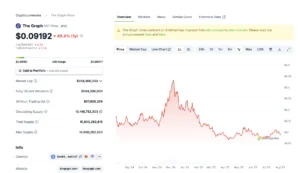
The Graph (GRT): one-year performance | Source: Coingecko
Despite its critical role, GRT attracts less retail attention than speculative coins, marking it as undervalued. As Web3 adoption grows, GRT’s value could rise, setting the stage for enterprise-focused altcoins like Hedera.
2. Hedera (HBAR): Enterprise DLT for Tokenized Assets
Hedera Hashgraph aims to deliver fast, low-cost transactions on its (Directed Acyclic Graph) DAG-based network, attracting enterprises and institutions.
As institutions continue to explore the benefits of #tokenization, features such as cost predictability and token associations will become increasingly important. #RWAhttps://t.co/sQCtW9wREV
HBAR powers this enterprise-grade network, enabling high-speed performance with over 10,000 transactions per second (TPS).
Price and market cap: $0.245 per HBAR with a market cap of $10.45 billion
Fully diluted valuation: $12.32 billion
Circulating supply: 42.39 billion HBAR
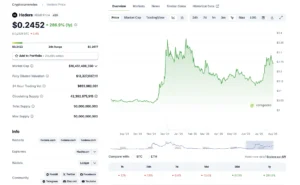
1-year performance: Up 286.9
Core utility: Supports payments, supply chain, and tokenized asset operations.
HBAR’s Relevance and Use Cases
Hedera is backed by leading global companies and powers enterprise blockchain solutions. The adoption of IBM and Boeing highlights its role in supply chain management and finance. Other use cases include digital currency interoperability, AI-driven verifiable compute, and tokenized assets, with backing from institutions like Google, NASA, and Deutsche Telekom.
The network underpins secure data exchange, cloud integrations, and micropayment systems, positioning Hedera as a trust layer for mission-critical enterprise applications.
3. VeChain (VET): Supply Chain and ESG Blockchain Solution
VeChain applies blockchain to global supply chains, using VET to ensure transparency, confirm product origins, and prevent counterfeiting.
We recently launched our whitepaper, co-developed with Boston Consulting Group, detailing our approach to solving global #sustainability challenges with #blockchain.
Price and market cap: $0.023 per VET with a market cap of $1.99 billion
Fully diluted valuation: $1.99 billion
Circulating supply: 85.9 billion VET
1-year performance: Down 12.5%
Core utility: Tracks goods, prevents counterfeiting, and supports Environmental, Social, and Governance (ESG) efforts.
VeChain’s Relevance and Use Cases
Over 100 enterprise partners rely on VET against counterfeiting. Walmart China tracks food products, while BMW verifies car parts globally. VeChain use cases extend to many other solutions that are focused on environmentally friendly practices, from tracking battery lifecycles and recycling efforts to supporting sustainable fashion.
VET’s achievements are overshadowed by flashier tokens, positioning it as a top undervalued altcoin 2025 contender. Its enterprise focus connects to BAT’s mission to disrupt digital advertising.
4. Basic Attention Token (BAT): Privacy Token for Digital Ads
BAT bypasses traditional ad middlemen, using a decentralized, privacy-preserving incentive tokenization system called Boomerang Protocol. As a result, BAT provides a user-driven model. It powers the Brave browser ecosystem, rewarding users for attention and giving advertisers privacy-focused campaigns.
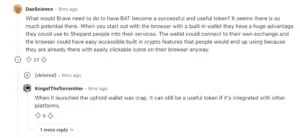
Do you think Brave browser growth going forward will cause BAT price appreciation?: BAT discussion on Reddit | Source: Reddit
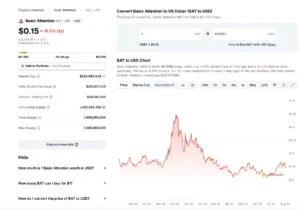
Price and market cap: $0.15 per BAT with a market cap of $224.9 million
Fully diluted valuation: $225.6 million
Circulating supply: 1.49 billion BAT
1-year performance: Down 19%
Core utility: Enables ad rewards, creator payments, and privacy-first campaigns.
BAT’s Relevance and Use Cases
Offers a Web3 alternative to traditional ad networks, emphasizing privacy.
BAT’s growing user base of tens of millions contrasts with its low market cap, marking it undervalued. Its privacy focus bridges to Filecoin’s decentralized storage solutions.
5. Filecoin (FIL): Decentralized Storage for the Data Economy
Filecoin offers a Web3 alternative to centralized cloud providers by delivering secure, permanent, and verifiable storage. FIL is a decentralized storage network that rivals traditional services like Amazon Web Services (AWS), catering to Web3 and NFT data needs.
Filecoin is approaching the lower support line of a descending triangle pattern on the weekly timeframe👀
A break above the MA 50 could signal a bullish reversal, with a potential rally toward $4.30, $6.40, $8.40, $11.40, and $16.50🔥 pic.twitter.com/iqG2OadK1n
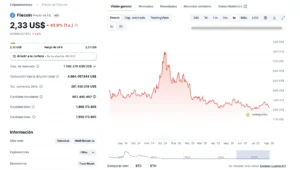
Price and market cap: $2.33 per FIL with a market cap of $1.59 billion
Fully diluted valuation: $4.56 billion
Circulating supply: 683 million FIL
1-year performance: Down 43.9%
Core utility: Powers decentralized storage for Web3, NFTs, and enterprise archives, with over 1 exabyte secured on IPFS and NFT marketplaces.
FIL’s Relevance and Use Cases
Relevance: Competes with AWS and Google Cloud in a decentralized model. The Decentralized Physical Infrastructure Networks (DePIN) movement is reshaping internet infrastructure with decentralized storage, computing, and telecom solutions. Filecoin leads this shift, with 3,000 providers contributing 7.8 exabytes of storage and 2.1 exabytes of data already connected.
FIL’s technical strength and lack of retail hype make it undervalued. Its Web3 role ties into the broader undervaluation of these altcoins.
Undervaluation and Market Status
Bitcoin’s market dominance fell below 60% in July 2025, pointing to a possible altcoin resurgence that could favor utility-driven tokens.
Despite this shift, The Graph, Hedera, VeChain, Basic Attention Token, and Filecoin remain overlooked.
Their fundamentals are strong, and institutional adoption is clear, yet the broader market continues to chase short-term hype and speculative meme tokens.
These coins are undervalued for three main reasons.
Investor attention favors quick gains: Retail capital flows toward coins that spike fast, leaving utility tokens underbought despite delivering real solutions.
Market narratives lag adoption: Enterprise integrations like Walmart China using VeChain or Brave driving BAT rewards develop quietly compared to memecoin headlines.
Bearish spillovers from broader crypto cycles: When macro sentiment turns cautious, even tokens with working products and partnerships face price compression.
Their market caps, from close to $225 million (BAT) to $10.45 billion (HBAR), highlight this gap between technological relevance and market recognition.
Price action reflects the story: HBAR has surged dramatically in a year, showing the upside when attention shifts, while GRT and FIL remain deep in retracement despite powering essential Web3 infrastructure.
These dynamics set up a long-term opportunity. As Web3, decentralized storage, and enterprise blockchain adoption expand, tokens with real-world use cases are best positioned to capture value once market focus shifts from speculation to utility.
Risks and Future Outlook
Crypto is still a volatile and crowded market. While HBAR has yet to make a mark in public DeFi, VET faces competition from other supply chain projects. Meanwhile, GRT, BAT, and FIL operate in a crowded Web3 field.
Uniswap, IBM, Walmart, Brave, and IPFS already use these networks, showing they have staying power. With Web3 and enterprise blockchain use expected to rise in 2025, these altcoins are in a good position to benefit.
HBAR’s $408 million ecosystem fund and VET’s 100+ enterprise deals add momentum, while GRT, BAT, and FIL ride the broader Web3 wave.
The market still demands careful research and caution, but these coins look like real contenders for long-term growth.
Conclusion
Altcoins with clear real-world applications are reshaping the 2025 crypto market. The Graph, Hedera, VeChain, Basic Attention Token, and Filecoin provide the backbone for industries that demand reliability, data access, and privacy. They solve problems beyond trading charts, powering supply chains, decentralized storage, and privacy‑first advertising.
Despite strong fundamentals, these tokens remain undervalued and overlooked, with price action lagging behind their enterprise adoption. HBAR’s sharp rally shows what can happen when attention shifts, while GRT and FIL still trade well below their potential despite essential Web3 roles.
As Web3 and enterprise blockchain adoption grow, tokens with utility-driven solutions are likely to stand out. Their evolution from speculative assets into functional infrastructure suggests that their long-term relevance is only beginning to surface.
Which industries will adopt these altcoins in 2025?
Enterprises in supply chain, digital advertising, data indexing, and decentralized storage are integrating these tokens into operations.
Why is Hedera (HBAR) gaining attention from institutions?
HBAR’s high-speed, low-fee transactions and enterprise backing make it attractive for tokenized assets and secure data exchanges.
How does Filecoin (FIL) differ from traditional cloud providers?
FIL provides decentralized, verifiable storage for NFTs and enterprise data, avoiding single points of failure common in centralized systems.
Can Basic Attention Token (BAT) generate income for users?
Yes, users earn BAT by opting into Brave’s privacy-focused ads, turning attention into a measurable reward.
Disclaimer:
The information provided in this article is for informational purposes only. It is not intended to be, nor should it be construed as, financial advice. We do not make any warranties regarding the completeness, reliability, or accuracy of this information. All investments involve risk, and past performance does not guarantee future results. We recommend consulting a financial advisor before making any investment decisions.
Dr. Lorena Nessi is an award-winning journalist and media technology expert with 15 years of experience in digital culture and communication. Based in Oxfordshire, UK, she combines academic insight with hands-on media practice.
She holds a PhD in Communication, Sociology, and Digital Cultures, and an MA in Globalization, Identity, and Technology.
Lorena has taught at Fairleigh Dickinson University, Nottingham Trent University, and the University of Oxford. She is a former producer for the BBC in London, with additional experience creating television content in Mexico and Japan.
Her research focuses on digital cultures, social media, technology, capitalism, and the societal impact of blockchain innovation.
She has written extensively on digital media and emerging technologies, with her work featured in both academic and media platforms. Her Web3 expertise explores how blockchain technologies shape culture, economics, and decentralized systems.
Outside of work, Lorena enjoys reading science fiction, playing strategic board games, traveling, and chasing adventures that get her heart racing. A perfect day ends with a relaxing spa and a good family meal.


 Easy
Easy