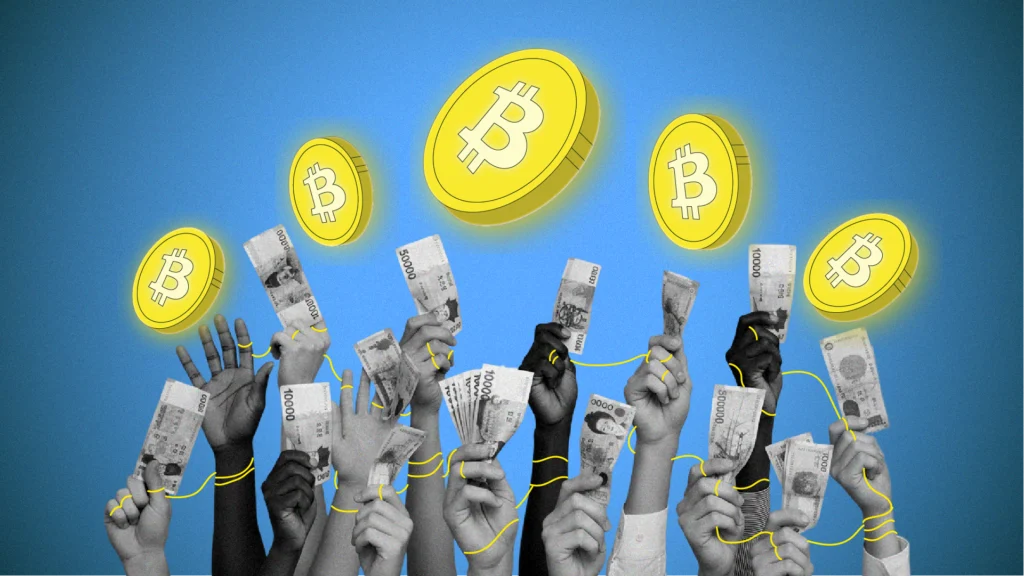
South Korea’s tax crackdown shows even crypto in cold wallets isn’t beyond reach. | Credit: CCN.com
Share
Key Takeaways
South Korea’s National Tax Service (NTS) aggressively pursues tax delinquents who use crypto to hide unpaid taxes.
The current focus is on asset concealment tied to existing tax debts, not on new trading profits.
However, the planned 22% tax on annual crypto gains over 2.5 million won has been postponed until 2027.
Cold wallets include hardware wallets, USB drives, and paper wallets.
South Korea has long been at the cutting edge of digital finance. From early crypto adoption to state-of-the-art blockchain startups, the country has been a testing ground for how digital assets integrate with a modern economy.
However, as the cryptocurrency ecosystem matures, so do the challenges it brings, including taxation.
Now, the country’s National Tax Service (NTS) is tightening its grip on crypto investors who attempt to hide wealth in cold wallets: offline storage devices that, until recently, were thought to be beyond the taxman’s reach.
This move signals a new phase in global crypto regulation: even digital assets kept off the internet are being drawn into the tax net.
Try Our Recommended Crypto Exchanges
Sponsored
Disclosure
We sometimes use affiliate links in our content, when clicking on those we might receive a commission at no extra cost to you. By using this website you agree to our terms and conditions and privacy policy.
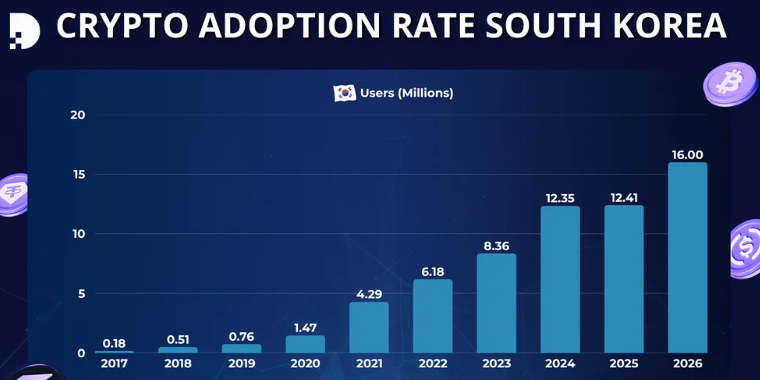
Cryptocurrency took South Korea by storm in the late 2010s. By 2021, local exchanges such as Upbit, Bithumb, and Coinone were handling billions of dollars in daily volume. For many young Koreans, crypto represented a speculative opportunity and a path to financial independence.
Crypto adoption rate is constantly increasing in South Korea. | Credit: Datawallet
Key facts about South Korea’s crypto scene:
At one point, local exchanges accounted for about 20% of global Bitcoin trades.
The “kimchi premium” and higher local coin prices symbolized Korea’s enthusiasm for digital assets.
A tech-savvy, younger population helped normalize crypto investing faster than in most nations.
But with the rise of crypto fortunes came an inevitable concern: tax evasion.
How South Korea’s Crypto Tax Framework Evolved Over Time
In the early days, South Korea treated crypto as a gray area, neither entirely banned nor properly regulated. That changed rapidly as market volumes surged.
However, enforcement faced one big blind spot: cold wallets, hardware, or paper wallets stored offline and outside institutional control.
Crypto Tax in South Korea: What’s Enforced Now and What’s Coming in 2027
While the NTS is becoming more aggressive in tracking crypto-linked tax evasion, it’s important to note that South Korea’s capital gains tax on new crypto profits is not yet in force.
The planned 22% tax on annual crypto gains exceeding 2.5 million won has been postponed until 2027.
The current NTS crackdown does not target new crypto gains. Instead, it focuses on existing tax delinquents, people who owe income, inheritance, or corporate taxes and try to hide assets in crypto to avoid payment.
In other words, the current enforcement drive concerns asset concealment, not the taxation of trading profits that have yet to become taxable.
Cold Wallets and Their Role in South Korea’s Crypto Crackdown
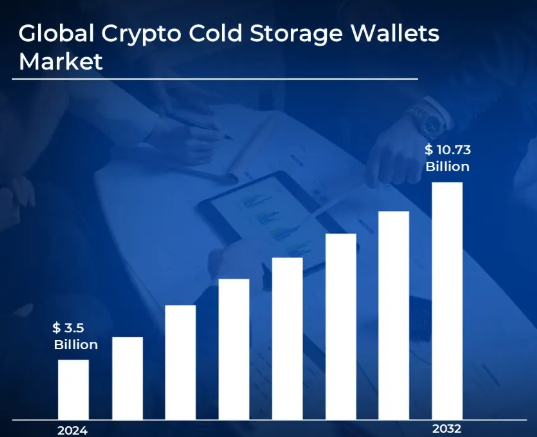
Cold wallets are prized for security. Unlike “hot wallets” connected to the internet, they’re offline storage devices resistant to hacks, phishing, and exchange shutdowns.
Global crypto cold storage wallets market. | Credit: Datawallet
However, those same protections make them problematic for tax enforcement. Since cold wallets don’t rely on centralized providers, there’s no automatic reporting, institutional oversight, and often no paper trail.
That opacity has made them a preferred hiding spot for delinquent taxpayers, a challenge the NTS is now determined to overcome.
How South Korea’s NTS Uses AI and Blockchain to Track Hidden Crypto Assets
The NTS has transformed from a reactive collector to a tech-driven enforcer, using digital forensics to hunt undeclared assets. Its strategy combines blockchain analytics, AI-driven audits, and cross-border data sharing.
Artificial intelligence helps spot discrepancies between income, bank records, and crypto activity, allowing the NTS to prioritize high-risk taxpayers.
Lifestyle audits, where hidden crypto was inferred from lavish spending.
Reports from financial institutions are obligated to flag suspicious activity.
The message was clear: even crypto stored offline can be traced, seized, and taxed retroactively if tied to unpaid taxes.
Crypto Regulation in South Korea: Privacy Concerns and Calls for Transparency
The campaign has sparked debate about financial privacy and state overreach. Critics fear mandating cold wallet disclosure undermines personal autonomy and crypto’s decentralized spirit.
Supporters counter that the initiative promotes tax fairness and market integrity. They argue:
All crypto, stocks, or property assets should be treated equally.
Transparency helps integrate digital assets into the mainstream economy.
Honest taxpayers benefit when hidden wealth is brought to light.
Ultimately, regulators say the goal isn’t punishment but normalization, creating a fair system where innovation and compliance coexist.
What South Korean Crypto Holders Should Know as Tax Rules Tighten
The rules are tightening for South Korean crypto holders—even if the capital gains tax is delayed.
Report all holdings, including those in cold wallets.
Maintain transaction records and proof of ownership.
Be aware that moving funds offline doesn’t make them invisible.
Use crypto tax software to stay compliant.
Expect stricter scrutiny as NTS analytics evolve.
Noncompliance can lead to fines, seizures, or criminal penalties before crypto trading profits become taxable.
How South Korea’s Crypto Enforcement Is Shaping Global Regulation
South Korea’s approach, combining blockchain intelligence with robust legal frameworks, is becoming a model for global regulators.
Countries like Japan and Singapore are already watching how Seoul enforces crypto transparency without stifling innovation.
When the postponed capital gains tax finally comes into effect in 2027, it’s expected that the groundwork now being laid via enforcement against tax evasion will make compliance smoother and harder to evade.
Conclusion
The myth of cold wallets as untouchable safe havens for hidden crypto is disappearing fast.
While crypto capital gains remain untaxed, South Korea’s tax authorities are proving that existing debts can still find you, even in the blockchain’s darkest corners.
For investors, one rule stands firm: Security is smart. Secrecy is not. The NTS’s message is unmistakable: if your coins are hidden in a cold wallet, they might be offline, but they’re no longer off the radar.
What is the primary goal of South Korea’s National Tax Service (NTS) in its crypto crackdown?
The NTS aims to locate and seize hidden assets from taxpayers who owe money to the government and attempt to hide their wealth in cryptocurrencies, especially in cold wallets (offline storage). This initiative targets tax evasion, not routine crypto trading.
Is South Korea currently taxing profits from crypto trading?
Not yet. The planned 22% tax on annual crypto gains exceeding 2.5 million won has been postponed until 2027. The current enforcement focuses on individuals who already owe taxes, such as income or corporate taxes, and are using crypto to conceal assets.
How does this affect foreign crypto exchanges or offshore accounts?
Under the OECD’s new CARF and other international agreements, foreign exchanges are increasingly required to share user data with tax authorities. This means that transferring funds abroad to avoid Korean tax oversight is becoming more difficult and risky.
What does this mean for the future of crypto regulation globally?
South Korea’s model, blending blockchain analytics with strict tax enforcement, is becoming a blueprint for other countries. Nations like Japan and Singapore are watching closely, aiming to balance innovation with transparency and compliance.
Disclaimer:
The information provided in this article is for informational purposes only. It is not intended to be, nor should it be construed as, financial advice. We do not make any warranties regarding the completeness, reliability, or accuracy of this information. All investments involve risk, and past performance does not guarantee future results. We recommend consulting a financial advisor before making any investment decisions.
Giuseppe Ciccomascolo began his career as an investigative journalist in Italy, where he contributed to both local and national newspapers, focusing on various financial sectors.
Upon relocating to London, he worked as an analyst for Fitch's CapitalStructure and later as a Senior Reporter for Alliance News. In 2017, Giuseppe transitioned to covering cryptocurrency-related news, producing documentaries and articles on Bitcoin and other emerging digital currencies. He also played a pivotal role in establishing the academy for a cryptocurrency exchange website. Crypto remained his primary area of interest throughout his tenure as a writer for ThirdFloor.


 Easy
Easy