Explore key players and major projects in RWA. | Credit: Veronica Cestari/CCN.com
Share
Key Takeaways
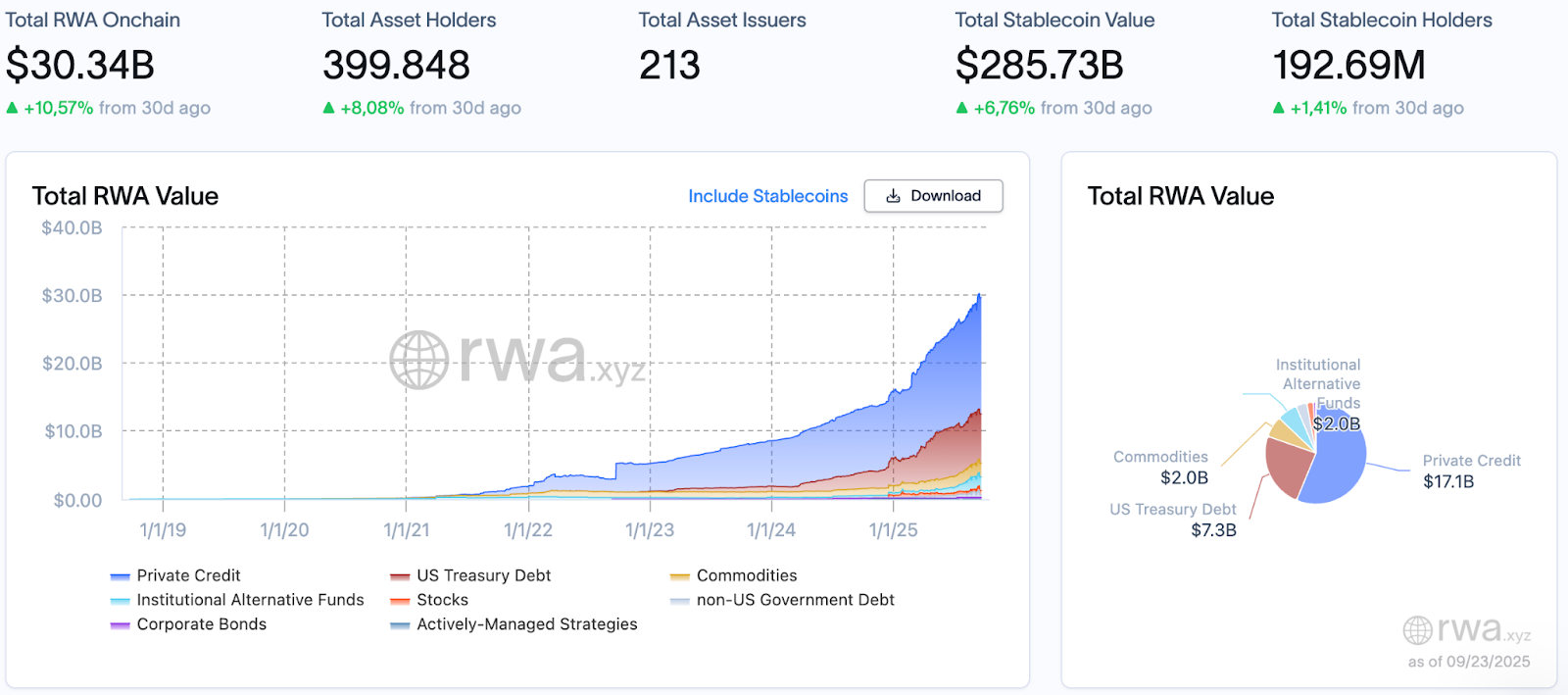
RWA tokenization is scaling fast as on-chain value reached $28.4 billion, with private credit and tokenized treasuries leading.
Major firms like Goldman Sachs, BNY Mellon, DBS, and Franklin Templeton are building tokenized money-market funds.
Projects like Ondo, Securitize, Maple, Goldfinch, and Centrifuge are operationalizing RWAs with compliance features and yield strategies.
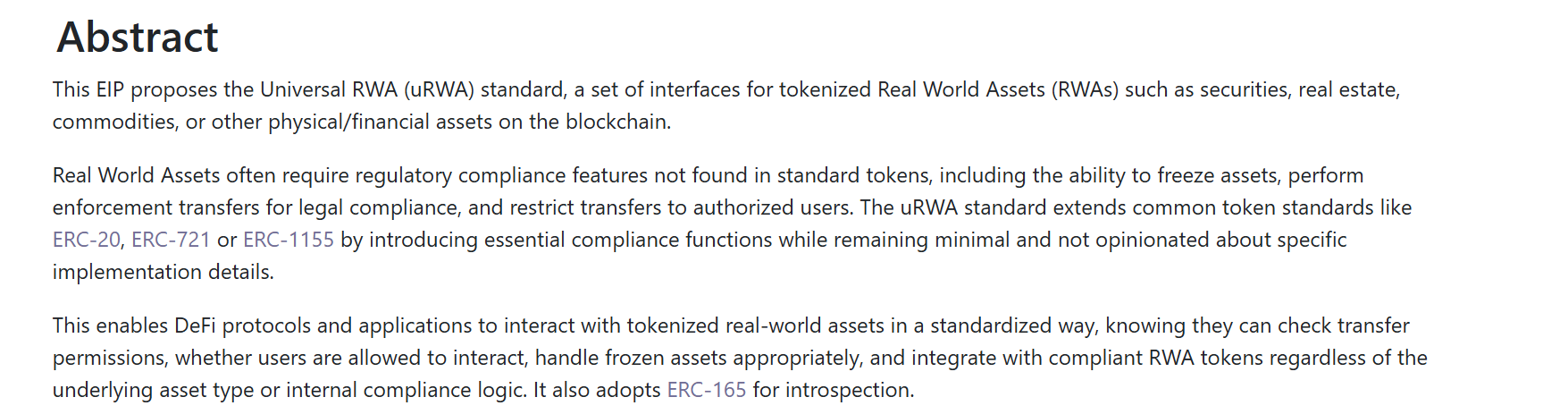
The introduction of ERC-7943 (uRWA) highlights the push for compliance-ready tokens.
Real-world asset (RWA) tokenization refers to the process of representing tangible or regulated financial assets, such as real estate, money-market funds, private credit, or government bonds, on blockchain networks.
It provides fractional ownership, enhanced liquidity, and programmable compliance, enabling institutions and individual investors to hold, trade, or use these assets in decentralized finance (DeFi) environments.
Tokenization bridges traditional finance and blockchain, potentially unlocking trillions in otherwise locked-up capital. It allows for more efficient capital flows, faster settlement, broader access, and new financial instruments that blend the on-chain and off-chain spheres.
RWA tokenization is gaining attention not only among Web3-native projects but also among heavyweight institutions in traditional finance. As regulatory clarity improves and demand grows, the space is seeing faster product launches, proposed standards, and a real increase in on-chain value.
This article highlights the latest trends, major institutional players, innovative DeFi projects, and regulatory shifts in RWA tokenization.
Try Our Recommended Crypto Exchanges
Sponsored
Disclosure
We sometimes use affiliate links in our content, when clicking on those we might receive a commission at no extra cost to you. By using this website you agree to our terms and conditions and privacy policy.
Major Institutional Players to Watch in the RWA Space
Some of the largest firms in finance are seriously considering RWA tokenization. These players bring credibility, scale, and infrastructure investment.
Goldman Sachs & BNY Mellon: These two have teamed up to move toward tokenized money market funds. BNY Mellon’s LiquidityDirect platform is integrating with Goldman’s private blockchain (GS DAP) to allow institutional clients to subscribe to and redeem tokenized versions of money market funds.
DBS, Franklin Templeton, Ripple: These institutions also pursue tokenized stablecoins and money-market funds for institutional clients. Their efforts include allowing tokenized assets to serve as collateral for lending.
Brickken: This European startup has already tokenized over $250 million in real-world assets across 14 countries. To scale operations and asset coverage, Brickken has been expanding into North America and Asia.
These institutional motions are not isolated experiments; they are backed by real product development, regulatory engagement, and expanding asset pools.
Key DeFi Projects in RWA Tokenization
While institutional players build out frameworks and platforms, several DeFi and fintech projects are already operationalizing RWA tokenization.
With native @USDC and CCTP V2 now live on @plumenetwork, @circle strengthens the foundation for institutional RWA settlement.
Institutional capital can now flow directly into tokenized funds on Plume.
The first: ACRDX, the Anemoy Tokenized Apollo Diversified Credit Fund, set to… https://t.co/pSXoNq07U1
Ondo Finance: Known for structuring tokenized funds and vaults with real-world assets (e.g. Treasuries, credit), Ondo is a key infrastructure provider.
Securitize: As a tokenization platform, Securitize powers many institutional tokenized offerings, including BlackRock’s BUIDL fund, Apollo ACRED, VanEck VBILL, Blockchain Capital BCAP, and Hamilton Lane Global Private Assets Fund. It supports issuance, compliance, transfer agents, custody, and token infrastructure.
Maple Finance, Goldfinch, Centrifuge: These protocols are focused more strongly on private credit, small business lending, or fractionalized real-world asset-backed financing. They provide loans and yield generation using tokenized assets.
New blockchains/tools: Efforts are also underway to build or adopt token standards and tools (e.g., on the Ethereum side, EVM chains) to reduce friction in building compliant RWAs.
Recent Notable Updates in RWA Tokenization
Several recent developments are shifting the RWA landscape:
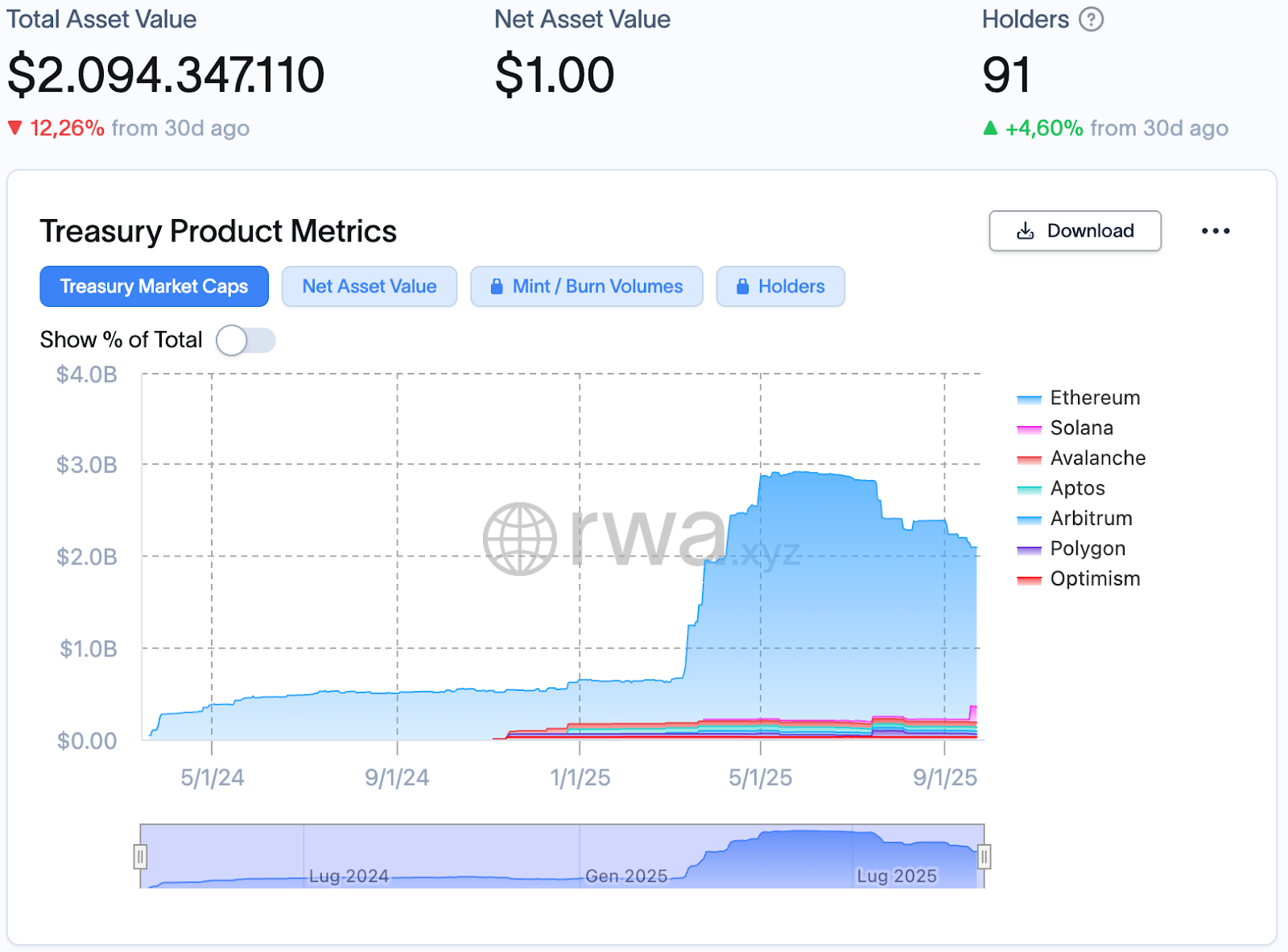
On-chain RWA value: Data from trackers like RWA.xyz show that the total value of tokenized RWAs on-chain has reached about US$28.44 billion, up nearly 6% in the past month.
New standard: ERC-7943 (sometimes called uRWA): Proposed by Dario Lo Buglio (co-founder of Brickken) and others, it’s a minimal, implementation-agnostic interface for RWA tokens. It introduces necessary primitives like isTransferAllowed, freezing, allow-lists, etc., to align token functionality with institutional and compliance requirements. It aims to reduce fragmentation.
Asset split trends: Private credit dominates many RWA portfolios. For example, U.S. Treasuries make up a significant share in the tokenized treasury and fixed-income RWA space but often lag private credit in growth dynamics.
Mavryk Network (UAE): Raised US$10 million to expand real estate tokenization, including a plan to tokenize over USD 10 billion in UAE real estate.
BlackRock’s BUIDL: A Tokenized Liquidity Fund Leading the RWA Market
BlackRock’s USD Institutional Digital Liquidity Fund (BUIDL), launched in March 2024 via Securitize, has emerged as a leader. Through tokenization, it offers qualified investors exposure to short-dated U.S. Treasuries, distributing daily or near-daily yields.
By holding nearly 42% of the tokenized U.S. Treasury market, BUIDL has become the benchmark for institutional liquidity in on-chain fixed income.
Regulatory Landscape & Tokenized RWAs
Regulation is both the most significant challenge and enabler in RWA tokenization.
Global regulatory movements: In the U.S., tokenized assets face securities laws, AML/KYC rules, custody regulations, and oversight. In the EU, frameworks like MiCA are raising standards for stablecoins and crypto assets more broadly, which will spill over into RWAs. The Middle East, particularly the UAE, is also pushing forward with regulatory sandboxes and incentives for tokenization.
Compliance and standardization pressure: With new token standards like ERC-7943, institutions are demanding built-in compliance features like identity verification, transfer restrictions, freeze/force transfer, etc. Projects need to align with market demand and existing legal frameworks.
Jurisdictional clarity: The ability for tokenized RWAs to be legally accepted as collateral or to serve in regulated instruments depends heavily on the jurisdiction. Legal uncertainty, unclear securities or commodity classification, tax implications, and cross-border considerations often delay institutional adoption.
As the RWA space continues to evolve, here are some of the trends and metrics to monitor in the near term:
Adoption of ERC-7943/uRWA: Seeing how many projects adopt this standard will signal standardization and interoperability.
Increase in private credit tokenization: As traditional yields remain challenged, private credit may dominate RWA issuance.
Growth of institutional funds like BUIDL: If more funds reach a multi-billion dollar scale, especially with diversified underlying assets beyond U.S. Treasuries, it will broaden what “institutional liquidity” means.
Regulatory-friendly product design: Institutions will be more likely to purchase products that embed compliance, identity tools, and governed token behavior.
Real-world use cases: Real estate tokenization, tokenized ownership of infrastructure, and government-issued digital bonds will be key proof points.
Conclusion
Real-world asset tokenization is no longer just a niche idea. It is gaining momentum from both DeFi developers and mainstream financial institutions. With significant funds on-chain, new standards like ERC-7943, and products like BlackRock’s BUIDL leading the way, the RWA sector appears poised for further growth.
Nonetheless, serious challenges remain around regulation, liquidity, and standardization. The winners in the space will be those who can combine legal and technical compliance, institutional trust, and strong DeFi integration.
Watch this space: the coming year could determine whether RWAs truly unlock broad institutional capital or remain an overhyped promise.
What types of real-world assets are being tokenized today?
Currently, the most common tokenized assets include U.S. Treasuries, private credit, real estate, and commodities like gold. Newer experiments are also exploring carbon credits, luxury goods, and even intellectual property rights.
How do investors benefit from RWA tokenization?
RWA tokenization allows fractional ownership, easier access to traditionally illiquid markets, faster settlement, and in some cases higher yields through blockchain-based infrastructure.
What risks should investors consider before investing in tokenized RWAs?
Key risks include regulatory uncertainty, liquidity limitations, valuation transparency, and smart contract vulnerabilities. Investors should also check whether tokenized ownership has strong legal enforceability.
Which blockchains are most commonly used for RWA tokenization?
Ethereum remains the leading chain, but newer ecosystems like Polygon, Avalanche, Stellar, and Solana are gaining traction due to scalability, lower fees, and partnerships with financial institutions.
Disclaimer:
The information provided in this article is for informational purposes only. It is not intended to be, nor should it be construed as, financial advice. We do not make any warranties regarding the completeness, reliability, or accuracy of this information. All investments involve risk, and past performance does not guarantee future results. We recommend consulting a financial advisor before making any investment decisions.
Giuseppe Ciccomascolo began his career as an investigative journalist in Italy, where he contributed to both local and national newspapers, focusing on various financial sectors.
Upon relocating to London, he worked as an analyst for Fitch's CapitalStructure and later as a Senior Reporter for Alliance News. In 2017, Giuseppe transitioned to covering cryptocurrency-related news, producing documentaries and articles on Bitcoin and other emerging digital currencies. He also played a pivotal role in establishing the academy for a cryptocurrency exchange website. Crypto remained his primary area of interest throughout his tenure as a writer for ThirdFloor.


 Easy
Easy