Jacob & Co. $40K Bitcoin Mining Watch: Jacob & Co. Bitcoin Mining Watch: How the Epic X GoMining Model Really Works
Share
Key Takeaways
The Jacob & Co. Epic X GoMining watch costs $40,000 and includes 1 PH/s of hosted Bitcoin mining power. The watch itself does not perform mining.
The mining allocation is very small compared to the global network. 1 PH/s equals about 0.0001% of Bitcoin’s total hash rate.
Mining revenue varies based on market conditions. Factors like Bitcoin price, difficulty, and fees affect earnings.
The product reflects a broader industry shift. Many mining companies are increasingly exploring AI and HPC infrastructure.
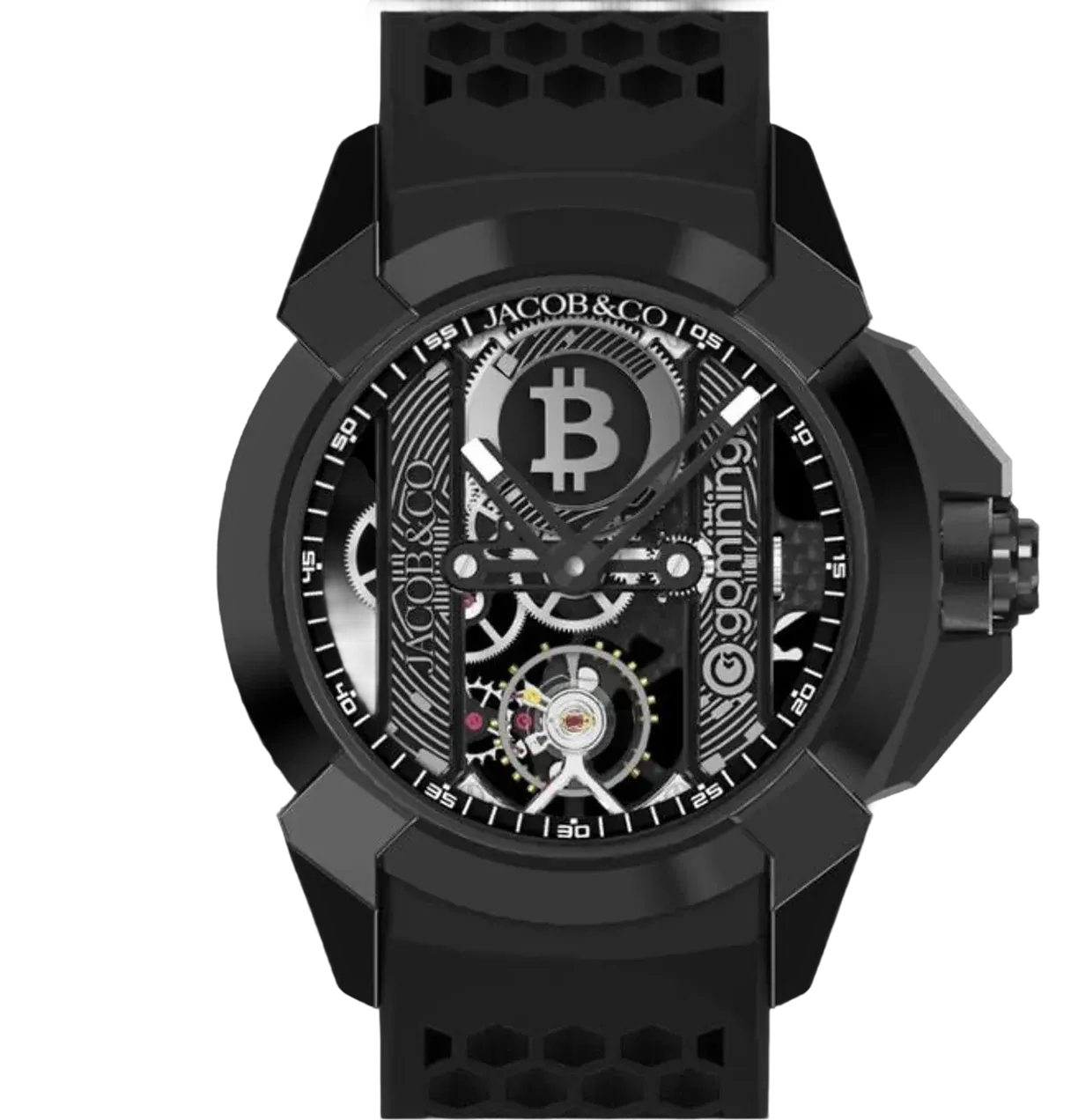
Luxury watchmaker Jacob & Co. partnered with Bitcoin mining platform GoMining to launch a limited-edition luxury watch tied to cryptocurrency mining. The Epic X GoMining watch, priced at $40,000, is marketed as a “Bitcoin mining watch,” combining high-end horology with digital mining infrastructure.
Epic X GoMining watch. | Source: gomining.com
While the concept sounds futuristic, the watch itself does not mine Bitcoin on your wrist. Instead, the product bundles a luxury timepiece with remote Bitcoin mining power hosted in data centers.
This article explains how the Jacob & Co. Bitcoin mining watch works, the economics behind its mining power, and the broader Bitcoin mining industry trends, including why many miners are shifting toward AI infrastructure.
What Is the Jacob & Co. Epic X GoMining Bitcoin Mining Watch?
The Epic X GoMining watch is a limited-edition mechanical watch bundled with digital Bitcoin mining capacity.
LUXURY WATCHMAKER JACOB & CO ANNOUNCED A WATCH THAT CAN MINE #BITCOIN
Movement: Skeletonized manual-wind mechanical movement
Partnership: Jacob & Co. × GoMining
Mining allocation: 1,000 TH/s (1 PH/s)
The watch features Bitcoin-themed design elements and a skeletonized dial typical of Jacob & Co.’s luxury timepieces. However, the cryptocurrency component is not physically integrated into the watch hardware.
Instead, the purchase includes a digital miner allocation managed through GoMining’s infrastructure.
How the Bitcoin Mining Watch Actually Works
Bitcoin mining requires specialized ASIC computers that consume large amounts of electricity and generate significant heat. These systems typically operate in industrial mining facilities, not consumer devices.
The Epic X GoMining watch works through hosted mining infrastructure.
The process works like this:
A customer purchases the watch.
The purchase includes 1,000 TH/s of mining power.
That mining power is hosted in GoMining-operated data centers.
The owner receives a digital miner tied to their GoMining account.
Mining rewards are credited periodically based on the allocated hash rate.
In simple terms, the watch is a luxury collectible linked to cloud-based Bitcoin mining capacity.
What 1,000 TH/s of Mining Power Means
The mining allocation attached to the watch equals:
1,000 terahashes per second (TH/s)
This is equivalent to:
1 petahash per second (PH/s)
To understand the scale, it helps to compare this to the global Bitcoin mining network.
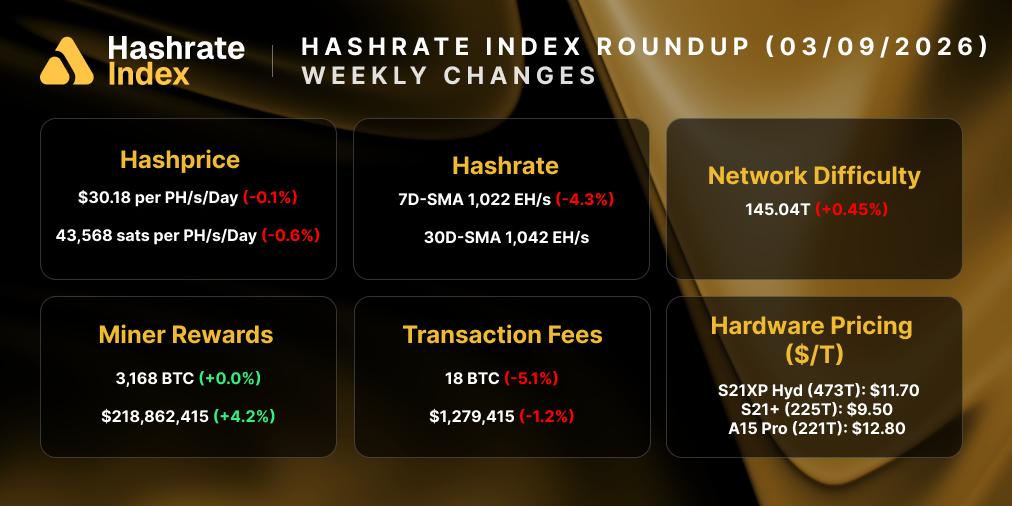
Recent industry data shows the Bitcoin network hash rate averaging around 1,022 exahashes per second (EH/s).
That equals:
1,022,000 PH/s
Therefore, the watch’s mining allocation represents approximately:
1 PH/s out of ~1,022,000 PH/s
Or about:
0.0001% of the global network hash rate
While 1,000 TH/s sounds large, it is very small relative to the total computational power securing the Bitcoin network.
Energy Consumption Behind the Digital Miner
GoMining lists mining efficiency of roughly:
15 watts per TH
For the watch’s allocation:
1,000 TH × 15 W
= 15,000 watts (15 kW)
Running continuously, the infrastructure would consume roughly: 360 kWh per day
Importantly, this energy is used in the data center where the mining hardware operates, not by the watch itself.
How Much Bitcoin Could the Mining Allocation Earn?
Mining revenue depends on multiple variables, including:
Bitcoin price
mining difficulty
network hash rate
transaction fees
electricity and maintenance costs
One widely used metric in mining economics is hashprice, which measures expected revenue per unit of hash power.
Recent industry data has placed hashprice at roughly: $30 per PH/s per day. Since the Epic X GoMining watch includes 1 PH/s, this implies a rough gross revenue of: $30 per day.
Hashrate Index Weekly Mining Roundup |as of March 9, 2026. | Source: hashrateindex.com
However, this estimate does not include platform maintenance fees, operational costs, or future difficulty changes.
Actual mining rewards may therefore vary significantly.
Estimated Payback Period of the $40K Bitcoin Mining Watch
Because of these variables, the watch should primarily be viewed as a luxury collectible with mining exposure rather than a guaranteed-return investment.
Current Bitcoin Mining Market Conditions
The Epic X GoMining watch launched during a period of record competition in Bitcoin mining.
These assets are also highly valuable for AI workloads and hyperscale computing infrastructure.
For many companies, selling power and infrastructure to AI customers may generate higher revenue than dedicating all capacity to Bitcoin mining.
Examples From Company Filings
The shift from Bitcoin mining to AI infrastructure is increasingly visible in public company disclosures.
IREN: Transition From Bitcoin Mining to AI Cloud
IREN Limited said in its Q2 FY26 results that performance reflected “continued progress in the transition from Bitcoin mining to AI Cloud,” with capacity increasingly allocated to higher-value AI workloads.
MARA: From Bitcoin Miner to Digital Infrastructure Company
MARA Holdings said in its Q4 2025 shareholder letter that it was accelerating expansion into AI and high-performance computing through a joint venture with Starwood.
The company described the effort as part of its transformation from a “pure-play Bitcoin miner” into an energy and digital infrastructure company.
Cipher Mining: 168 MW AI Hosting Deal
Cipher Mining disclosed a 168 megawatt AI hosting agreement with Fluidstack lasting ten years.
The agreement represents billions in potential infrastructure revenue and includes Google backing $1.4 billion of lease obligations tied to the deal.
In later filings, Cipher said that Bitcoin mining operations at its Black Pearl facility ceased in February 2026, as the site transitioned toward HPC infrastructure.
Core Scientific: Expanding AI and HPC Hosting
Core Scientific has also disclosed increasing focus on high-density colocation services supporting machine learning and artificial intelligence workloads alongside its digital asset mining operations.
The Jacob & Co. Epic X GoMining watch illustrates a unique convergence of industries:
luxury watches
cryptocurrency mining
digital infrastructure
Technically, it is not a wearable Bitcoin miner, but a luxury timepiece linked to hosted mining capacity.
Its launch also reflects broader shifts across the crypto mining sector, where:
network hash rate continues to grow
mining profitability fluctuates
infrastructure operators increasingly pivot toward AI computing.
Crypto Lifestyle Is Moving Beyond Screens
Traditionally, crypto ownership has been invisible — stored in private keys and digital accounts. But products like this watch signal a shift toward physical representations of digital wealth.
For today’s crypto citizens, wealth is no longer confined to wallets, exchanges, or cold storage. Instead, it is increasingly being expressed through real-world assets that combine technology, status, and utility.
The Epic X GoMining watch fits directly into this trend by blending:
Luxury craftsmanship with high-end watchmaking
Digital income exposure through Bitcoin mining
Status signaling within the crypto community
In that sense, the watch becomes more than a financial product, it becomes part of a personal identity tied to crypto adoption.
Moreover, the rise of crypto-linked luxury products suggests that the industry is entering a new phase. Instead of separating finance and lifestyle, companies are beginning to merge the two.
As Bitcoin and digital assets continue to mature, more products are likely to follow this model —bridging the gap between wealth, technology, and lifestyle.
Does the Jacob & Co. Bitcoin mining watch actually mine Bitcoin?
No. The watch itself does not contain mining hardware. Instead, it comes with 1,000 TH/s of hosted mining power managed by GoMining in data centers. The owner receives mining rewards based on this allocation.
How much Bitcoin can the Epic X GoMining watch earn?
Mining revenue varies depending on Bitcoin price, network difficulty, and mining fees. Based on recent hashprice estimates of roughly $30 per PH/s per day, the bundled 1 PH/s allocation could generate about $30 per day before operational costs.
Why is the watch priced at $40,000?
The price reflects two components:
A luxury Jacob & Co. mechanical watch
A digital miner allocation with 1 PH/s of mining power
The product combines luxury horology with exposure to cryptocurrency mining infrastructure.
Why are Bitcoin miners moving into AI infrastructure?
Many mining companies are shifting toward AI and high-performance computing data centers because AI workloads can generate higher revenue per megawatt of power than Bitcoin mining alone.
Disclaimer:
The information provided in this article is for informational purposes only. It is not intended to be, nor should it be construed as, financial advice. We do not make any warranties regarding the completeness, reliability, or accuracy of this information. All investments involve risk, and past performance does not guarantee future results. We recommend consulting a financial advisor before making any investment decisions.
Onkar Singh has three years of experience as a digital finance content creator. Throughout his career, he has collaborated with various DeFi projects and crypto media outlets. In his leisure time, he enjoys fitness activities at the gym and watching movies across different genres. Balancing his professional and personal interests, Onkar continues to contribute to the digital finance landscape while pursuing his hobbies.


 Easy
Easy