Data from the past decade shows 300+ reported physical attacks on crypto holders across 15 countries during major Bitcoin bull runs. | Credit: CCN.com
Share
Key Takeaways
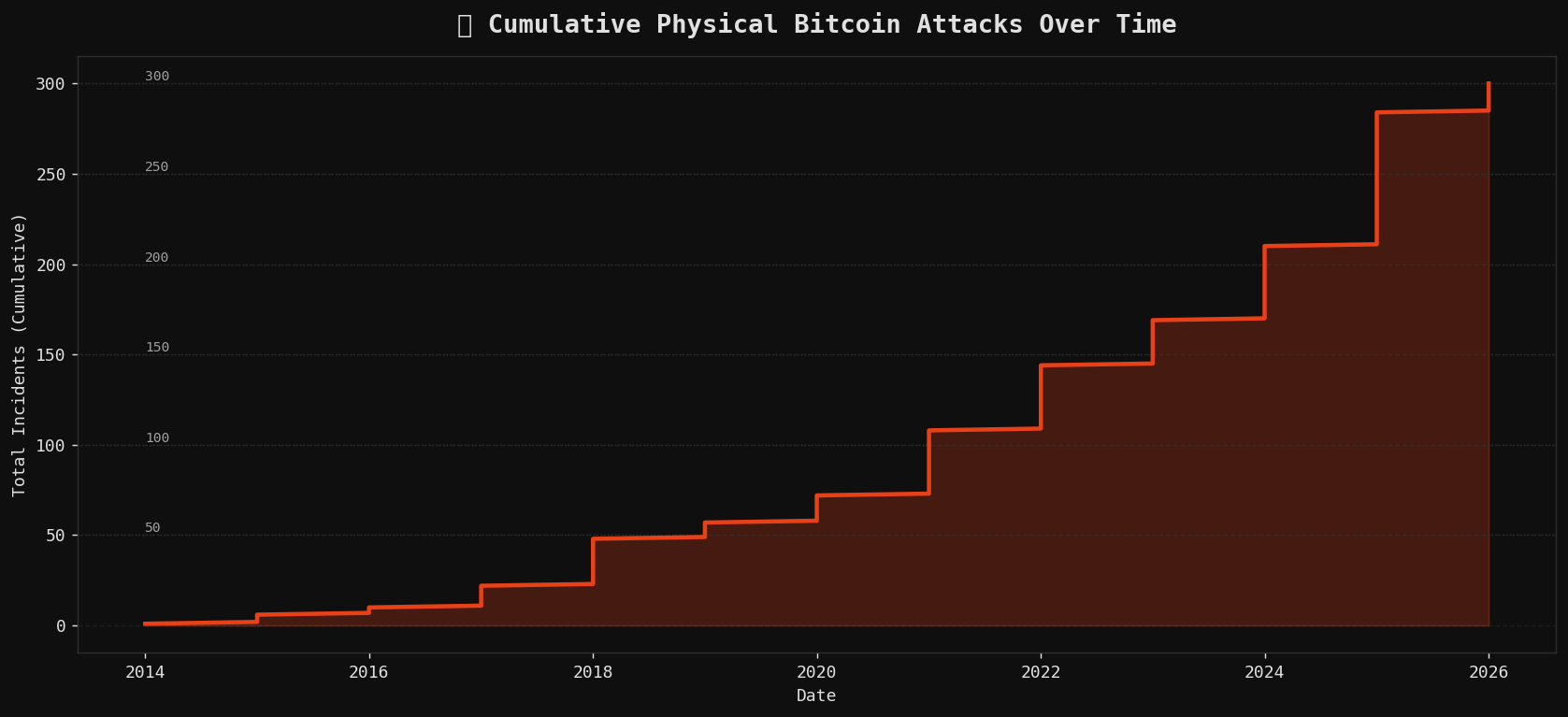
More than 300 reported incidents across at least 15 countries have targeted Bitcoin traders, founders, investors, and crypto users over the past decade.
Data suggests that incidents spiked during the 2017-2018 Bitcoin rally, when prices surged and media coverage of crypto wealth intensified.
Rather than breaking cryptography, attackers often rely on “$5 wrench attacks,” forcing victims to reveal private keys or transfer funds under threat.
Victims frequently had public profiles, social media activity, or conference appearances that revealed their involvement in cryptocurrency.
As Bitcoin adoption grows and prices climb, a troubling question has begun to surface in security and financial circles: does a rising Bitcoin price also increase the risk of physical crime?
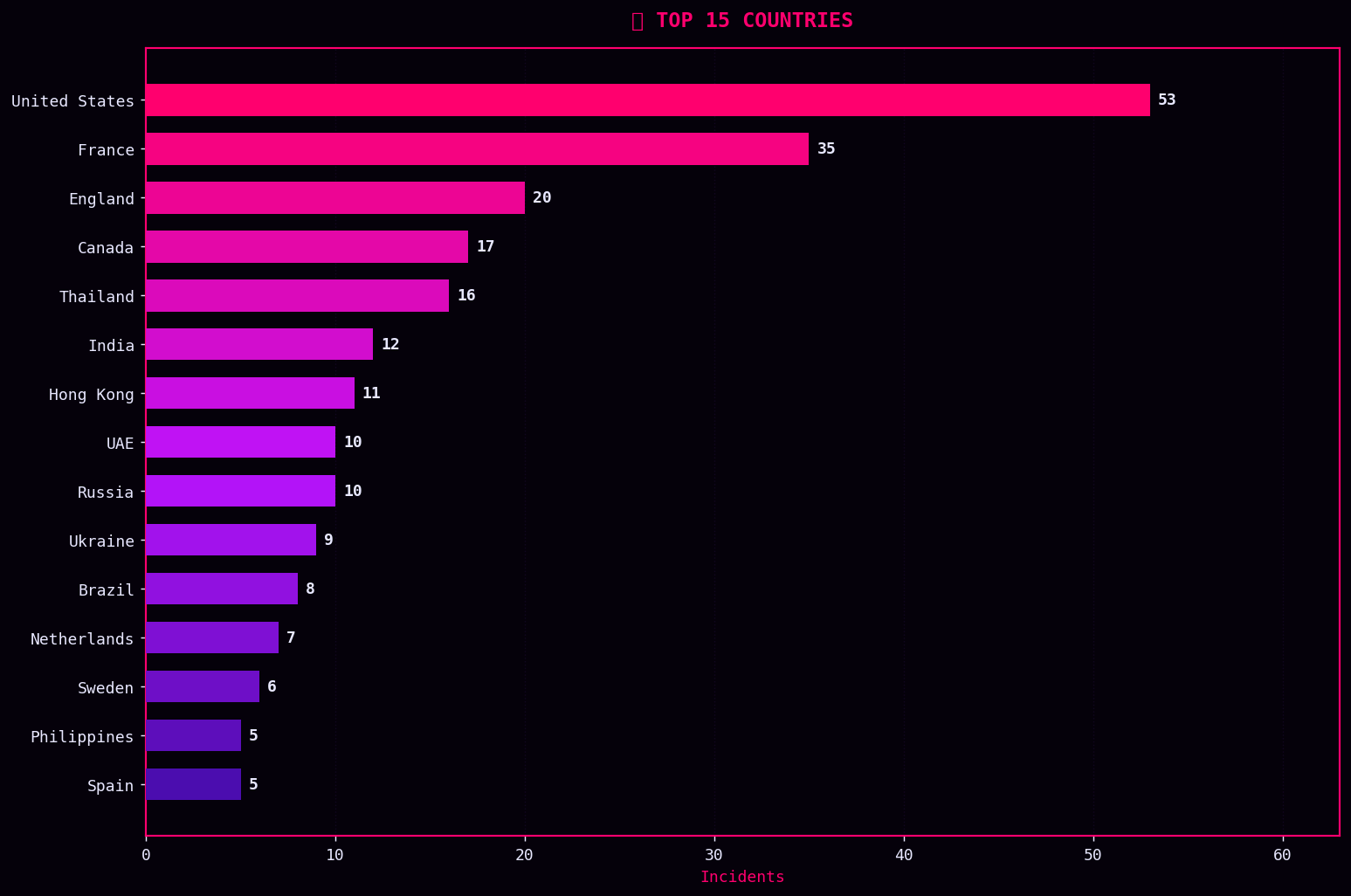
Over the past decade, researchers, journalists, and blockchain security analysts have documented hundreds of real-world attacks linked to cryptocurrency ownership, including robberies, kidnappings, extortion attempts, and home invasions. In total, publicly reported cases now exceed 300 incidents across at least 15 countries, targeting traders, founders, investors, and even casual holders.
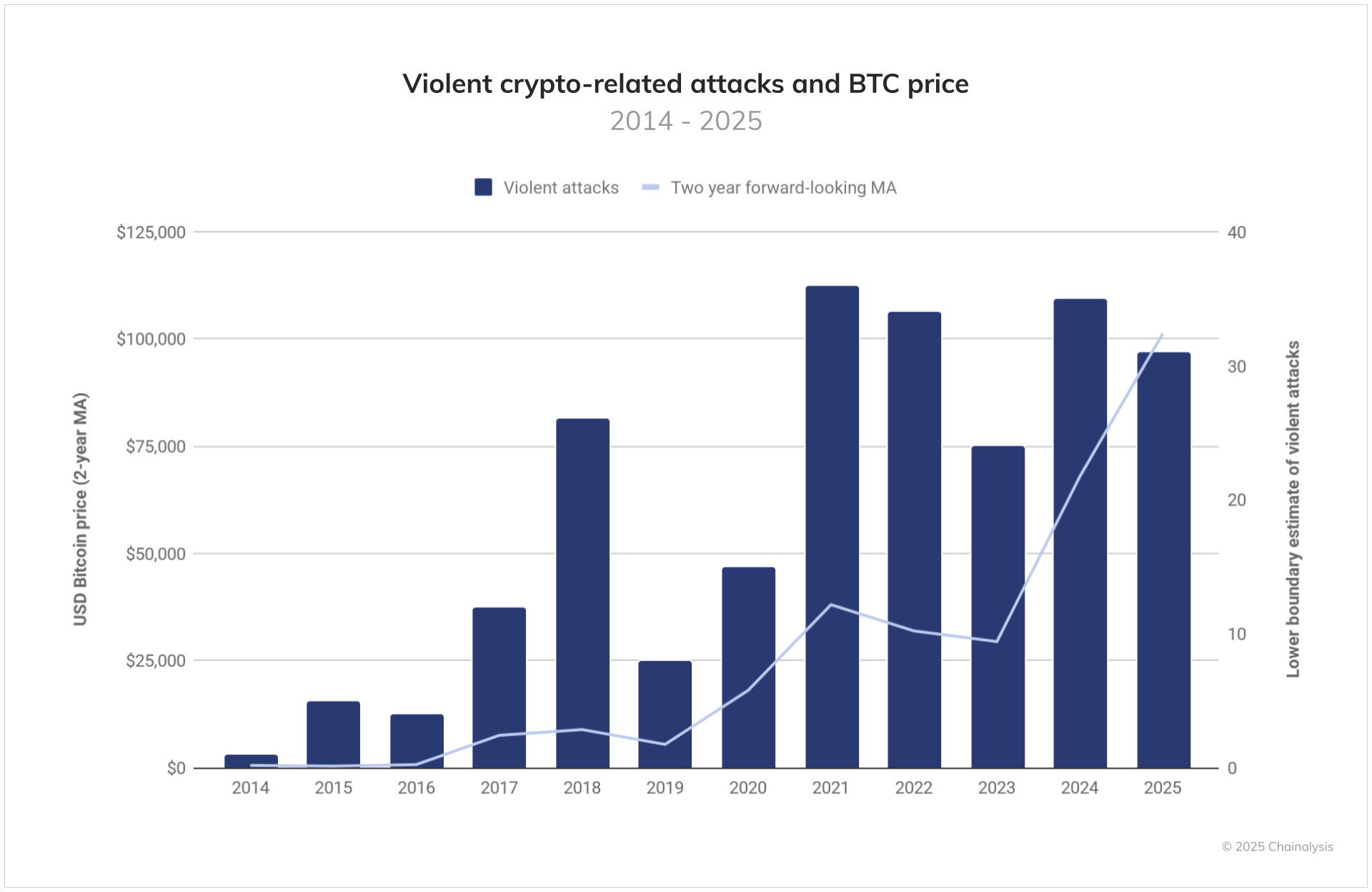
A closer look at the data reveals a striking pattern. The number of reported attacks appears to rise during major Bitcoin bull markets, particularly the explosive rally between 2017 and early 2018, before declining again as prices cooled.
This pattern raises a key question for institutional investors, security professionals, and risk analysts: are physical crypto attacks price-sensitive?
Physical Bitcoin and Crypto Attacks On The Rise
Unlike traditional financial crime, cryptocurrency-related attacks often target individual holders rather than financial institutions.
This is because digital assets introduce a unique security dynamic. While Bitcoin wallets are cryptographically secure, access is often controlled through private keys or seed phrases, which can be physically coerced from the owner.
Violent crypto-related attacks and BTC price. | Credit: Chainalysis
This makes cryptocurrency wealth potentially vulnerable to what security experts call “$5 wrench attacks.”
The term refers to a simple idea: instead of hacking a cryptographic system, an attacker could simply threaten the person holding the keys.
Real-world incidents documented across North America, Europe, and Asia include:
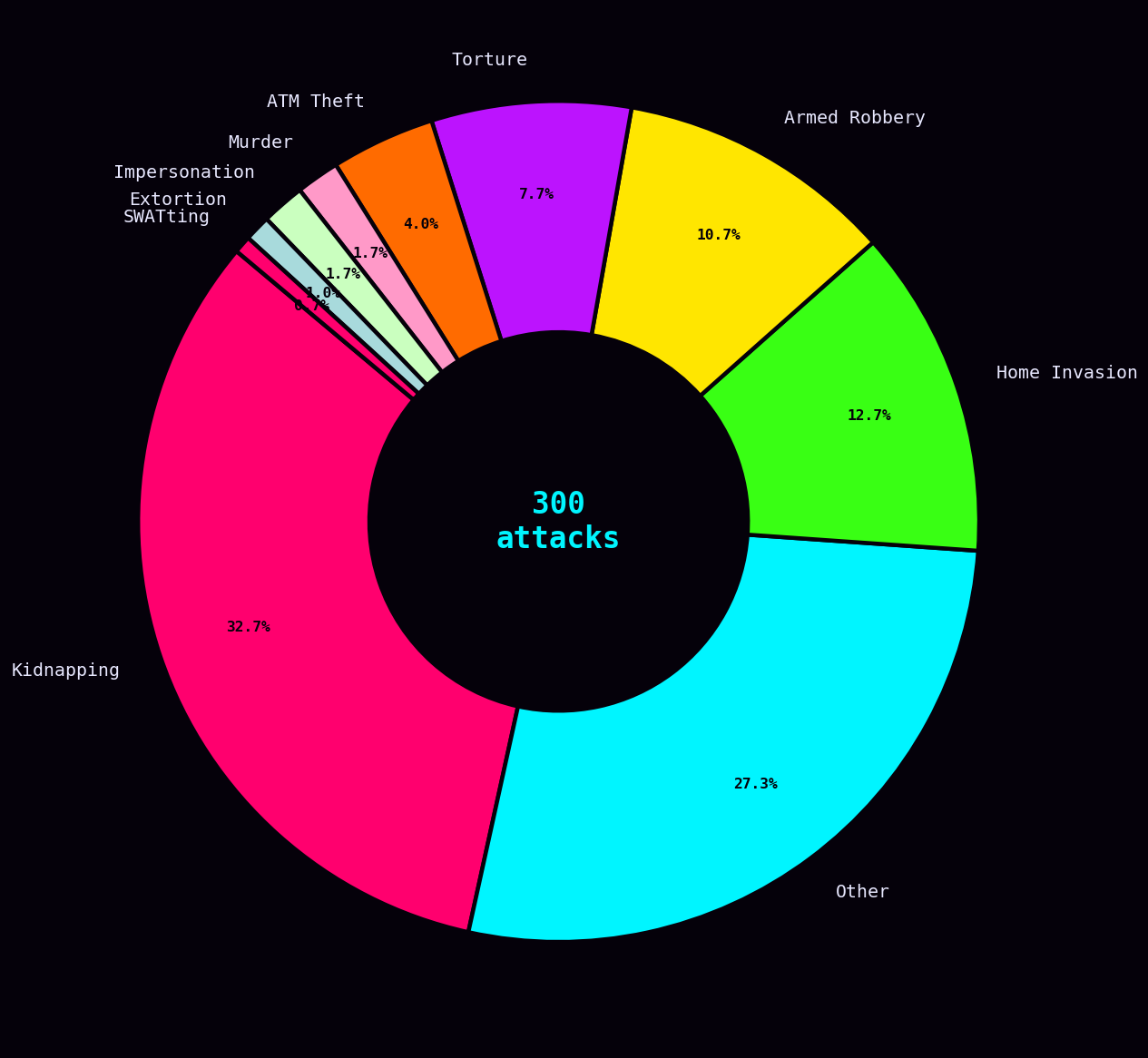
Kidnappings where victims were forced to transfer crypto assets
Home invasions aimed at stealing hardware wallets
Extortion attempts against prominent crypto investors
In some cases, attackers specifically tracked victims through social media posts or conference appearances, identifying individuals likely to hold significant cryptocurrency wealth.
Bitcoin Price Surge in 2017-2018 Coincided With a Spike in Physical Crypto Attacks
Data on known incidents suggests that the 2017 Bitcoin bull market coincided with a surge in reported physical attacks.
That period saw Bitcoin rise dramatically, from roughly $1,000 in early 2017 to nearly $20,000 by December of that year.
At the same time, media coverage of cryptocurrency wealth exploded. Early adopters suddenly appeared in headlines as new millionaires, while online forums were filled with stories of massive returns.
This visibility appears to have had an unintended side effect.
Reported attacks targeting Bitcoin holders rose significantly during the same period. Many involved individuals who were publicly known within the crypto community, including traders, developers, and entrepreneurs.
Several patterns emerged:
Public visibility increased risk: Victims often had a strong online presence discussing cryptocurrency investments.
Criminal groups targeted known crypto hubs: Cities with active crypto communities, such as New York, Amsterdam, and San Francisco, saw multiple incidents.
Attacks frequently involved direct coercion: Rather than stealing digital wallets, attackers attempted to force victims to transfer funds.
This alignment between price appreciation and crime activity led some analysts to suggest that physical crypto crime may be cyclical and tied to market hype cycles.
Physical Crypto Attacks vs Bitcoin Price Cycles
Publicly reported incidents suggest that physical attacks targeting cryptocurrency holders may follow Bitcoin’s major market cycles. While the data is incomplete and likely underreported, a clear clustering of incidents appears around major bull markets.
Period
Bitcoin Market Phase
Approx. BTC Price Range
Reported Physical Crypto Attacks
Key Observations
2014–2016
Early adoption phase
$200 – $700
Low but emerging
Isolated robberies targeting early traders and Bitcoin ATMs
2017–2018
Major bull market
$1,000 – $19,700
Significant spike
Increased visibility of crypto wealth and multiple robberies
2019–2020
Post-bubble correction
$3,000 – $10,000
Noticeable decline
Reduced media attention and lower perceived rewards
2021–2022
Institutional bull cycle
$30,000 – $69,000
New incidents globally
Attacks expand to Europe and Asia
2023–2026
Institutional adoption phase
$25,000 – $70,000+
Continuing cases
Targeting founders, traders, and public crypto figures
Why Physical Bitcoin Attacks Declined After the 2018 Crypto Market Crash
Following Bitcoin’s sharp correction in 2018, when prices fell from nearly $20,000 to below $4,000, the number of reported physical attacks appeared to decline.
Several factors likely contributed to this drop.
Reduced Media Attention
When cryptocurrency prices fell dramatically, mainstream attention faded. The narrative of overnight crypto millionaires disappeared, reducing the visibility of potential targets.
Lower Perceived Rewards
From a criminal perspective, the incentives also changed.
Stealing Bitcoin during a bear market offered less immediate financial payoff. In addition, falling prices meant stolen assets could quickly lose value.
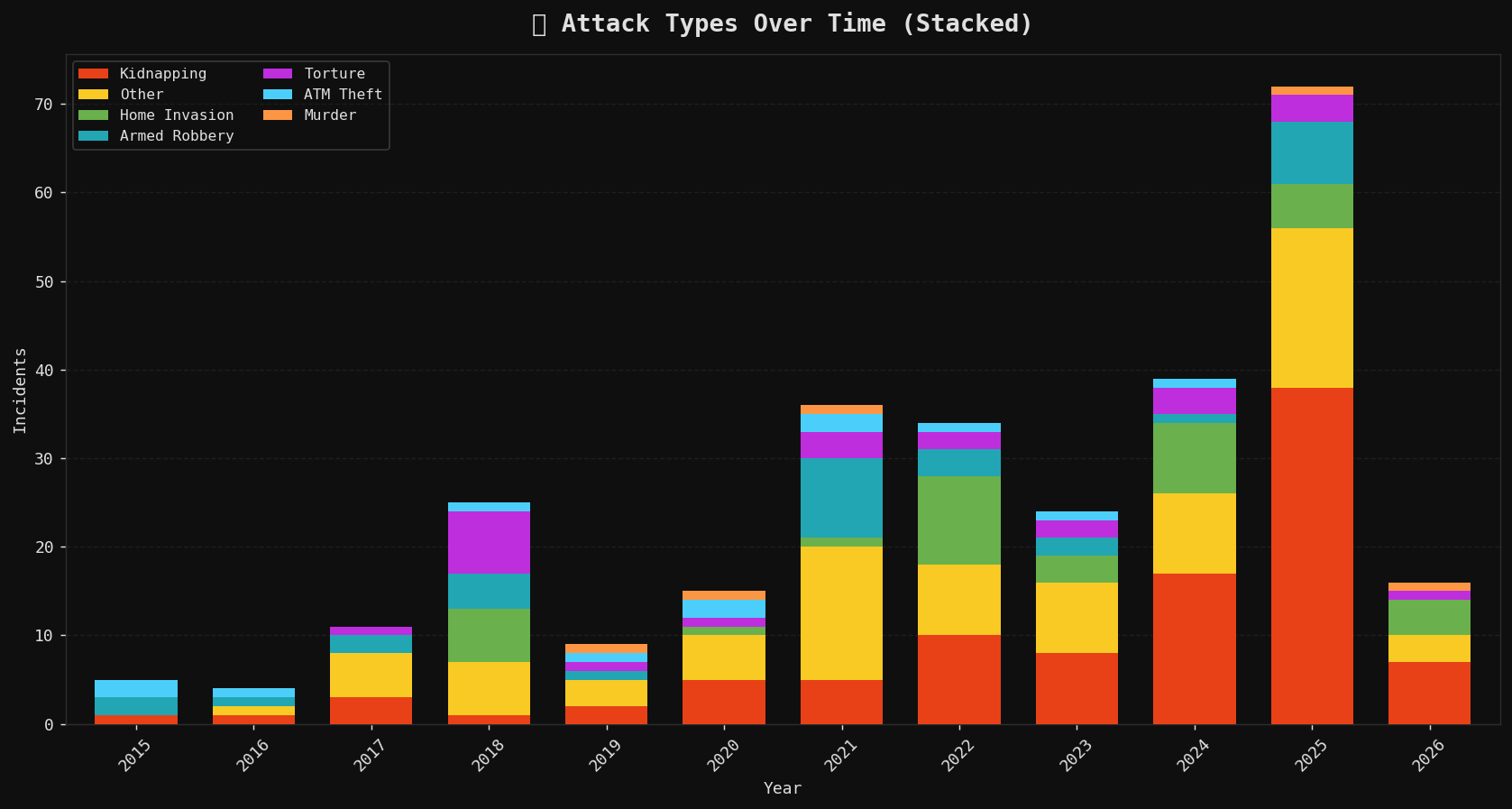
Attack types over time. | Credit: CCN.com
Improved Security Awareness
The 2017 bull run also triggered a wave of security education within the crypto industry.
Wallet providers, exchanges, and security firms began emphasizing:
As a result, many investors adopted stronger protection strategies.
Why Bitcoin Bull Markets May Increase the Risk of Physical Crypto Crime
If the pattern is real, several mechanisms could explain why Bitcoin price surges might increase the risk of physical attacks.
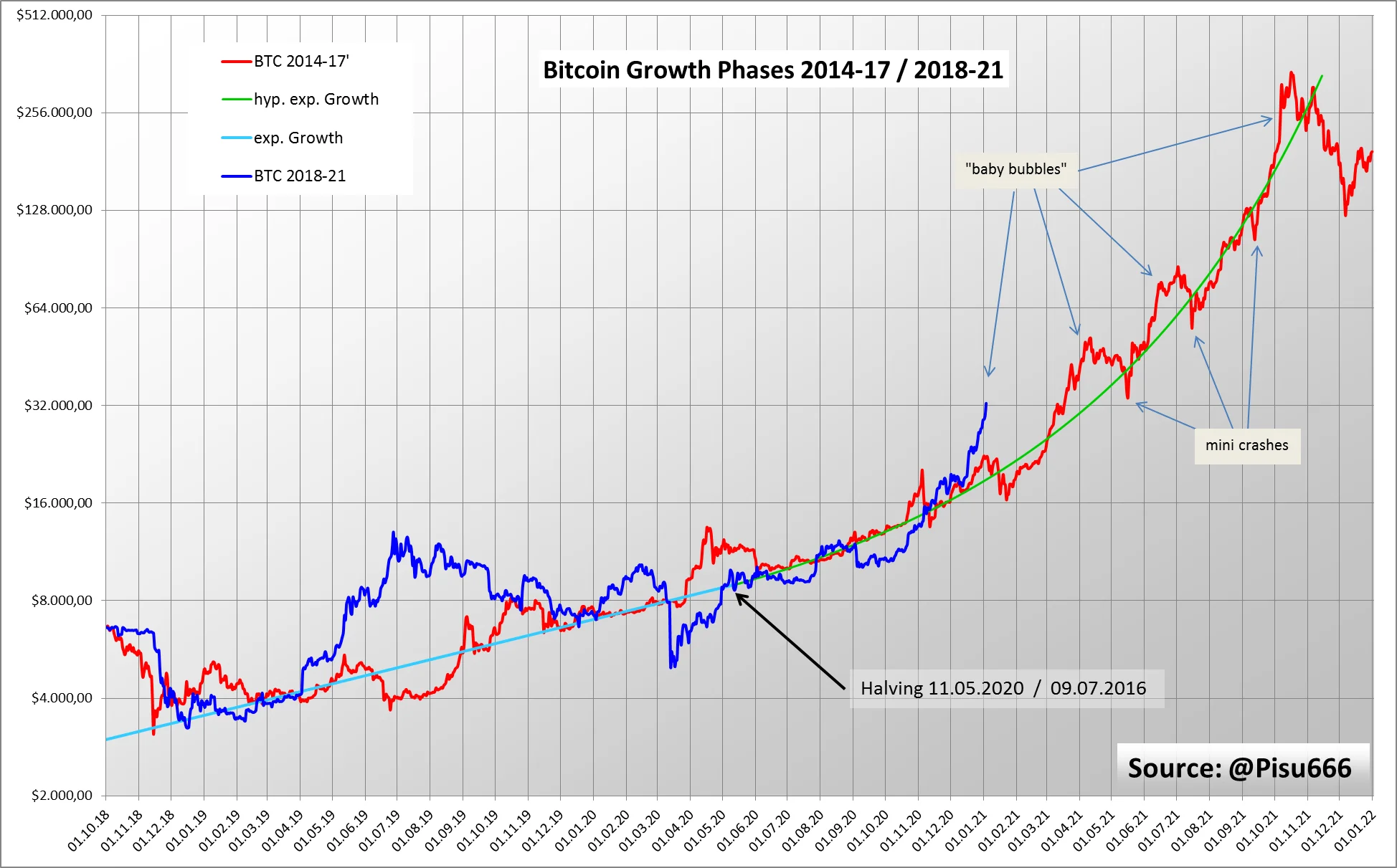
Bitcoin growth phases 2014-2017 and 2018-2021. | Credit: X
Visibility of Wealth
During bull markets, cryptocurrency wealth becomes highly visible.
Investors share screenshots of portfolio gains, media profiles highlight early adopters, and social platforms amplify success stories.
This visibility can create target lists for criminals.
Unlike traditional wealth indicators, such as luxury homes or cars, crypto wealth is often digitally traceable through public blockchain data or online activity.
Liquidity and Transferability
Bitcoin and other cryptocurrencies are also easier to transfer quickly than many traditional assets.
Once a victim transfers funds to a new wallet, transactions can be:
Irreversible
Borderless
Difficult to recover
This makes cryptocurrency theft more appealing to criminals than laundering assets through banks.
Psychological Pressure
Physical coercion can also be highly effective in crypto theft.
Unlike traditional bank accounts, cryptocurrency transfers often require only a password, hardware wallet, or seed phrase.
Under threat, victims may comply quickly to avoid harm.
Why Bitcoin Bull Markets May Increase the Risk of Physical Crypto Crime
As institutional capital enters the crypto market, the security conversation is expanding beyond cybersecurity to include physical risk management.
Large investors, family offices, and crypto funds increasingly treat digital asset holdings as high-value portable wealth, similar to diamonds or precious metals.
Cumulative physical Bitcoin attacks over time. | Credit: CCN.com
This has led to several emerging security practices:
Custody segmentation: Institutional investors often store assets with regulated custodians rather than holding keys directly. This reduces the risk that individuals could be targeted for physical coercion.
Multi-signature wallets: Require multiple approvals to move funds, making it impossible for a single individual under duress to transfer assets.
Geographic distribution: Some investors also distribute keys across different jurisdictions or secure vault locations to prevent a single-point compromise.
In many cases, victims were not necessarily among the richest investors but were visible within online communities.
This suggests that information exposure may be as important as actual wealth when determining risk.
Types of physical Bitcoin attacks. | Credit: CCN.com
Are Physical Bitcoin Attacks Linked to Bitcoin Price Surges?
While the correlation between Bitcoin bull markets and physical attacks is notable, analysts caution against assuming a direct causal relationship.
Several factors complicate the picture.
Top 15 countries for crypto-related attacks. | Credit: CCN.com
Underreporting
Many incidents are never reported publicly.
Victims may avoid media attention or law enforcement due to privacy concerns, making the true number of attacks difficult to measure.
Data Limitations
Existing datasets rely heavily on public news reports, which may cluster around high-profile events.
Broader Crime Trends
Physical attacks involving cryptocurrency also reflect general trends in organized crime, rather than crypto markets alone.
Still, the timing of attack clusters around major bull runs has led some security researchers to conclude that price appreciation likely plays a role.
How Bitcoin Security Risks Could Evolve as Crypto Adoption Grows
With Bitcoin once again approaching new highs and institutional participation expanding, the question of physical security risks may become increasingly important.
Several developments could influence the trend going forward.
As more investors rely on professional custodians, fewer individuals may hold large balances personally, thereby reducing the incentive for physical attacks.
Technologies designed to improve financial privacy could also make it harder for criminals to identify targets.
Authorities worldwide are becoming more familiar with crypto-related crime, improving investigation and recovery capabilities.
However, as digital assets continue to grow in value and adoption, the intersection of cyber wealth and physical risk will likely remain a critical issue.
What Bitcoin Investors Should Know About Physical Crypto Crime Risks
The data suggests a compelling pattern: Bitcoin price surges may coincide with increases in physical crypto attacks.
During the 2017-2018 bull market, reported incidents spiked as cryptocurrency wealth became highly visible. After the market cooled, recorded attacks declined.
While the relationship is not fully understood, the trend highlights an often-overlooked reality of digital assets.
Bitcoin may be secured by cryptography, but the people who hold it are not.
For institutional investors, security professionals, and risk analysts, the lesson is clear: as cryptocurrency markets mature, protecting digital wealth may require thinking beyond cybersecurity and into the physical world.
Physical crypto attacks are crimes where attackers target individuals who own cryptocurrency rather than hacking digital systems. These incidents may include robberies, kidnappings, home invasions, or extortion attempts where victims are forced to transfer their crypto assets.
What is a “$5 wrench attack” in cryptocurrency?
A “$5 wrench attack” refers to the idea that criminals may bypass complex cryptography by physically threatening the person holding the private keys or wallet credentials. Instead of hacking a wallet, attackers coerce the owner into transferring funds.
Is there evidence that Bitcoin price increases lead to more physical attacks?
Data from publicly reported incidents suggests that attacks on cryptocurrency holders tend to rise during major Bitcoin bull markets. For example, a spike in incidents occurred during the 2017-2018 rally when Bitcoin surged from about $1,000 to nearly $20,000.
Bull markets increase the visibility of crypto wealth. Media coverage, social media posts, and public discussions of large gains can make investors more visible to criminals, increasing the likelihood of targeted attacks.
Disclaimer:
The information provided in this article is for informational purposes only. It is not intended to be, nor should it be construed as, financial advice. We do not make any warranties regarding the completeness, reliability, or accuracy of this information. All investments involve risk, and past performance does not guarantee future results. We recommend consulting a financial advisor before making any investment decisions.
Giuseppe Ciccomascolo began his career as an investigative journalist in Italy, where he contributed to both local and national newspapers, focusing on various financial sectors.
Upon relocating to London, he worked as an analyst for Fitch's CapitalStructure and later as a Senior Reporter for Alliance News. In 2017, Giuseppe transitioned to covering cryptocurrency-related news, producing documentaries and articles on Bitcoin and other emerging digital currencies. He also played a pivotal role in establishing the academy for a cryptocurrency exchange website. Crypto remained his primary area of interest throughout his tenure as a writer for ThirdFloor.


 Easy
Easy