SPK Rallies to 6-Month High — Can Spark Sustain Momentum?
Share
Key Takeaways
Spark Protocol’s TVL has surged 28% to $4.78 billion as depositors rotate capital out of Aave following the April 18 Kelp DAO bridge exploit.
Justin Sun alone has moved more than $174 million into Spark, accounting for roughly 26% of the protocol’s recent growth.
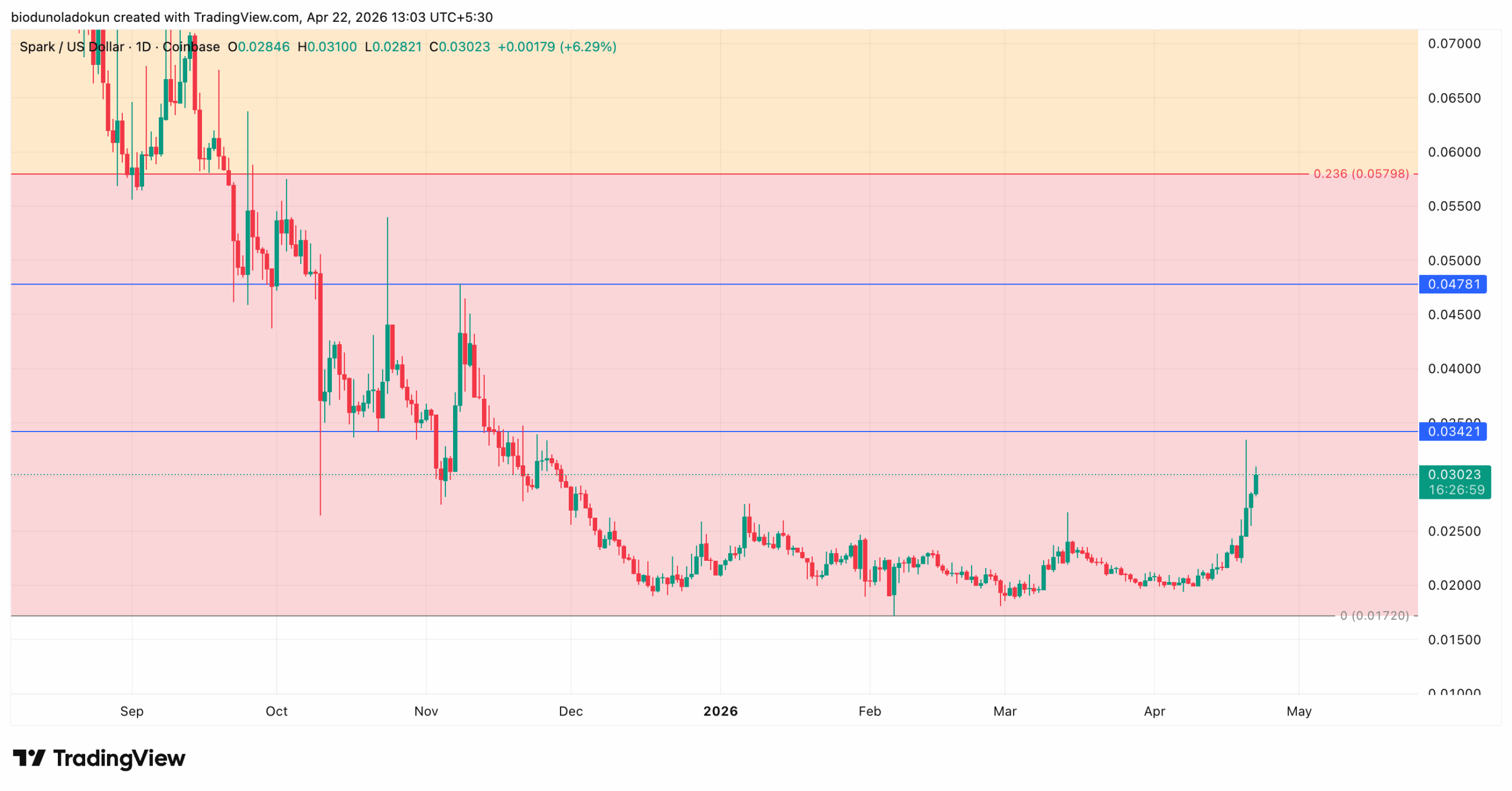
SPK is up 37% since the hack and is now trading at a six-month high, though momentum indicators signal overbought conditions.
Ethereum-based non-custodial lending protocol Spark has emerged as the standout beneficiary of the fallout from the Kelp DAO bridge exploit.
The April 18 attack has triggered a sustained liquidity exit from top lender Aave, and much of that capital is now rotating into Spark.
Over the past few days, the protocol has seen a surge in total value locked (TVL), on-chain deposits, and demand for its native SPK token, positioning it as the earliest winner of the reshuffling of DeFi’s lending layer.
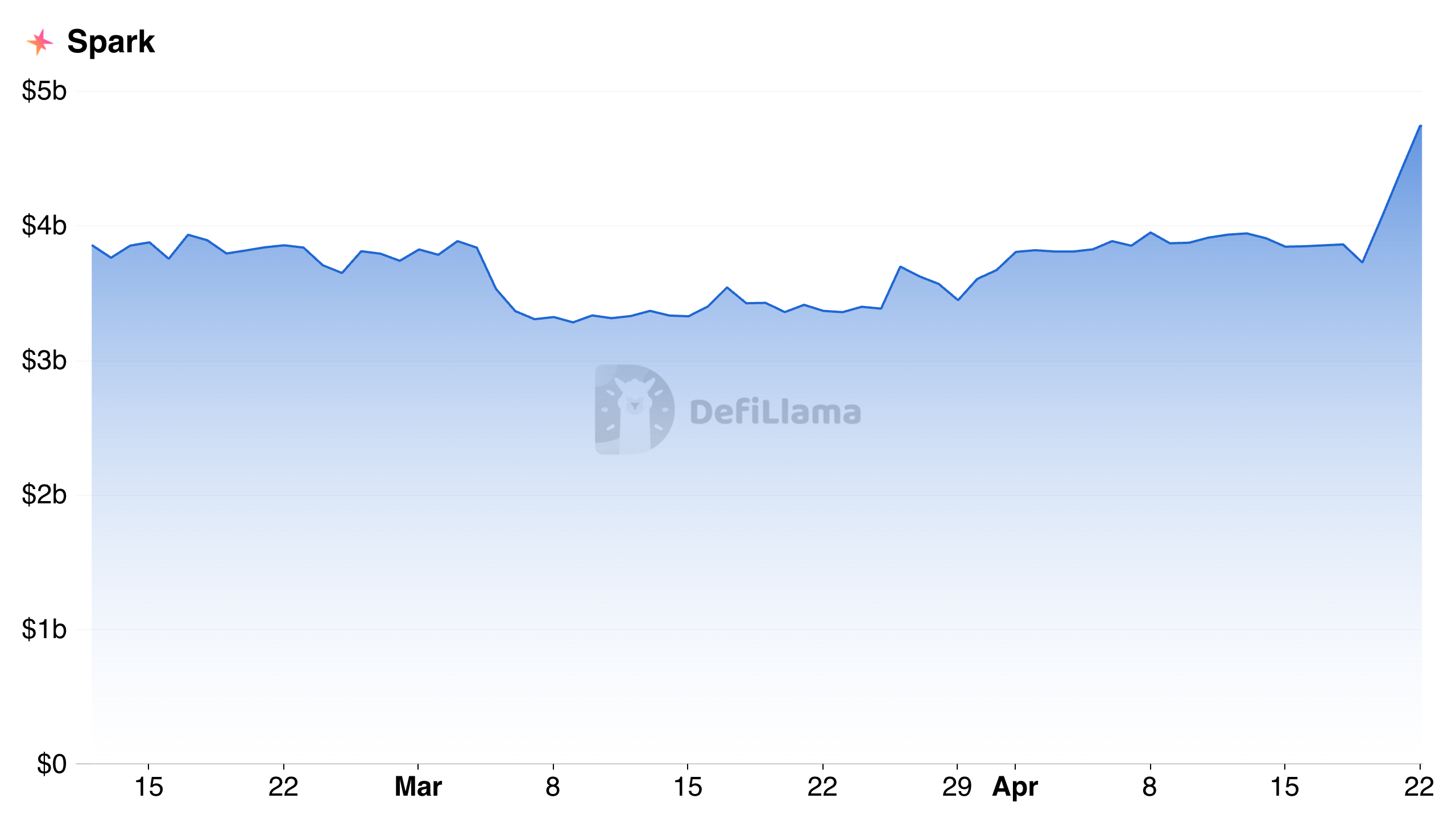
Spark TVL See Surge
According to DefiLlama, Spark’s TVL has rocketed 28% since the April 18 hack, adding over $1 billion in fresh deposits over the past four days.
Sponsored
Disclosure
We sometimes use affiliate links in our content, when clicking on those we might receive a commission at no extra cost to you. By using this website you agree to our terms and conditions and privacy policy.
TVL measures the aggregate dollar value of all user deposits held inside a protocol’s smart contracts.
For lending platforms like Spark, it tracks the combined worth of collateral posted by borrowers and liquidity supplied by lenders across its markets.
Protocol TVL jumps like this are typically triggered by one of two things: a campaign that pulls in liquidity or an event-driven situation where capital is actively rotating out of a rival platform. The latter has been the case for Spark.
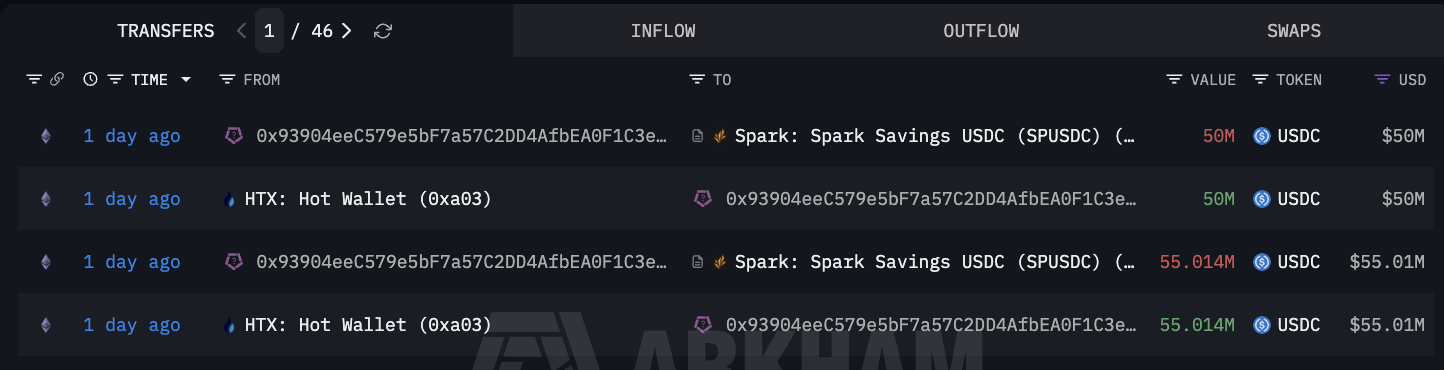
A significant share of the TVL growth has come from a single wallet.
Tron founder Justin Sun has deposited $174 million into Spark since the exploit, accounting for around 26% of the protocol’s recent TVL growth.
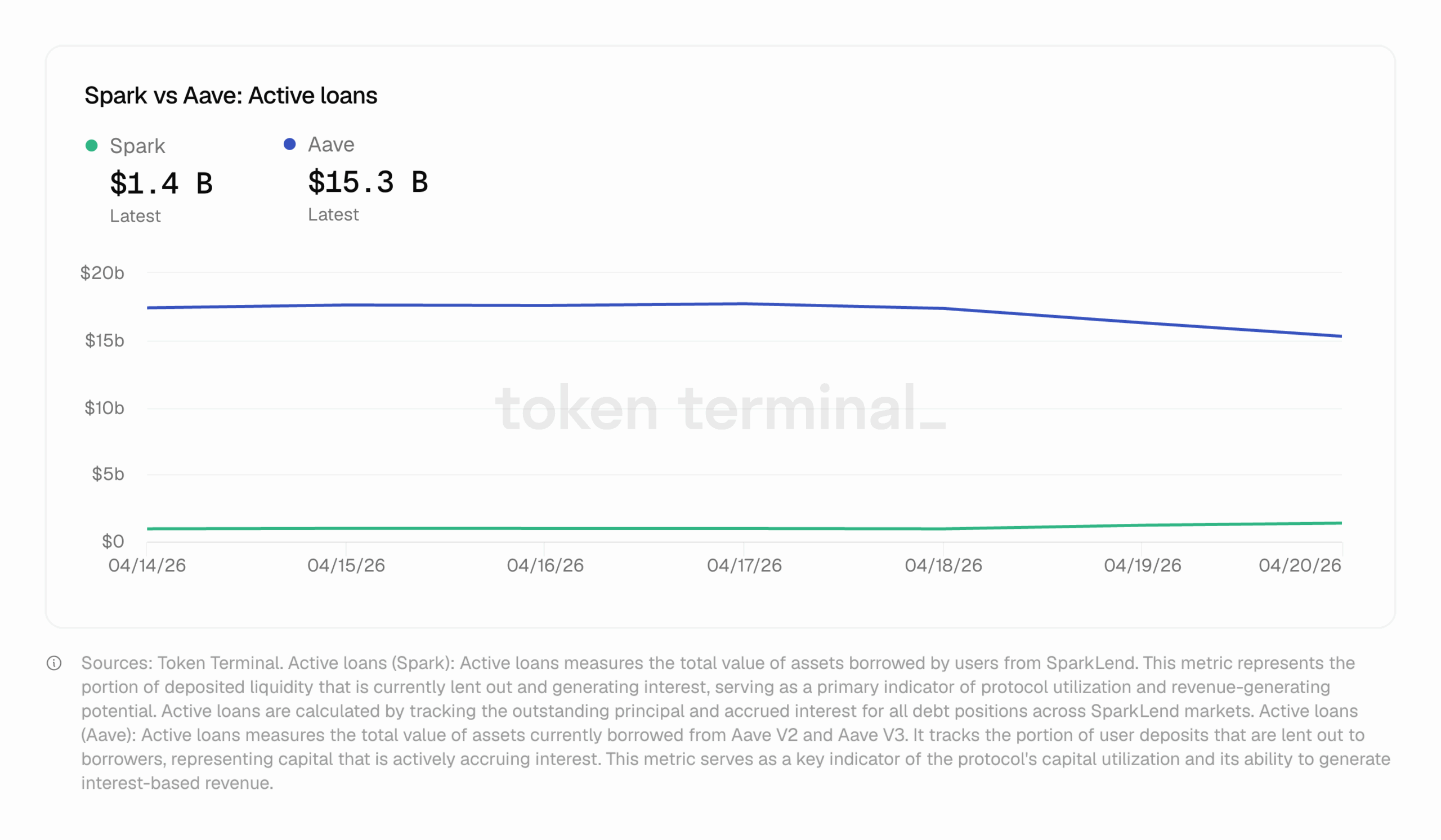
The rotation is also visible in lending activity across the two competing lenders.
As users flee Aave for Spark, active loans on the troubled lender have dropped, while Spark’s active borrows are rising.
According to Token Terminal, since April 18, Aave’s active loans have slid from $17.36 billion to $15.28 billion, a drop of $2.08 billion in just over 48 hours.
Spark, by contrast, has seen its active loan tick steadily higher to $1.4 billion from $942 million during the same period.
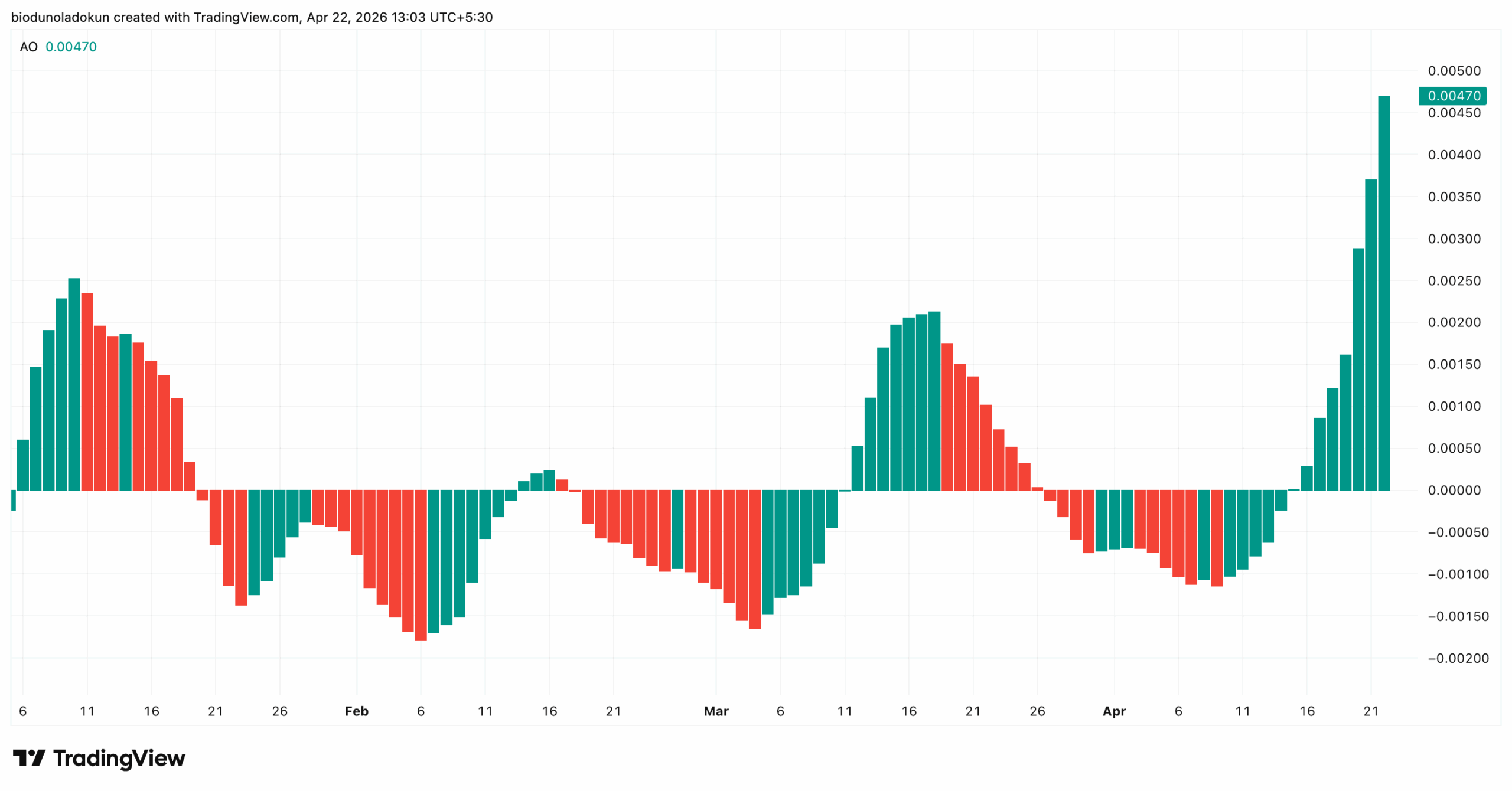
The Awesome Oscillator compares an asset’s current market momentum with its longer-term momentum, helping identify potential trend shifts.
Readings above zero confirm bullish momentum.
Successive green bars of increasing size, as seen on SPK’s chart, signal that buying pressure is increasing. This suggests that the uptrend still has room to run.
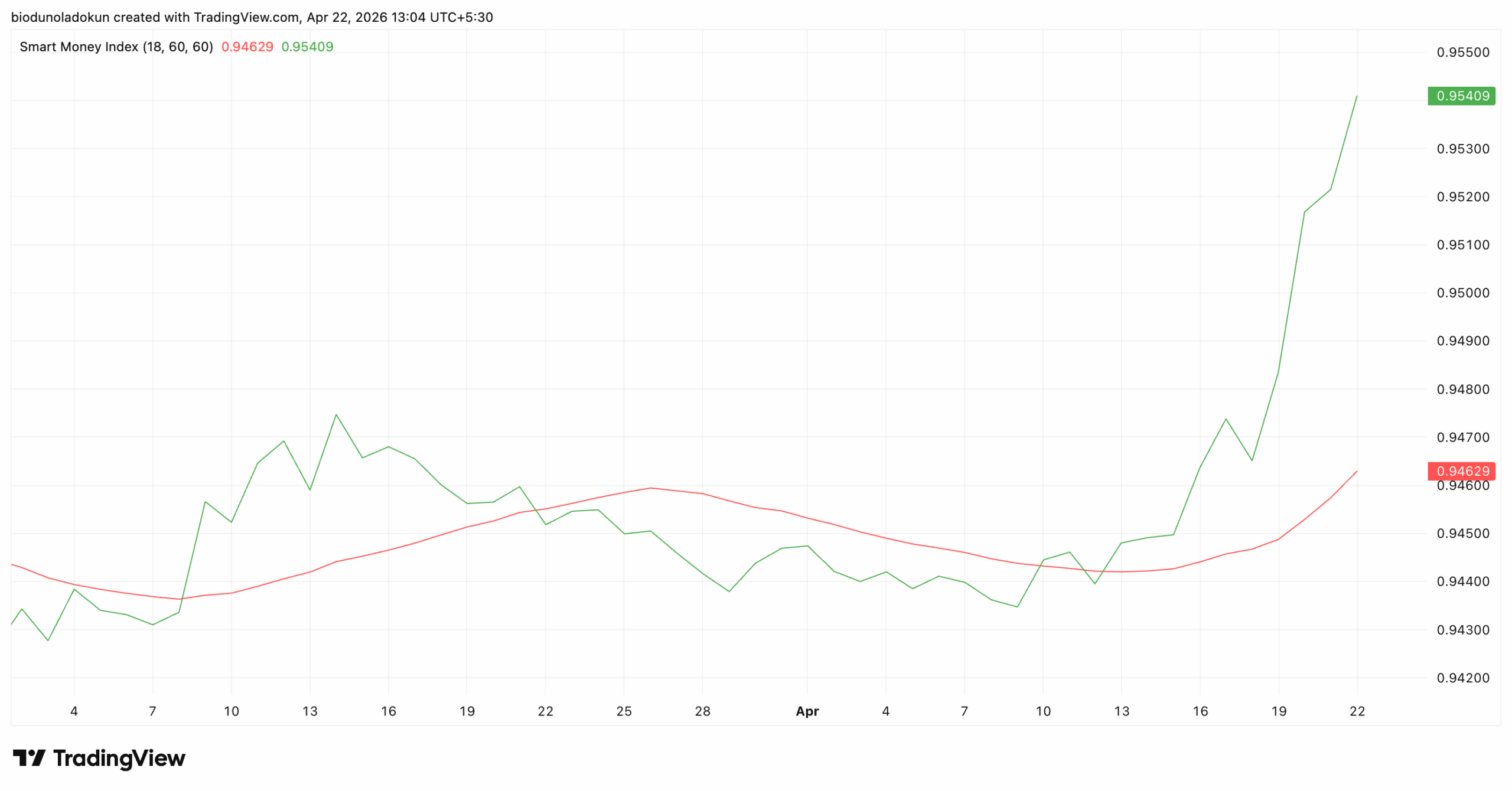
Moreover, the altcoin’s Smart Money Index (SMI) has ticked up since April 18, signaling that the price surge receives strong backing from key holders.
As of this writing, this momentum indicator is at 0.95 and remains in an uptrend.
Smart money refers to capital managed by institutional investors or seasoned traders with deeper insight into market trends and timing.
The SMI tracks its activity by analyzing intraday price movements.
When this indicator trends upward, as with SPK, it indicates that smart money is accumulating the asset, hinting at further rallies.
Surging Volatility May Hurt SPK
While demand remains high among spot traders, SPK remains prone to sharp reversals amid the rapid volatility expansion that has accompanied its recent rally.
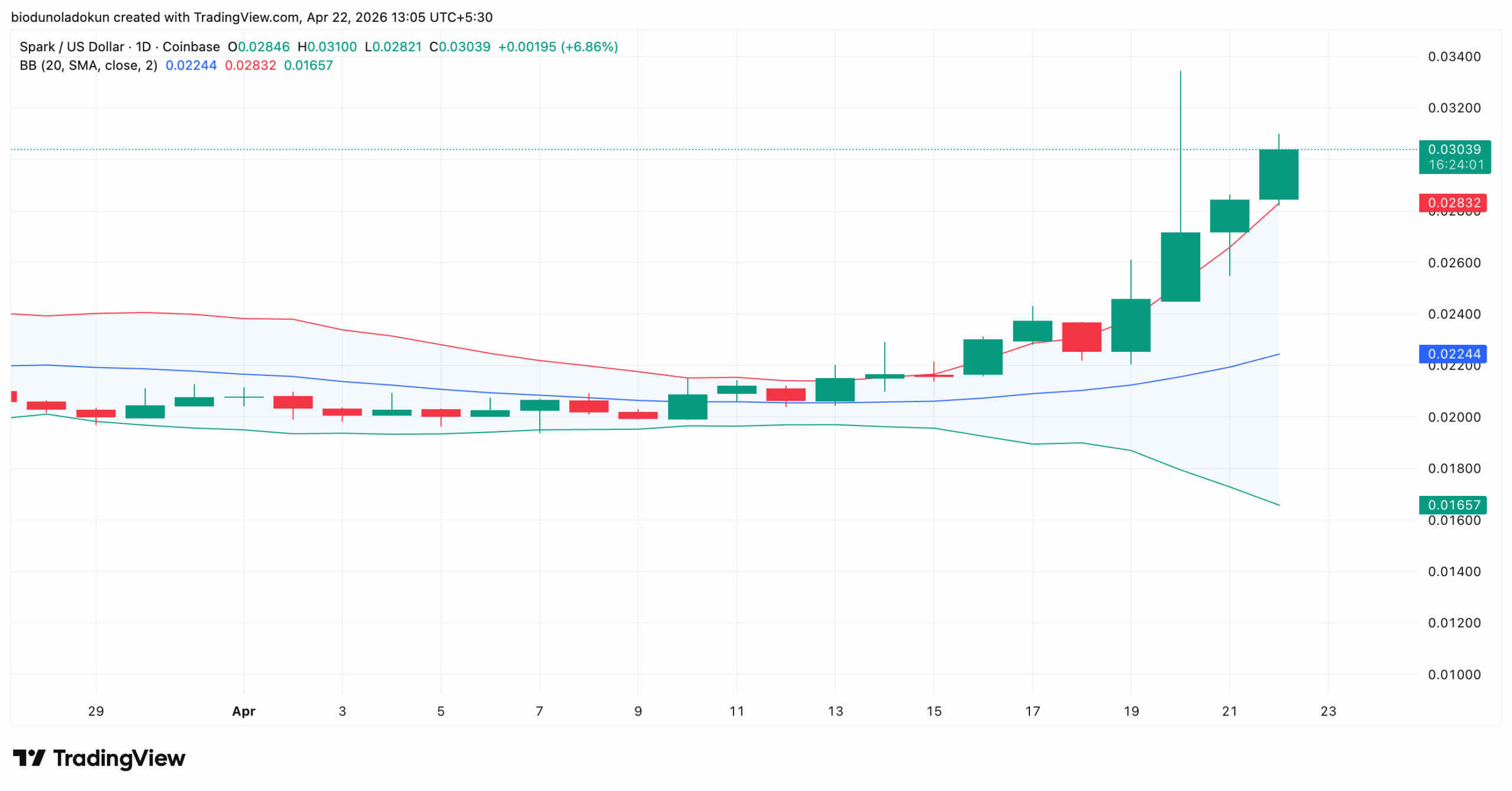
An assessment of the SPK/USD one-day chart shows that the altcoin now trades above the upper band of its Bollinger Bands indicator, signaling it is overbought and that the current price has deviated significantly from its average.
The Bollinger Bands measure an asset’s price volatility and identify overbought or oversold conditions.
It consists of three lines: a simple moving average (middle band) and two bands (upper and lower) representing standard deviations above and below the moving average.
When an asset breaks above the upper band — as SPK has done — it suggests a spike in volatility as the asset’s current value is moving significantly away from its average.
It also indicates that the asset may be overbought and due for a price correction.
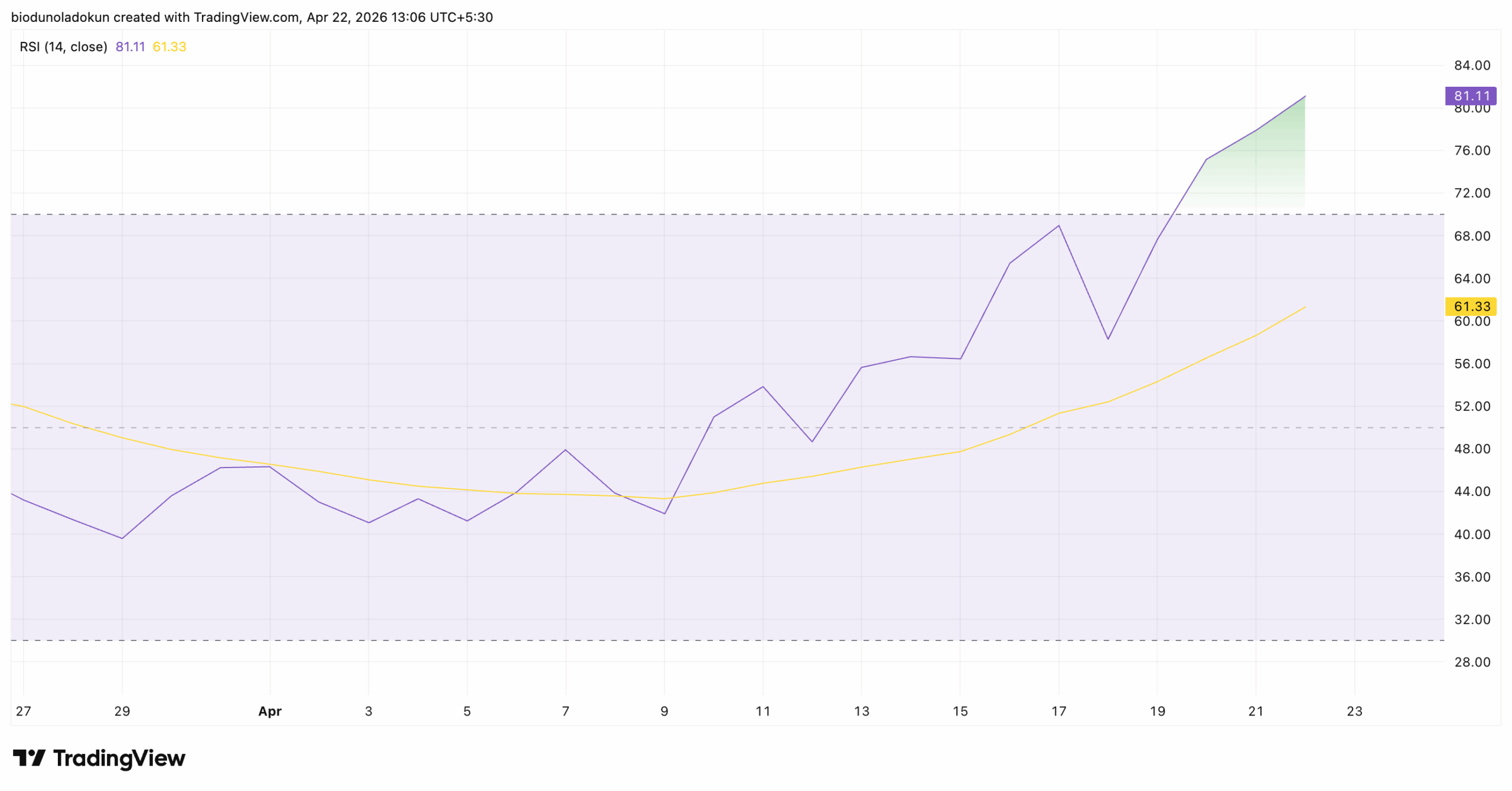
Readings from SPK’s Relative Strength Index (RSI) confirm its overbought conditions.
At press time, this key momentum indicator is at 81.11, sitting well above the 70 threshold.
Disclaimer:
The information provided in this article is for informational purposes only. It is not intended to be, nor should it be construed as, financial advice. We do not make any warranties regarding the completeness, reliability, or accuracy of this information. All investments involve risk, and past performance does not guarantee future results. We recommend consulting a financial advisor before making any investment decisions.
Abiodun Oladokun is a Research Analyst at CCN, where he covers cryptocurrency markets with a focus on on-chain analysis, technical assessments, and emerging trends across decentralized finance (DeFi), real-world assets (RWA), artificial intelligence (AI), decentralized physical infrastructure networks (DePIN), Layer 2s, and meme coins.
Prior to CCN, he served as a Senior On-Chain Analyst at BeInCrypto, producing market reports spanning diverse crypto sectors.
Before that, he conducted technical analysis and market assessments of various altcoins at AMBCrypto, where he also contributed long-form quarterly research papers on DeFi, NFTs, DAOs, and scaling architectures, leveraging on-chain platforms including Messari, Santiment, DefiLlama, and Dune Analytics.
He began his crypto career as a research analyst at SixthSense DAO, developing blockchain forensic tools to trace the history of stolen assets.
Abiodun is a lawyer called to the Nigerian Bar and the founder of Ilé Ijó, a Lagos-based electronic dance music collective.