What next for SKR after double-digit price surge at launch? | Credit: Veronica Cestari
Share
Key Takeaways
SKR token price surged post-launch as traders piled into the Solana Mobile narrative.
The token’s core thesis is ecosystem utility and incentives that tie Seeker users and developers.
Seeker’s price action shows that it could extend the rally beyond $0.015 in the short term.
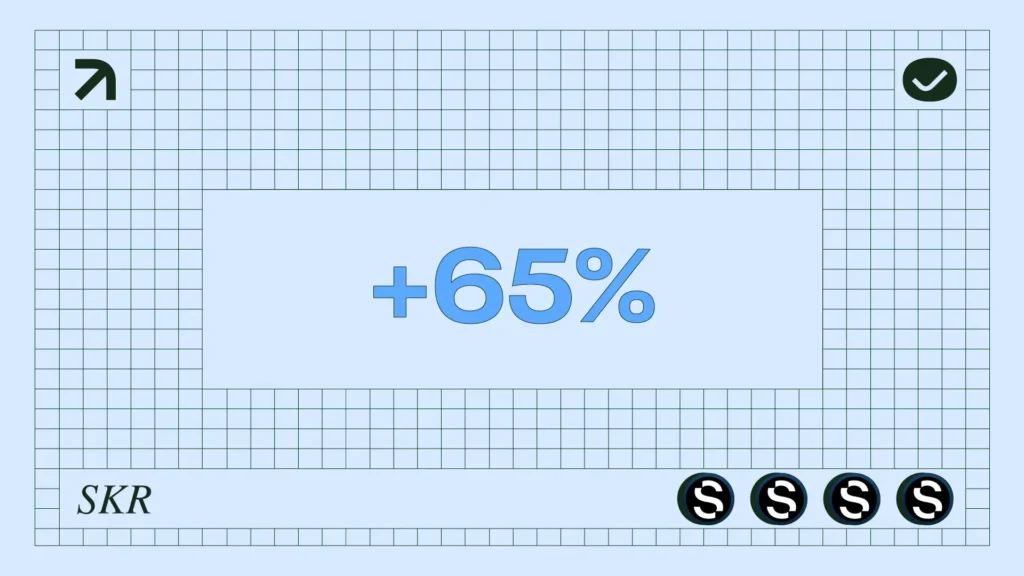
Seeker (SKR) is officially live. The Solana Mobile native asset has jumped 65% since its launch.
The token went live at a base price of $0.006 and quickly peaked at $0.0149. At the time of writing, it has stabilized near $0.012 with a 24-hour trading volume exceeding $38 million.
Buyers rushed in fast. So what drove the launch pump, and what matters next?
What Is Seeker?
For those unfamiliar, Seeker is Solana Mobile’s next Web3 smartphone. It builds on the earlier Saga device. It aims to make crypto use feel native on a phone, not bolted on afterward.
First, Seeker is baked into Solana tooling. It supports wallets, dApps, and token ownership out of the box. It also aims to deliver smoother on-chain identity and app experiences so that users can interact with Web3 without constant friction.
Next, security is the core pitch. Seeker uses hardware-backed private key protection, including the Seed Vault. That keeps keys isolated from the central operating system, which reduces the risk of common wallet exploits.
Finally, Seeker is about distribution and control. Solana Mobile wants an open mobile ecosystem. That means developers can ship Web3 apps without relying on traditional app-store gatekeepers.
It also means users and builders can share more ownership in the platform’s direction, rather than following rules set by centralized mobile incumbents.
The SKR Tokenomics and Airdrop Details
SKR is the native token powering the Solana Mobile ecosystem, with a direct link to the Seeker smartphone and its decentralized mobile platform.
As announced by the project, it runs on Solana and works as both a utility and governance asset.
At its core, the Seeker token gives users a voice. Holders can vote on how the Seeker ecosystem evolves, including decisions around the decentralized app store, incentive structures, and community funds.
This shifts control away from centralized gatekeepers and toward users and builders.
SKR also drives participation. Users can stake the token and delegate it to ecosystem “Guardians,” who help secure the platform and curate apps.
In return, stakers earn rewards, which encourages long-term alignment rather than short-term speculation.
Incentives play another key role. SKR is designed to align users, developers, and hardware partners so that the value created within the ecosystem flows back to participants rather than to traditional intermediaries.
It also helps fund growth, partnerships, and community-led initiatives.
From a supply standpoint, Seeker has a fixed cap of 10 billion tokens. As of this writing, the current circulating supply is 5.70 billion SKR tokens.
A significant portion, roughly 20 to 30%, is earmarked for airdrops and ecosystem incentives, mainly targeting Seeker phone users and developers.
The rest supports staking, governance, and long-term expansion of the Solana Mobile platform. here
Metric
Current Status (Jan 21, 2026)
Market Significance
Launch Price
$0.006
Initial base price at TGE.
Current Price
$0.012
+65% from launch; peaking at $0.015.
24h Volume
$38 million+
Massive liquidity for a new mobile-utility token.
Circulating Supply
5.70 billion SKR
57% of the 10B total supply is now unlocked.
Early Staking APY
28%
Incentive for holders to delegate to “Guardians.”
SKR Price Prediction
From a technical perspective, SKR’s price rallied nearly 7% on the 15-minute chart, trading around 0.0119, after an explosive start.
That initial surge flipped market structure bullish, the Seeker token well above the 0.5 and 0.618 Fibonacci levels, and established strong short-term demand.
Since the peak near $0.015, SKR has been consolidating within a downward channel, which is a bull flag.
Importantly, this pullback is occurring above the 0.618 retracement around $0.0105, a level that continues to act as support.
Volume has cooled during the consolidation, suggesting selling pressure is corrective rather than aggressive distribution.
As long as the SKR price holds above the $ 0.0105 zone, the structure favors continuation.
A break above the descending channel would open the door for a retest of $0.013, with the prior high near $0.015 acting as the primary target.
Disclaimer:
The information provided in this article is for informational purposes only. It is not intended to be, nor should it be construed as, financial advice. We do not make any warranties regarding the completeness, reliability, or accuracy of this information. All investments involve risk, and past performance does not guarantee future results. We recommend consulting a financial advisor before making any investment decisions.
Victor Olanrewaju is a crypto analyst and reporter at CCN with deep roots in on-chain research and technical analysis. His crypto journey began in 2017, but it was the 2020 Uniswap airdrop that sparked a full-time pivot into the space.
With a foundation in copywriting, Victor honed his craft creating high-converting content for leading crypto brokers — most notably an XRP price prediction that ranked #1 on Google during the 2021 bull run.
He later joined AMBCrypto in 2022, where he combined storytelling with technical and on-chain analysis to cover key market narratives.
In 2024, he expanded his expertise at BeInCrypto, collaborating with analysts and using tools like Glassnode, Santiment, and IntoTheBlock to break down Bitcoin and altcoin trends.
At CCN, Victor covers the top cryptocurrencies, memecoins, macro shifts, blending real-time insights with deep-dive metrics.
He holds a Bachelor’s degree in Physics from the University of Ibadan, equipping him to simplify complex data for a wide audience. Follow his work or connect on LinkedIn or X.