Key Takeaways
- The 2025 NFL International Series will feature seven games across five countries, including matches in Spain and Ireland for the first time.
- With rising adoption in Latin America and Europe, crypto payments, fan tokens, and NFTs could play a bigger role in NFL fan engagement.
- Host cities benefit from massive boosts in tourism, jobs, and global exposure while cultures focused on Soccer embrace American football.
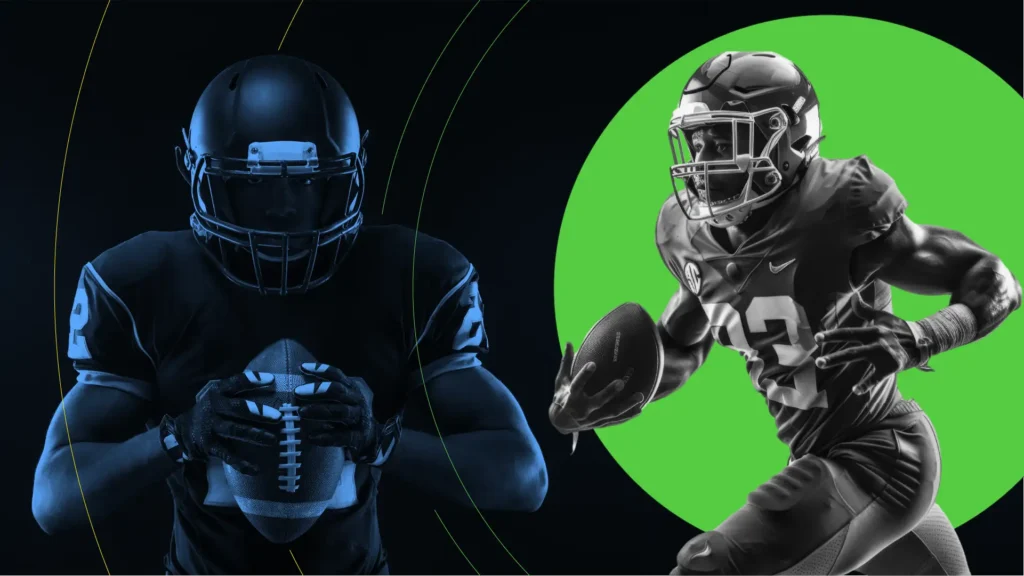
The NFL International Series has grown from a single London showcase in 2007 into one of the league’s most ambitious global expansions.
In 2025, the NFL will schedule seven international games across five countries, including Spain and Ireland as hosts for the first time.
Beyond football, the series impacts tourism and could even help shape the future of crypto adoption in sports.
2025 NFL International Series Overview
The NFL International Series is part of the league’s efforts to expand American football beyond its borders.
It launched in 2007 with a single game at Wembley Stadium in London, and continued with one game yearly in London until 2011, expanding to two in 202, and three in 2014 and 2015.
In 2016, a game was played in Mexico City, beginning a trend where three games yearly were played in London and one in Mexico.
Games were played in Germany from 2022 and in Brazil from 2024.
In 2025, the NFL will hold its biggest-ever international series, with seven games in five countries, including Ireland and Spain as maiden hosts..
The NFL has already dipped its toes in blockchain sponsorships and advertising.
In 2021, it allowed teams to engage in deals with cryptocurrency companies, allowing FTX and Coinbase to establish partnerships with teams and secure naming rights quickly.
In 2019, the Miami Dolphins secured a partnership with the Litecoin Foundation, making it the team’s official cryptocurrency.
Additionally, several players decided to receive part or all of their salary in Bitcoin. Russell Okung started the trend in 2020, while Saquon Barkley, Aaron Rodgers, and Odell Beckham Jr. followed suit.
The league also launched NFTs through the Flow blockchain, allowing fans to own specific moments and play in football history, similarly to how cards functioned for decades.
This is done through Dapper Labs, the same company behind NBA Top Shot.
Soccer clubs are famous for using fan tokens to give supporters voting rights and exclusive experiences. While this has not happened yet in the NFL, it is a likely next step.
Even though there are no official 2025 international series ties to crypto, such as specific sponsorships, the intersection of sports and blockchain continues to grow.
2025 NFL International Series: Full Schedule
| Date |
Week |
Matchup |
Stadium |
City |
Country |
| Sept. 5 |
1 |
Kansas City Chiefs vs. Los Angeles Chargers |
Corinthians Arena |
São Paulo |
Brazil |
| Sept. 28 |
4 |
Minnesota Vikings vs. Pittsburgh Steelers |
Croke Park |
Dublin |
Ireland |
| Oct. 5 |
5 |
Minnesota Vikings vs. Cleveland Browns |
Tottenham Hotspur Stadium |
London |
U.K. |
| Oct. 12 |
6 |
Denver Broncos vs. New York Jets |
Tottenham Hotspur Stadium |
London |
U.K. |
| Oct. 19 |
7 |
Los Angeles Rams vs. Jacksonville Jaguars |
Wembley Stadium |
London |
U.K. |
| Nov. 9 |
10 |
Atlanta Falcons vs. Indianapolis Colts |
Olympic Stadium |
Berlin |
Germany |
| Nov. 16 |
11 |
Washington Commanders vs. Miami Dolphins |
Santiago Bernabéu Stadium |
Madrid |
Spain |
The NFL London Games will continue as usual in 2025, with three planned games, including their now de facto team, the Jacksonville Jaguars.
The NFL Germany Games will continue in 2025, as will the one in Brazil.
Spain and Ireland are the new entrants, possibly kicking off a new phase of NFL Spain and Ireland games.
Hosting Countries & Stadiums
In Brazil, the NFL returns to São Paulo’s Corinthians Arena after its 2024 debut, tapping into the country’s legendary sports culture and rapidly growing NFL fanbase.
Brazil is also the leader in Latin American crypto adoption and ranks #10th worldwide. Major soccer clubs such as Atletico Mineiro, have already launched fan tokens.
Ireland hosts its first-ever NFL game at Dublin’s historic Croke Park, the heart of Gaelic sports. Dublin has a reputation for being a European Fintech hub.
Gemini’s cryptocurrency exchange chose Dublin as its headquarters in 2023 but moved it to Malta in 2025. The Blockchain Ireland summit is also held annually.
The United Kingdom remains the NFL’s longest-standing international hub, with games at both Wembley and Tottenham Hotspur Stadium, the latter of which has explored digital ticketing innovations. The U.K. has recently lifted a ban on Crypto Exchange-Traded Notes (ETNs)
In Germany, Berlin’s Olympiastadion welcomes fans in one of the NFL’s fastest-growing international markets, since there is a passionate American Football fanbase.
The country’s progressive stance on regulated cryptocurrency exchanges also points to future blockchain-driven fan engagement.
Germany’s largest stock exchange has also launched Bitcoin and Ethereum custody for institutional investors.
Spain joins the series for the first time at Madrid’s Santiago Bernabéu, home of Real Madrid, the largest soccer team in Spain and possibly the world.
Several Spanish soccer teams, such as Atletico Madrid, Secilla F.C., and FC Barcelona, have launched fan tokens through Chiliz and Socios, something the NFL could experiment with.
Bitget has also served as the official crypto partner for La Liga since 2024.
Teams Involved in 2025
Thirteen teams will travel overseas in 2025:
-
AFC Teams: Jacksonville Jaguars, Miami Dolphins, New England Patriots, New York Jets, Kansas City Chiefs.
-
NFC Teams: Chicago Bears, Green Bay Packers, Atlanta Falcons, Dallas Cowboys, Philadelphia Eagles, San Francisco 49ers, Detroit Lions
Since the inception of the NFL international series, the Jacksonville Jaguars have played in London every year, effectively becoming a second “home team.”
Due to their rich history, teams like the Cobwoys, Packers, and 49ers have a massive international fanbase, so their selection for international games is no surprise.
Interestingly, the Miami Dolphins have also been chosen, since they were one of the first teams to create legitimate crypto sponsorships. Still, it is uncertain if this played a role in their selection.
The Minnesota Vikings will also play twice this year, once in Ireland and once in the United Kingdom.
Impact and Cryptocurrency Links
The NFL’s international push is not solely focused on football; it’s driving tourism, jobs, and even crypto adoption.
Whenever games are played abroad, host cities see a significant boom in travel and hotel revenue, while stadium operations, media, and logistics create thousands of jobs tied to these events.
Beyond economics, there’s also cultural fusion: American football collides with cultures that obsess over soccer, playing games at soccer stadiums, and creating a unique cross-sport ecosystem of fans.
On the tech and finance side, ticket and merchandise sales are prime candidates for crypto payment systems offering faster and borderless transactions.
In the future, fan tokens, already popular in soccer, could be the next big engagement tool for the NFL, allowing fans to connect with their favorite teams.
Prediction markets are also worth monitoring. After Robinhood sued Nevada and New Jersey for unlawfully blocking its prediction markets, sports betting has recently been in the spotlight.
Robinhood argues that its event contracts fall under federal jurisdiction rather than state gambling law. Earlier this year, federal courts allowed KalshiEx to list similar products.
The battle for sports betting mirrors the earlier crypto regulatory crisis, highlighted by the Securities and Exchange Commission (SEC) vs Ripple case, which finally concluded this year.
Digital engagement is another growth engine. Streaming and broadcast partnerships are expanding access for overseas fans, while official NFL NFTs on the Flow blockchain already hint at the league’s future international collectibles market.
And though crypto sponsorships have cooled off, they could make a comeback as the industry stabilizes.
Conclusion
The 2025 NFL International Series marks a turning point where sports, technology, and crypto innovation collide globally.
The NFL is positioning itself as a truly borderless league by embracing international markets, digital fan engagement, and blockchain-powered possibilities.
Whether through tourism, fan tokens, or NFTs, the league’s expansion proves that football’s future goes far beyond the gridiron.
13 teams will play:
- Kansas City Chiefs
- San Diego Chargers
- Los Angeles Rams
- Jacksonville Jaguars
- Minnesota Vikings
- Pittsburgh Steelers
- Cleveland Browns
- Denver Broncos
- New York Jets
- Atlanta Falcons
- Indianapolis Colts
- Washington Redskins
- Miami Dolphins
-
UK (Wembley, Tottenham Hotspur)
-
Germany (Olympiastadion, Berlin)
-
Brazil (Arena Corinthians, São Paulo)
-
Ireland (Croke Park, Dublin)
-
Spain (Santiago Bernabéu, Madrid)
There is no official partnership in 2025, but the NFL has prior history with cryptocurrency sponsors (FTX, fan tokens, NFTs) and could re-engage as global expansion aligns with blockchain adoption.
Games will stream globally via NFL Game Pass, local TV rights, and official streaming partners. Fans can also engage through NFTs, digital collectibles, and team social media campaigns.
The information provided in this article is for informational purposes only. It is not intended to be, nor should it be construed as, financial advice. We do not make any warranties regarding the completeness, reliability, or accuracy of this information. All investments involve risk, and past performance does not guarantee future results. We recommend consulting a financial advisor before making any investment decisions.

Valdrin Tahiri is a cryptocurrency analyst and reporter at CCN, specializing in technical analysis with a focus on Elliott Wave theory, on-chain metrics, and fundamental research. He brings over seven years of experience in the crypto space as both a trader and writer.
He discovered cryptocurrencies in 2017 while earning his MSc in Financial Markets at the Barcelona School of Economics, which sparked a deep interest in blockchain and market dynamics. Since then, he’s contributed to top crypto outlets like BeInCrypto and CoinGape.
Valdrin also served as Community Manager of BeInCrypto’s Telegram group for three years, helping grow it into one of the largest crypto communities worldwide. His expertise in market structure and price patterns allows him to break down complex trends into clear, actionable insights.
He’s published thousands of articles covering altcoins, Bitcoin cycles, and macro trends.