Key Takeaways
- Robinhood is suing Nevada and New Jersey officials, who they claim are unlawfully blocking its prediction markets.
- Just as regulators have clashed over whether crypto tokens are securities or commodities, the courts must now decide if event contracts are regulated derivatives or state-controlled gambling products.
- A win for Robinhood would strengthen the case for federal oversight and bring prediction markets further into the mainstream.
For over a decade, the crypto industry has wrestled with an identity crisis over whether digital assets are securities, commodities, or something else entirely.
This uncertainty has fueled a constant global battle between federal regulators, state authorities, and the courts, leaving innovators caught in a patchwork of rules.
Robinhood’s new battle over sports prediction markets now mirrors that same dilemma.
In a new lawsuit against gaming regulators in Nevada and New Jersey, Robinhood is asking judges to decide whether its event contracts are legitimate, regulated derivatives or simple wagers that fall under state gambling law.
What Are Event Contracts?
Event contracts let people trade on the outcomes of real-world events, from who wins a football game to the result of an election.
Each contract settles in a binary fashion, paying out if the event occurs and expiring worthless if it does not, making them structurally similar to other derivatives but thematically closer to wagers.
According to court documents filed on Tuesday, Robinhood Derivatives sued gaming regulators and the attorneys general of Nevada and New Jersey, alleging that the state authorities continued to block its efforts to offer event contracts in both jurisdictions.
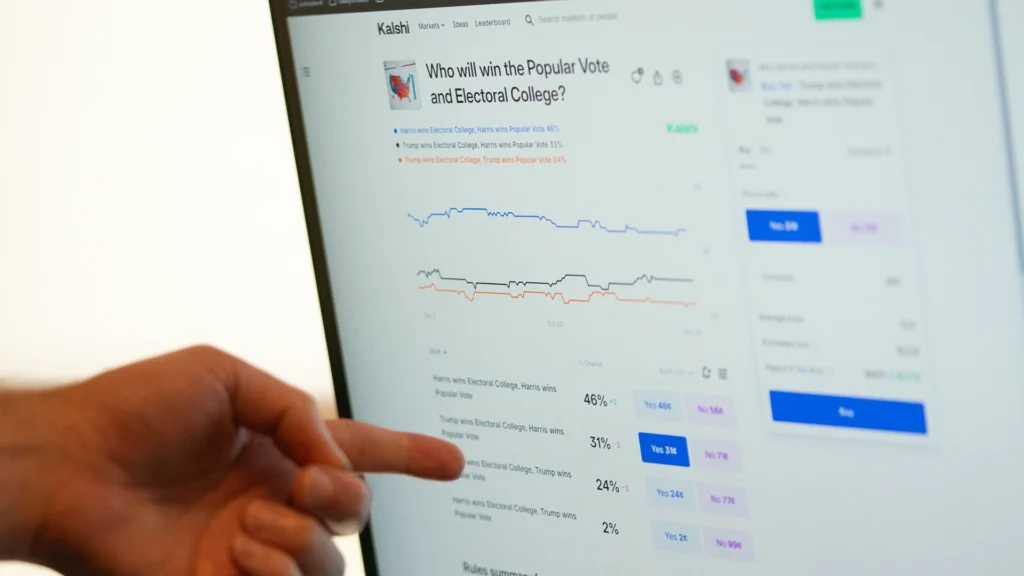
In a separate complaint, the company explained that it began offering these contracts after federal courts earlier this year allowed KalshiEx, a CFTC-designated derivatives exchange, to list similar products.
Robinhood argued that those rulings effectively confirmed that event contracts fall under federal jurisdiction, not state gambling law.
“Our event contracts, including those for pro and college football, are offered in a compliant, federally regulated way through our CFTC-registered Futures Commission Merchant, Robinhood Derivatives. This is a decisive step forward in our mission to democratize finance for all and unlock even more innovative market opportunities for investors,” a Robinhood Spokesperson told CCN.
Parallels With Crypto’s Regulatory Crisis
Robinhood’s recent lawsuits over prediction markets bear a striking resemblance to the legal disputes that have defined the evolution of crypto regulation in the U.S.
For over a decade, regulators and courts have debated whether digital assets constitute securities, commodities, or a distinct category of their own.
The question has led to major wars between the SEC and other state regulators.
The high-profile cases have involved leading crypto platforms, including Ripple Labs, Coinbase, and Binance.
In 2023, a judge ruled that some sales of Ripple’s XRP token were unregistered securities, but others were not.
In 2024, a long-standing case between the SEC and Coinbase also proceeded, with the agency concluding that some tokens should be treated as securities.
Prediction markets have also faced similar challenges.
In 2022, the CFTC fined Polymarket, the leading blockchain-based prediction platform, for offering unregistered event contracts.
Both crypto and event contracts continue to test the boundaries of existing frameworks, which makes the recent court proceedings involving Robinhood such a key moment for potential further clarity.
Stakes for Future Innovation
The outcome of Robinhood’s lawsuits could have far-reaching implications for the future of prediction markets.
A ruling in Robinhood’s favor would strengthen the argument for federal preemption, shielding similar products from state gambling laws.
Such a decision could legitimize prediction markets and open the door to wider adoption of contracts tied to elections, entertainment, and other major events.
At the same time, the dispute underscores a broader regulatory tension between federal oversight and the fragmented, state-by-state approach that has long defined gambling law.
If courts side with state regulators, event contracts may remain restricted, reinforcing a patchwork system that often slows financial innovation.
Prediction Markets to the Mainstream
Robinhood entered the prediction market space earlier this year, positioning itself as the first major U.S. trading platform to offer the product under federal oversight.
Since launch, users have already traded more than two billion contracts across a wide range of categories, from crypto value to cultural events and sports.
Much of the global prediction market industry still operates outside U.S. jurisdiction.
Platforms such as Polymarket remain popular overseas but claim to officially block American users to avoid scrutiny from regulators.
By putting prediction markets inside its app, Robinhood is taking the opposite path and attempting to work through the regulatory framework to convince the courts that its offerings are legitimate financial instruments rather than gambling products.
“We believe in the power of prediction markets and think they play an important role at the intersection of trading, news, information, economics, politics, culture, and sports,” the trading platform wrote in a blog post.
Top Trending Crypto Articles

Kurt Robson is a London-based reporter at CCN, specialising in the fast-moving worlds of crypto and emerging technology. He began his career covering local news in Cornwall after graduating from Falmouth University with First Class Honours in Journalism. There, he cut his teeth on everything from council meetings to missing swans.
He quickly rose through the ranks to become a frontline journalist at several of the UK’s leading national newspapers. Over the years, he has interviewed musicians and celebrities, reported from courtrooms and crime scenes, and secured multiple front-page exclusives.
Following the upheaval of the COVID-19 pandemic, Kurt shifted his focus to technology journalism—just ahead of the AI boom. With a natural curiosity and a trained eye for emerging trends, he has found a new rhythm in reporting on innovation.
At CCN, Kurt's work focuses on the cutting edge of crypto, blockchain, AI, and the evolving digital world. Drawing on his background in people-first reporting and his deep interest in disruptive tech, Kurt delivers stories that are insightful, entertaining, and human-centric.