Key Takeaways
- When the U.S. government shuts down, the world’s largest economy doesn’t stop, but it slows.
- Roughly 800,000 federal employees have been affected.
- While shutdowns often trigger short-term volatility in traditional markets, digital assets have historically shown mixed or even counterintuitive reactions.
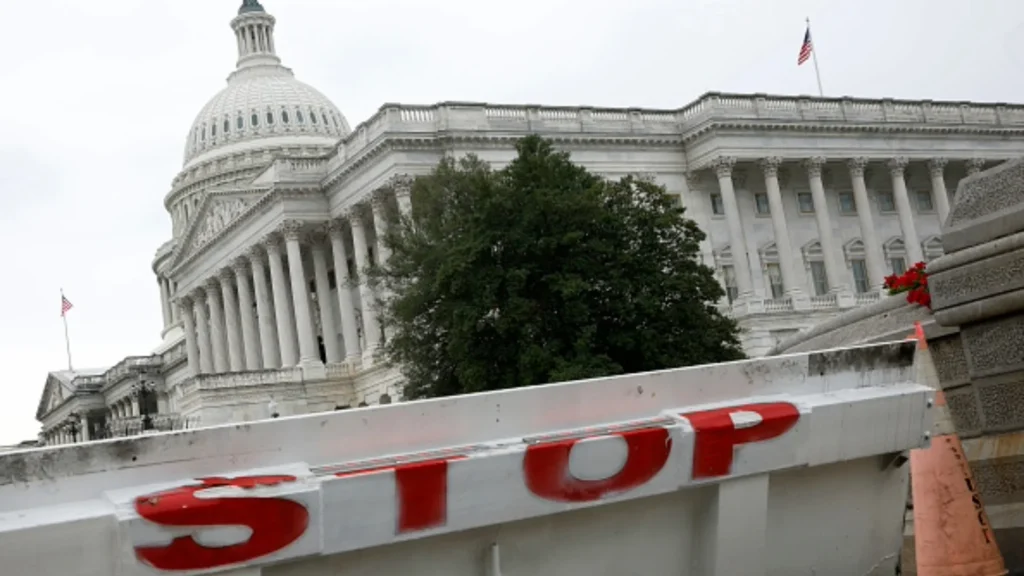
Since Oct. 1st, hundreds of thousands of federal workers have been furloughed, government data releases have been delayed, and key congressional activity paused.
Shutdowns introduce one of the least desirable variables in modern markets: uncertainty. For investors and innovators alike, this disruption arrives during a critical inflection point for the digital asset industry.
Right now, dozens of ETF applications, a major crypto market structure bill, and several public-private blockchain initiatives are left in limbo.
While nobody can predict the length or impact of the U.S. shutdown on the digital asset industry, it is clear that it threatens to stall legislative and regulatory accomplishments many hoped to finalize by the end of the year.
The question now is how the shutdown will impact these political initiatives and the market.
Wider Negative Effects
Without having a crystal ball to predict when the shutdown will end, I argue that most legislative and regulatory progress will proceed as planned, and that markets will be relatively insulated from wider negative effects while potentially outperforming traditional assets.
My reasoning for this is twofold:
First, digital asset legislation & regulation remains one of the administration’s top priorities, with the Trump family personally invested in the industry’s success. The agencies governing crypto have had the least impacted staff reductions and congressional staff continue to work on this issue through the shutdown.
As for the market, crypto’s relative advantage is its global, decentralized, and 24/7 nature, which makes it less susceptible to macroeconomic trends and data blackouts.
Background and Political Context
The government shutdown is in its eighth day at the time of writing, and comes as Congress failed to pass a continuing resolution to fund government operations amid partisan disagreements over extending healthcare tax credits.
Roughly 800,000 federal employees have been affected, with congressional offices and many agencies, including the Securities and Exchange Commission (SEC) and Treasury Department, operating on limited staff or pausing non-essential functions entirely.
The hardest-impacted agencies include the EPA, Education, Commerce, Labor, and HUD departments, with more than 70% of their staff furloughed.
Politically, many view this as the first real opportunity for the Democrats to show any sign of collective resistance to their biggest challenge of the Trump administration’s second term.
Alternatively, Republicans aim to use this opportunity to place the blame of government dysfunction on the Democrats, while continuing their previous DOGE efforts to cut “Democratic Agencies” under a new banner. This means that digital assets are relatively sheltered from the politicisation of this shutdown, with healthcare being the primary industry in the crosshairs.
Regulatory Implementation Is Already Underway
Perhaps the shutdown’s most visible impact on digital assets is on the SEC, which is currently unable to process or approve new ETF applications.
Around 90 ETF filings spanning dozens of different crypto products are sitting idle. Under shutdown protocols, the SEC can continue only “essential” activities such as enforcement and emergency market operations, leaving all other pending applications effectively frozen. This comes at a pivotal time.
The fourth quarter of 2025 was expected to be “ETF season,” as multiple asset managers, including BlackRock and Fidelity, awaited decisions that could open the next wave of institutional adoption. Those reviews, already delayed once, now remain suspended until Congress restores funding, pushing timetables potentially into early 2026.
However, when the shutdown ends, I expect these decisions to be issued in short order. Given that most filings were already under active review before the pause, markets can reasonably anticipate a swift clearance process once agencies reopen.
Further, agency directors and staff are not constrained by the political considerations and campaign demands that legislators encounter as the midterms approach.
Policy Progress Paused But Political Will Persists
On Capitol Hill, legislative efforts face a similar standstill. While the GENIUS Act became law earlier this year, the Clarity Act market structure bill has now stalled in the Senate after passing a House vote in July.
Many congressional and industry leaders hoped that the bill, designed to define jurisdictional boundaries between the SEC and CFTC, would pass by the end of the year. That timeline is now in question as the shutdown has led to committee mark-ups, hearings, and inter-agency coordination being paused.
Supporters of the bill have emphasized the urgency of passing a clear market structure framework before the 2026 midterms. Every week of inactivity shortens that window. If legislative calendars slip too far into campaign season, crypto policy reform could again fall victim to political timing.
That said, analysts explain in Forbes that the shutdown may actually provide a quiet period where legislative staff can focus on substantive policy issues. In the same article, a spokesperson for Sen. Cynthia Lummis (R-Wyo.) said her team remains “full steam ahead” on market structure legislation.
Due to existing tailwind political momentum from the passage of Genius earlier this year, coupled with the fact that the Trump family is invested in the industry’s success, I expect there will be the political will to pass Clarity before the midterms.
Why Digital Assets May Prove More Resilient
Government shutdowns typically have a negligible impact on capital markets. In fact, the S&P 500 index rose in every one of the last six government shutdowns.
While shutdowns often trigger short-term volatility in traditional markets due to the lack of publicly available data, digital assets have historically shown mixed or even counterintuitive reactions.
Several factors could explain why crypto markets may remain resilient or, in some cases, benefit from Washington’s latest fiscal standoff.
First, despite increasing correlation between digital assets and equities (measured by Bitcoin and the S&P 500, respectively) Bitcoin’s competitive advantage is that its price movements have become increasingly driven by on-chain liquidity and network flows rather than global macro data.
In short, while a “data blackout” frustrates equity traders, crypto markets operate on a different rhythm: 24/7 and sentiment-driven, with participants around the world continuing to trade even as Washington stalls.
Second, there’s the timing factor. October has historically been one of Bitcoin’s strongest months, so much so that traders call it “Uptober.”
Bitcoin has posted positive returns in ten of the past thirteen Octobers, with returns averaging 20%. That seasonal bias, combined with extended opportunity for institutional capital flows ahead of more regulatory & legislative accomplishments, could support a steadier market environment through the shutdown.
Finally, the political dysfunction fueling the shutdown may paradoxically reinforce the ideological appeal of decentralized assets. Bitcoin was born from distrust in centralized monetary systems, and moments of government instability often drive renewed attention to its core narrative as a sovereignty hedge.
Bitcoin rose significantly during previous periods of institutional instability, including debt-ceiling crises, the 2020 election, and the 2023 banking turmoil. The current shutdown fits that broader pattern. Bitcoin is up 7.56% since the shutdown started at the time of writing.
Bitcoin Rising During Institutional Instability
| Event |
Period |
Duration of Days |
BTC Start Close (USD) |
BTC End Close (USD) |
% Change |
| 2011 Debt Ceiling Crisis |
May 16–Aug 2, 2011 |
79 |
3.80 |
10.90 |
+186.8% |
| 2020 Election Uncertainty |
Nov 3, 2020–Jan 20, 2021 |
79 |
3,949.86 |
35,553.55 |
+154.9% |
| 2021 Debt Ceiling Brinkmanship |
Aug 1–Dec 16, 2021 |
137 |
39,974.89 |
47,625.01 |
+19.1% |
| 2023 Debt Ceiling Crisis |
Jan 19–Jun 3, 2023 |
135 |
21,030.88 |
27,078.29 |
+28.8% |
| Banking & Regulatory Confidence Shocks (SVB Collapse) |
Mar 9–17, 2023 |
9 |
20,351.98 |
27,406.74 |
+34.7% |
| 2025 Debt Ceiling Reinstatement & Raise |
Jan 2–Jul 4, 2025 |
183 |
93,548.80 |
118,000.00 |
+26.2% |
Bitcoin price performance data compiled from StatMuse Money and CoinMarketCap historical records (accessed October 2025). Percent changes calculated based on verified end-of-day USD closing prices. Prompt run on Chat-GPT.
Waiting for the Lights to Turn Back On
The government shutdown introduces short-term uncertainty but is unlikely to derail U.S. crypto policy or market momentum.
While ETF approvals and the Clarity Act face temporary pauses, the political will behind digital assets remains strong. Agency staff continue limited operations, and congressional offices still advance market structure work.
Historically, shutdowns and broader government dysfunction have not harmed crypto markets. Bitcoin has risen during debt-ceiling crises, election turmoil, and the 2023 banking shock, as investors view decentralized assets as an alternative to political and monetary instability.
Its global, 24/7 nature, anti-establishment ethos, and October’s seasonal strength further support this resilience.
Ultimately, the very qualities that define digital assets: decentralization, borderless liquidity, and independence from government systems make them durable in moments like this.
The shutdown is a reminder that while politics can pause policy, the crypto economy never truly stops.
Visit Our Secure Partners
The views, thoughts, and opinions expressed in the article belong solely to the author, and not necessarily to CCN, its management, employees, or affiliates. This content is for informational purposes only and should not be considered professional advice.
About the Author
G Clay Miller is a Partner at Penrose Partners, where he supports clients such as Coinbase, Circle, the NEAR Foundation, and the Government of Bermuda. He is an elected Brooklyn County Committee Member, working at the intersection of digital innovation, public policy, and community empowerment. He has previously held positions in the United States Senate, advised on presidential campaigns, and serves as the Government Affairs Ambassador to the Global Blockchain Business Council. He is also the founder of multiple non-profit & advocacy initiatives, and holds an MSc from the London School of Economics as well as a BA from McGill University.