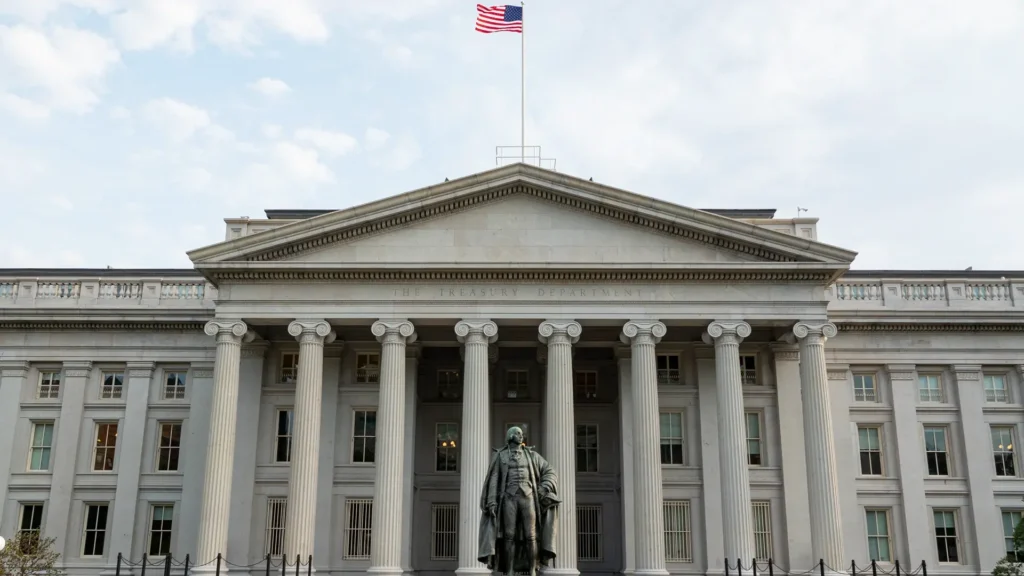
“The more consequential question concerns the ‘where’: on which technical infrastructure will issuance, transmission, and settlement occur?” | Image credit: Veronica Cestari/CCN
Share
Key Takeaways
Sovereign stablecoins rely on settlement infrastructure as much as on regulated issuers. Control at the issuance level weakens if transaction networks sit outside domestic governance.
Foreign-governed public blockchains introduce risks that national currencies cannot absorb. Governance changes, fee volatility, and external validators undermine monetary sovereignty and policy alignment.
Korea’s bank-only issuance model answers who can issue digital won stablecoins, not where they should settle.
Financial market infrastructure standards set by BIS and IOSCO require deterministic governance and auditability. Permissionless blockchains cannot guarantee these controls at a sovereign scale.
Sovereign currency cannot run on foreign-governed blockchains.
A nation that builds its digital currency on a foreign-governed public blockchain is effectively handing the keys to its monetary sovereignty to a global decentralized committee it can neither lobby nor control.
Across the Asia-Pacific region, stablecoin initiatives are moving rapidly from regulatory design into the far more complex phase of technical implementation.
Multiple jurisdictions, including Korea, are no longer debating whether digital currencies will integrate with traditional finance, but rather how they can be deployed safely at a systemic scale.
Bet on ESports with These Partners
Sponsored
Disclosure
We sometimes use affiliate links in our content, when clicking on those we might receive a commission at no extra cost to you. By using this website you agree to our terms and conditions and privacy policy.
From Regulation to Deployment: Why Korea’s Technical Choices Now Matter
Recent regional developments illustrate the transition.
For example, the Asia-Pacific stablecoin market has accelerated sharply following new regulatory clarity in Korea and Japan, with financial institutions preparing for operational deployment rather than conceptual exploration.
At the same time, high-profile failures in commercial stablecoin infrastructure, such as the accidental minting of 300 trillion tokens by Paxos due to a smart-contract misconfiguration, underscore the operational risks that arise when digital currency systems lack financial market infrastructure-grade controls.
These developments highlight why Korea’s implementation choices matter: the technical architecture selected today will determine whether the digital Won strengthens or endangers monetary sovereignty, financial stability, and public trust.
The Bank of Korea (BOK)’s recent mandate designating commercial banks as the sole prospective issuers of KRW-pegged stablecoins provides an essential foundation.
This policy anchors the digital Won in existing prudential regimes, including reserve management, supervisory oversight, and well-defined institutional liability.
The Unresolved Question: Where the Digital Won Should Settle
In effect, the BOK has resolved the “who” of trust, establishing that regulated banking institutions must serve as the issuance layer for sovereign digital money.
However, the more consequential question now concerns the “where”: on which technical infrastructure will issuance, transmission, and settlement occur?
If the digital Won is deployed on infrastructure not fully governed by Korean institutions, then the benefits of prudential oversight at the issuance layer may be undermined at the settlement layer.
The integrity of a sovereign currency ultimately depends not only on the identity of its issuer but also on the governance of its underlying transaction network.
Risks of Implementing Sovereign Digital Currency on General-Purpose Blockchains
The possibility of deploying national digital currencies on high-liquidity public chains (e.g., Ethereum or Solana) is often framed as a practical shortcut to ecosystem integration. Yet, from a systems-engineering and financial-infrastructure perspective, significant structural mismatches arise.
Unpredictable and Volatile Fee Markets
General-purpose public blockchains rely on auction-based gas pricing. Numerous empirical studies have shown high variance in gas fees during periods of network congestion.
This variability is incompatible with the core requirements of a national payment rail, which demands predictable, tightly bounded operational costs to support consumer payments, interbank settlement, and high-volume retail activity.
Governance Externalities and Loss of Monetary Sovereignty
Public blockchains are governed by global, decentralized communities.
Protocol upgrades, parameter changes, and consensus rules are decided by token holders or external validator communities.
Placing a sovereign digital currency on such infrastructure introduces a structural dependence on non-domestic governance processes that may not align with national monetary policy objectives.
For central banks, this represents an unacceptable governance externality.
Inadequate Compliance and Supervisory Controls
Domestic compliance requirements, including real-time sanctions screening, court-ordered freezes, and jurisdiction-specific settlement conditions, are difficult or impossible to enforce deterministically on permissionless public networks.
Financial market infrastructure principles established by the Bank for International Settlements (BIS) and International Organization of Securities Commissions (IOSCO) demand enforceable controls, explicit risk ownership, and supervisory auditability, none of which can be guaranteed on foreign-governed chains.
“Just as national highway systems cannot be built on foreign land, sovereign currencies cannot rely on foreign, general-purpose blockchains.” | Source: Heiner Camacho
What Sovereign Settlement Infrastructure Must Deliver
If general-purpose public chains introduce systemic risk, then sovereign digital currencies require sovereign infrastructure, a dedicated Layer-1 designed around FMI-grade controls.
Proof-of-Authority (PoA) Consensus with Institutional Validators
A PoA network operated by licensed Korean banks and designated institutions offers deterministic governance, regulatory clarity, and enforceable operational standards.
In this model, validators are identifiable legal entities subject to domestic regulation, enabling the BOK and financial supervisors to maintain transparent oversight.
Protocol-Level Enforcement of Stability and Auditability
Critical monetary operations such as minting, burning, and reserve validation should be handled by the protocol itself rather than by discretionary smart-contract logic.
Automated mint/burn systems tied directly to bank reserves, coupled with real-time transparency into reserves, would provide continuous auditability and reduce the risk of implementation errors or manipulation.
Compliance-By-Design
A sovereign rail must embed compliance primitives such as:
Embedding these capabilities at the network layer enables observability and enforceability without introducing privacy-compromising architectures.
How a Hybrid Bank-Led Model Can Support the Digital Won
The deployment of the digital Won requires neither full insourcing nor full outsourcing. A hybrid model is superior:
Commercial banks retain full ownership of reserves, issuance, customer relationships, and risk responsibilities.
A specialized technology provider delivers the blockchain substrate as a Blockchain-as-a-Service, maintaining performance, security, and protocol correctness.
To support long-term sustainability, validator institutions must share in fee-based economic rewards.
This aligns incentives, ensures adequate infrastructure investment, and avoids reliance on speculative or inflationary subsidy models common in public blockchains.
The BOK’s decision to designate banks as the issuers of KRW-stablecoins is a critical milestone for Korea’s digital-currency roadmap.
However, the long-term success of the digital Won will ultimately depend on selecting a settlement infrastructure that is consistent with sovereign monetary policy, domestic compliance obligations, and financial market infrastructure-grade resilience.
Just as national highway systems cannot be built on foreign land, sovereign currencies cannot rely on foreign, general-purpose blockchains.
A dedicated, sovereign Layer-1 operated by Korean institutions and engineered to meet the highest standards offers the only viable pathway for a secure, auditable, and future-proof digital Won.
Disclaimer:
The views, thoughts, and opinions expressed in the article belong solely to the author, and not necessarily to CCN, its management, employees, or affiliates. This content is for informational purposes only and should not be considered professional advice.
About the Author
Heiner Camacho
Heiner Camacho, Head of Strategy at Gurufin, is a former Colombian Central Bank official specializing in the convergence of regulation and digital transformation. With advanced degrees in Technology Management and Economics, he has led national-level data strategies and smart city initiatives across Latin America.
At Gurufin, Heiner leverages his policy expertise to drive the global expansion of sovereign, regulated stablecoin infrastructure. He focuses on bridging the gap between institutional compliance and technical efficiency, ensuring that central banks and commercial entities can securely navigate the evolving digital asset landscape across multiple jurisdictions.
Personal disclaimer: Heiner Camacho is employed by Gurufin, a stablecoin technology platform.