Key Takeaways
- South Korea’s Supreme Court ruled Bitcoin is seizable property with economic value.
- Seizure applies to crypto on exchanges during criminal investigations.
- Ruling strengthens law enforcement but encourages self-custody for users.
South Korea’s highest court has quietly delivered a ruling that could reshape how crypto is treated under the law—and what that means for millions of exchange users.
On Jan. 8, the Supreme Court ruled that cryptocurrencies held on domestic exchanges qualify as seizable assets in criminal investigations.
This effectively puts digital assets on the same legal footing as cash or securities.
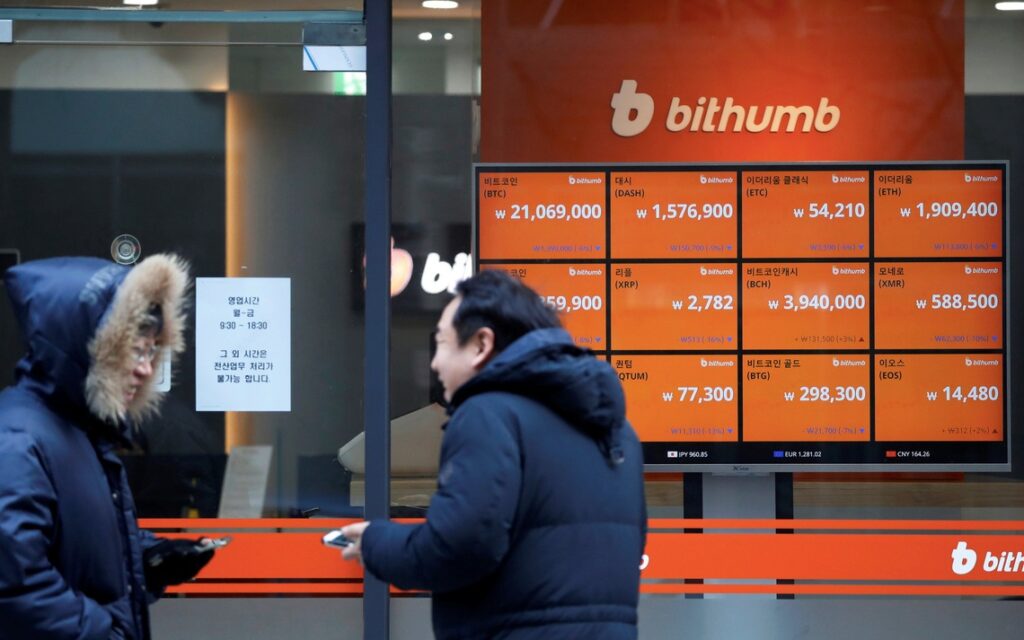
The decision broadens investigators’ authority and raises fresh questions for users of major platforms like Upbit and Bithumb, which collectively hold tens of billions of dollars in digital assets.
Supreme Court Ruling
According to local reports, the South Korean Supreme Court issued a landmark decision affirming that Bitcoin (BTC) and other cryptocurrencies held on domestic exchanges such as Upbit or Bithumb can be legally seized by authorities under the country’s Criminal Procedure Act.
The decision arose from a 2020 money laundering case in which prosecutors confiscated about 55.6 BTC from a suspect’s exchange account—worth roughly 600 million won, or about $413,000, at the time.
The defendant challenged the seizure, arguing that Bitcoin does not have a physical form.
Therefore, authorities cannot confiscate it in the same way as tangible property under Article 106 of the Act.
The Supreme Court rejected that argument, ruling that Bitcoin qualifies as an “electronic asset” or “electronic certificate with economic value.”
The court stated that investigators can independently control, trade in, and manage such assets, thereby placing them squarely within the category of property subject to lawful seizure.
What the Ruling Means for Crypto Holders in South Korea
The ruling effectively broadens what authorities can legally seize, making it clear that digital assets and other intangible property can be confiscated as long as they carry measurable economic value.
Importantly, the decision applies only in the context of criminal investigations, such as cases involving money laundering, fraud, or other financial crimes.
It does not give authorities the power to seize crypto arbitrarily or without proper legal grounds.
Under the ruling, prosecutors and police can request that exchanges like Upbit and Bithumb freeze and transfer cryptocurrency tied to suspected crimes, including fraud, embezzlement, or bribery.
As regulated entities, exchanges must comply with these requests.
The decision grants investigators clearer legal authority to freeze and seize crypto assets held on exchanges, potentially accelerating efforts to track illicit funds, recover the proceeds of crime, and enforce tax laws.
South Korea’s approach now aligns more closely with jurisdictions such as the United States and the United Kingdom, where courts already treat digital assets as property subject to seizure and forfeiture.
Overall, the move aims to strengthen enforcement against financial crime and tax evasion, while keeping seizures limited to cases supported by formal investigations and due process.
$33B in Crypto at Risk?
On-chain data shows that South Korean exchanges, such as Upbit and Bithumb, collectively hold more than $33 billion in various cryptocurrencies.
Under the ruling, those holdings are not automatically at risk.
Authorities can freeze or seize crypto only when they suspect a user of violating the law, such as committing financial crimes, money laundering, or tax evasion.
The decision effectively closes a long-standing gray area in South Korea’s crypto regulations by confirming that digital assets held on exchanges fall within the scope of existing seizure laws.
For compliant users and platforms, this legal clarity could strengthen confidence in regulated exchanges while discouraging illicit activity.
At the same time, the ruling may carry side effects.
Some investors could view it as heavy-handed, potentially triggering short-term market volatility or dampening foreign participation in a market already known for strict rules, including real-name trading requirements.
The decision may also accelerate a broader shift toward self-custody.
Since the ruling applies specifically to assets held on centralized exchanges, some users may choose to store crypto in private wallets to reduce exposure to enforcement actions.

Prashant Jha is a seasoned crypto journalist based in Delhi, India, with a Bachelor’s Degree in Computer Science Engineering. Passionate about the evolving world of blockchain and cryptocurrencies, he has been a dedicated voice in the industry since 2018. Prashant’s expertise lies in regulatory reporting, where he unravels complex legal and financial developments with clarity and precision. Before joining CCN in 2024, he honed his craft at Cointelegraph, establishing himself as a trusted name in crypto journalism.
His coverage spans major industry events, including the high-profile collapses of FTX, Three Arrows Capital (3AC), and LUNA, offering readers insightful analyses of their regulatory and market implications. Prashant’s technical background enables him to bridge the gap between intricate blockchain technology and its real-world applications, making his work accessible to novices and experts.
Beyond his professional pursuits, Prashant is an avid music enthusiast, often exploring diverse genres to unwind. A sports lover, he has a particular passion for cricket and frequently engages in discussions about the game. His multifaceted interests and sharp journalistic instincts make him a valuable contributor to CCN, where he continues shaping the crypto landscape's narrative.