Key Takeaways
- The New York Times investigation claiming Adam Back is Satoshi Nakamoto faces strong skepticism.
- Growing belief that Satoshi Nakamoto is gone or inactive.
- Backlash over safety concerns.
The latest attempt to unmask Bitcoin’s elusive creator, Satoshi Nakamoto, has triggered a sharp backlash across the crypto industry, with prominent figures rejecting new claims and increasingly arguing that Nakamoto may no longer be alive.
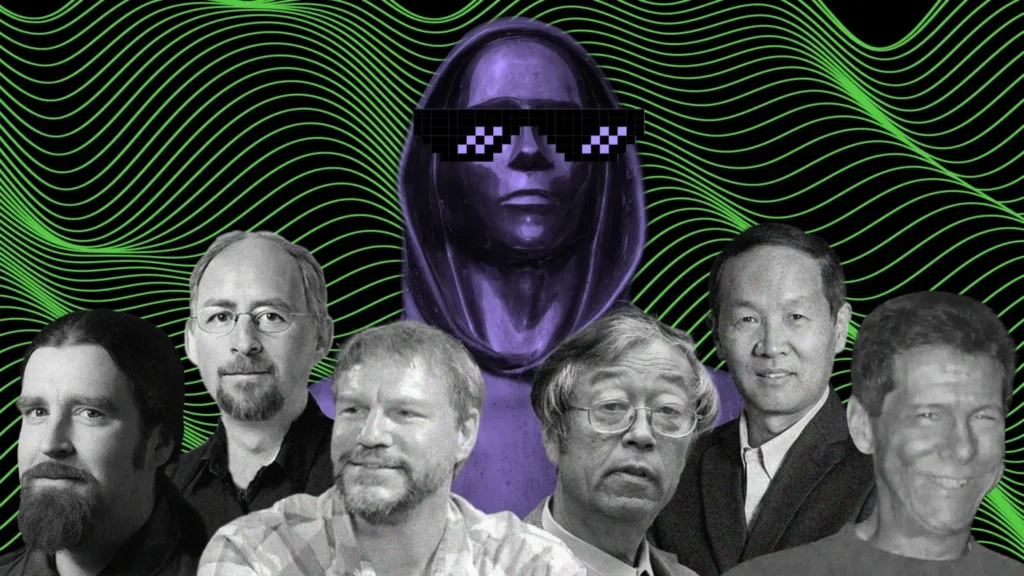
A recent investigation by journalist John Carreyrou identified British cryptographer Adam Back as a leading candidate for Nakamoto.
But the report has also sparked anger among some members of the community, who have warned of potential safety concerns for those identified, rightly or wrongly.
Crypto Leaders Push Back
The Times report was met with swift skepticism from industry participants, many of whom said the evidence fell short of the extraordinary burden required to identify Bitcoin’s creator.
Investor Nic Carter criticized the analysis as “surprisingly weak,” arguing it relied heavily on superficial linguistic similarities rather than rigorous statistical methods.
“The New York Times thinks Adam Back is Satoshi… There is no meaningfully new evidence presented,” Carter wrote on X.
He added that the stylometric techniques used within the article can be easily manipulated.
Others questioned whether Back’s public persona aligned with that of a figure believed to control tens of billions of dollars in dormant Bitcoin.
“He doesn’t seem to show in any way that he is worth $70 billion,” Jared Polls wrote on X, suggesting Back’s continued fundraising efforts were inconsistent with such wealth.
Columnist Josh Barro floated another possibility — that even if a candidate were Nakamoto, they may no longer have access to the coins.
“What if he is Satoshi Nakamoto but also he lost the keys, a super embarrassing fact he doesn’t want to admit?” he wrote.
Ripple’s former Chief Technology Officer David Schwartz said the simplest explanation may be that no one alive can access Nakamoto’s holdings.
“It does seem likely that whoever Satoshi Nakamoto is or was, nobody alive today has access to the keys,” he wrote.
Has Satoshi Nakamoto Died?
Alongside skepticism of the Back theory, a growing number of crypto commentators are converging on a different conclusion — that Nakamoto is either deceased or permanently cut off from their Bitcoin.
Central to this argument is the estimated 1 million-plus BTC attributed to Nakamoto, coins that have never been moved since Bitcoin’s early days.
At current prices, that stash is worth tens of billions of dollars.
Carter and others argue that if Nakamoto were alive and in control, they would likely have acted by now — particularly as new risks emerge.
One such risk is the potential for quantum computing to break older Bitcoin cryptography.
“If Satoshi were alive today, they would have an enormous responsibility” to secure or neutralize those coins, Carter wrote.
Len Sassaman and The ‘Eulogy’ Theory
Separate from the Back debate, some researchers continue to revisit theories that Nakamoto may have been a now-deceased cryptographer, with renewed attention on Len Sassaman.
In a widely circulated essay, technologist Evan Hatch pointed to Sassaman’s deep involvement in cryptography and the cypherpunk community, as well as the timing of his death in 2011.
“We’ve lost too many hackers to suicide. What if Satoshi was one of them?” Hatch wrote.
Sassaman, a developer of privacy technologies and contributor to PGP encryption, died at age 31.
His passing has been memorialized in Bitcoin’s blockchain itself.
“Embedded on every single node of the Bitcoin network is an obituary,” Hatch wrote, referring to a tribute encoded in transaction data.
“A fitting tribute in more ways than one.”
Hatch stopped short of making a definitive claim but argued that Sassaman possessed many of the technical traits associated with Nakamoto, including expertise in public-key cryptography and peer-to-peer systems.
An Enduring Mystery
Fifteen years after Bitcoin’s creation, Nakamoto’s identity remains unresolved.
For many in the crypto industry, the debate has been centred on whether it matters at all, particularly as the network continues to function without its creator.
Still, the stakes are not purely philosophical.
The question of whether Nakamoto is alive, and whether the associated Bitcoin can ever move, carries profound implications for the future of the world’s biggest crypto.
It matters because Satoshi is believed to control over 1 million BTC. If those coins ever moved, it could have a huge effect on price.
But not everyone believes Nakamoto should be found.
Beyond technical criticism, some reactions to the New York Times report have been outright anger.
Several commentators warned that identifying an individual as the creator of Bitcoin could expose them to serious personal risk.
“It’s actually so bad new articles point the finger at people that could be Satoshi. Think of the real life impact this could have on someone’s life,” one X user wrote.
Adding: “The threat of danger is real for anyone that is outed as Satoshi rightly or wrongly.”
Inside the New York Times Satoshi Nakamoto Investigation
Carreyrou’s investigation drew on a year-long review of early Bitcoin writings, cypherpunk mailing lists and technical history, alongside input from computational linguists.
The report highlighted Back’s role as the creator of Hashcash — a proof-of-work system cited in Bitcoin’s white paper — and noted stylistic overlaps between his writing and Nakamoto’s.
It also examined historical connections between Back and early Bitcoin contributors, as well as inconsistencies in past statements about language use.
However, even within the analysis, the conclusions remained inconclusive.
The linguistic match was not exact and, under different methodologies, other candidates — including early Bitcoin contributor Hal Finney — ranked similarly or higher.
Top Trending Crypto Articles

Kurt Robson is a London-based reporter at CCN, specialising in the fast-moving worlds of crypto and emerging technology. He began his career covering local news in Cornwall after graduating from Falmouth University with First Class Honours in Journalism. There, he cut his teeth on everything from council meetings to missing swans.
He quickly rose through the ranks to become a frontline journalist at several of the UK’s leading national newspapers. Over the years, he has interviewed musicians and celebrities, reported from courtrooms and crime scenes, and secured multiple front-page exclusives.
Following the upheaval of the COVID-19 pandemic, Kurt shifted his focus to technology journalism—just ahead of the AI boom. With a natural curiosity and a trained eye for emerging trends, he has found a new rhythm in reporting on innovation.
At CCN, Kurt's work focuses on the cutting edge of crypto, blockchain, AI, and the evolving digital world. Drawing on his background in people-first reporting and his deep interest in disruptive tech, Kurt delivers stories that are insightful, entertaining, and human-centric.