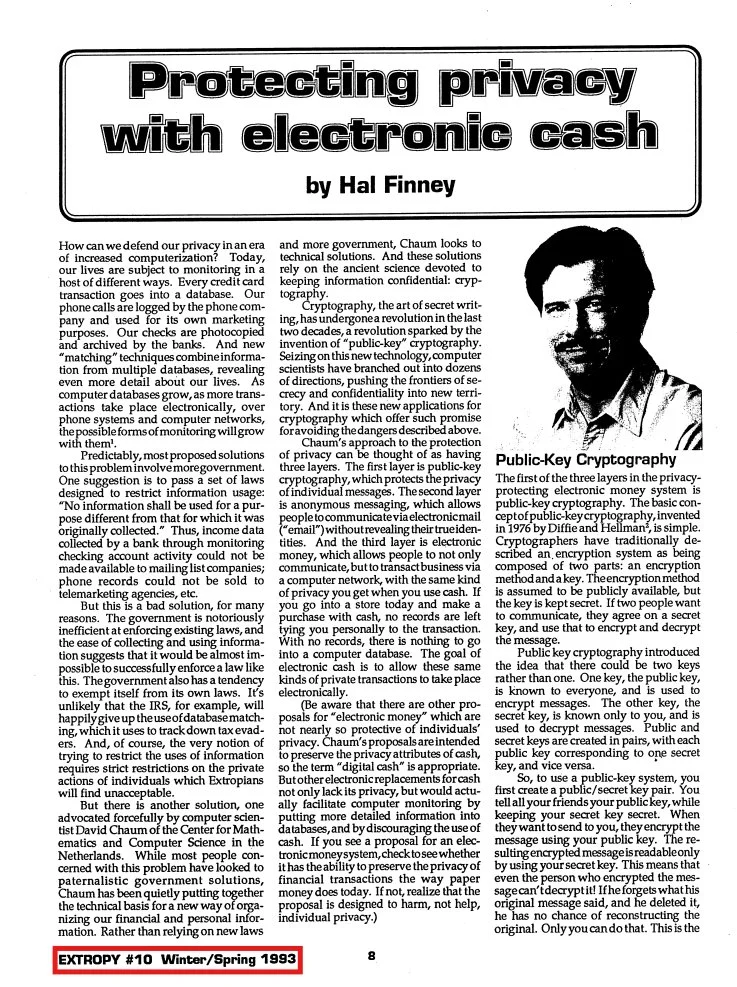
A year-long New York Times investigation identified Adam Back as a leading Satoshi Nakamoto candidate.
It comes as the Finding Satoshi film claims it has identified Bitcoin’s creator.
Renewed attention on Hal Finney, fueled by a resurfaced 1993 essay, continues to divide the industry.
A fresh attempt to unmask Bitcoin’s pseudonymous creator, Satoshi Nakamoto, is gaining attention as a New York Times investigation points to British cryptographer Adam Back.
It comes in the lead-up to a forthcoming documentary backed by Coinbase, which claims it will deliver a definitive answer to one of finance’s most enduring mysteries.
The competing narratives have sparked even fiercer debate over Bitcoin’s biggest mystery, nearly two decades after its creation, even as new analyses, media projects and industry figures get involved.
Sponsored
Disclosure
We sometimes use affiliate links in our content, when clicking on those we might receive a commission at no extra cost to you. By using this website you agree to our terms and conditions and privacy policy.
Satoshi Nakamoto New York Times Probe Points To Adam Back
According to a New York Times investigation by reporter John Carreyrou, British cryptographer Adam Back has emerged as a leading candidate for the identity of Satoshi Nakamoto following a year-long inquiry into the origins of Bitcoin.
Carreyrou’s reporting draws on a combination of linguistic analysis, historical records and technical comparisons between Back’s work and the design of Bitcoin.
The investigation examines both Nakamoto’s known writings, including emails and forum posts, from early cryptography communities.
Back is a prominent figure in the so-called cypherpunk movement, a loose collective of privacy-focused programmers and cryptographers active since the 1990s.
He is best known as the creator of Hashcash, a proof-of-work system originally designed to combat email spam, which Nakamoto later cited in the 2008 Bitcoin white paper and adapted as a core component of the cryptocurrency’s mining process.
Writing Similarities
The investigation also notes overlaps in writing style and recurring themes in both men’s published material, including a focus on privacy, decentralization and spam mitigation.
“The closer I looked, the more writing similarities I spotted,” Carreyrou wrote.
Carreyrou pointed to stylistic quirks such as the use of double spaces between sentences, noting it was an outdated convention that may indicate an older author.
He also highlighted specific linguistic overlaps.
Nakamoto once used the British expression “bloody” in an online forum, while Back had previously denied ever using the term.
However, Carreyrou reported finding a 1998 cypherpunk mailing list post in which Back used the same word in a similar context, referring to internet banner ads.
“Why deny using a word he had in fact used so adamantly if he had nothing to hide?” he wrote.
Carreyrou called upon the help of Florian Cafiero, a computational linguist at France’s École nationale des chartes, to assess the use of function words like “the,” “and,” and “of” to illuminate someone’s writing style.
“After comparing papers from the 12 suspects to the Bitcoin white paper, Mr. Cafiero’s stylometry program showed Mr. Back as the closest match,” he wrote.
However, the match was not exact and was actually matched very closely with Hal Finney.
After changing the technique, Back was also pushed further out of the realm of possibility.
“After eight months of reporting and countless hours obsessing over Satoshi’s identity, I had thought I was close to solving the mystery. But now it seemed out of reach again,” Carreyrou wrote.
Further Research
Carreyrou also described a more systematic effort to analyze Nakamoto’s writing using computational methods, working with a New York Times colleague specializing in AI.
Assuming Nakamoto was active in early cryptography circles, the analysis focused on archived posts from cypherpunk-related mailing lists, including Cryptography and Hashcash.
After filtering tens of thousands of contributors down to several hundred who had discussed digital money, the team compared linguistic patterns across the dataset.
According to the report, one approach examined the use of highly specific technical terms.
Back ranked highest among candidates when matching these terms with Nakamoto’s known writings, despite having a smaller body of posts than some peers.
The investigation then analyzed grammatical patterns, including hyphenation.
Carreyrou reported that Nakamoto’s writing contained hundreds of unconventional hyphenation choices, many of which also appeared in Back’s earlier posts, making him a statistical outlier among candidates.
By the final stage, Back was the only individual who matched the full set of linguistic markers identified in Nakamoto’s writings, according to the analysis.
Despite these findings, Carreyrou noted that the evidence remains circumstantial and does not conclusively establish Back as Bitcoin’s creator.
Back Denies Being Satoshi Nakamoto
In response to the article, Back took to X on Wednesday to deny all claims that he was behind Bitcoin’s creation.
Back attributed persistent rumors of his involvement to his early and prolific presence in the cypherpunk movement and to his research into electronic cash during the 1990s.
“I’m not Satoshi, but I was early in laser focus on the positive societal implications of cryptography, online privacy and electronic cash,” Back stated.
Responding directly to Carreyrou’s research, Back argued that linguistic and conceptual similarities between his early writings and the creation of Bitcoin are the result of statistical “confirmation bias” rather than proof of identity.
Back explained that because he posted frequently on cryptography mailing lists about decentralized electronic cash, his comments are disproportionately represented in historical archives compared to peers who posted less frequently.
He noted that shared phrases were a combination of coincidence and the common vocabulary of developers who came “so close yet so far” to designing a Bitcoin-like system.
i'm not satoshi, but I was early in laser focus on the positive societal implications of cryptography, online privacy and electronic cash, hence my ~1992 onwards active interest in applied research on ecash, privacy tech on cypherpunks list which led to hashcash and other ideas.
The cryptographer added that he does not know Nakamoto’s true identity and believes this anonymity remains beneficial for the cryptocurrency network.
Back wrote that the mystery helps position Bitcoin as a “new asset class” and a “mathematically scarce digital commodity.”
Addressing past comments where he stated “we are all Satoshi,” Back clarified that the phrase was merely a reference to a special effects short film, not a personal admission.
When challenged by another user who suggested his current actions do not align with those of a founder holding a dormant fortune of over 1 million Bitcoin, Back expressed regret over his missed early opportunities.
“Not enough bitcoin! Sadly. Ofc kicking myself for not mining in anger in 2009,” Back posted.
The new investigation comes ahead of a new documentary titled Finding Satoshi, backed by crypto exchange Coinbase, marketing itself as a breakthrough in the search for Nakamoto’s identity.
According to promotional materials and a trailer released last week, the film claims to piece together blockchain data, online activity and interviews to identify a single individual.
“The code, the timestamps, the typing, it all matched,” one investigator says in the trailer, which frames the search as “the greatest financial mystery of the 21st century.”
Another line states: “I know who Satoshi Nakamoto is.”
The filmmakers say their conclusion is based on interviews, emails and public records, though they have not disclosed the individual’s name ahead of release.
Promotional content suggests the answer may differ from widely discussed candidates.
Coinbase Chief Executive Brian Armstrong is quoted in promotional material as saying the film offers “the most thoughtful take” he has seen and that he suspects it reaches the correct conclusion.
Armstrong’s endorsement has drawn attention, particularly as he had previously suggested in 2025 that Hal Finney — possibly working with others such as Nick Szabo — was the most likely explanation.
Familiar Names
Despite claims of new evidence, the documentary revisits a familiar list of potential Nakamoto candidates long debated within the cryptocurrency community.
These include:
Hal Finney, an early Bitcoin contributor and recipient of the first transaction
Nick Szabo, creator of the “bit gold” concept
Wei Dai, author of the “b-money” proposal cited by Nakamoto
Adam Back, due to his work on Hashcash
Len Sassaman, a cryptographer linked to cypherpunk circles
Paul Le Roux, a programmer and convicted criminal
Bram Cohen, creator of BitTorrent
Many of these figures were active in the cypherpunk movement and contributed ideas that informed Bitcoin’s development.
Many have tried to identify Nakamoto, including a 2024 HBO documentary that pointed to developer Peter Todd, but experts widely disputed these claims as weak or circumstantial.
Hal Finney Satoshi Nakamoto Theories Remain
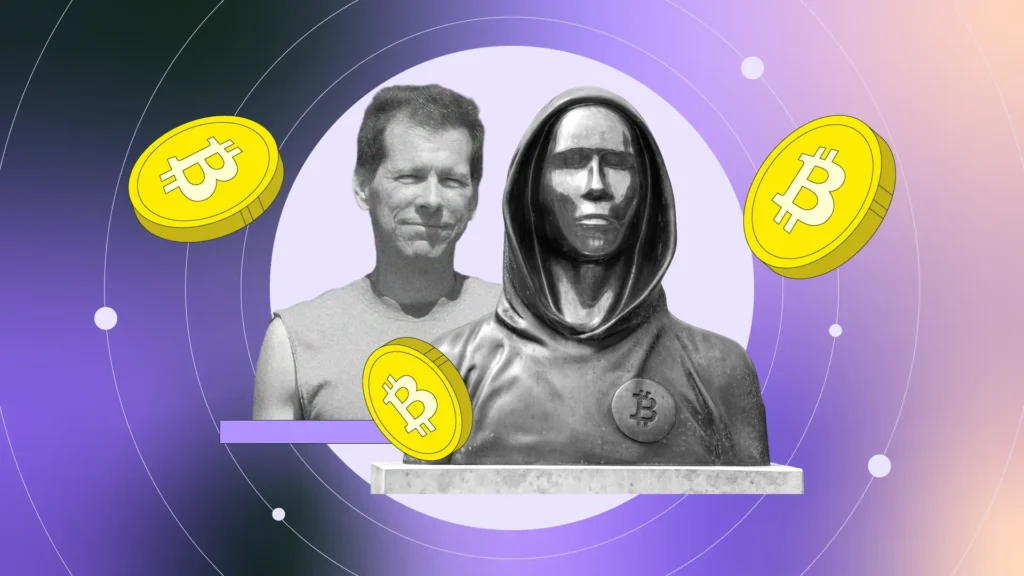
Among alternative theories, Hal Finney continues to be one of the most frequently cited candidates.
Finney, a respected cryptographer who died in 2014, had direct contact with Nakamoto, contributed to Bitcoin’s early development and received the first Bitcoin transaction.
A 1993 article written by Finney resurfaced online in December, drawing attention for its early discussion of “electronic cash” and privacy-preserving digital transactions — concepts that closely resemble Bitcoin’s later design.
Hal Finney’s 1993 report, the magazine of the Extropy Institute, an early cypherpunk–linked organization. | Source: SCRIBD
Writing in Extropy, a publication linked to early cypherpunk circles, Finney argued that increasing computerization would make financial activity more traceable.
He outlined a vision of electronic money that would allow transactions to retain the anonymity of physical cash through cryptographic techniques.
Finney’s article built on earlier work by cryptographer David Chaum and described digital money as part of a broader privacy-focused technological stack, alongside encryption and anonymous communication systems.
However, the theory remains unproven, and no conclusive evidence has linked Finney to the Nakamoto identity.
Records show Finney was away from a computer at times when Nakamoto was posting online, and no conclusive evidence links him to the pseudonym.
Kurt Robson is a London-based reporter at CCN, specialising in the fast-moving worlds of crypto and emerging technology. He began his career covering local news in Cornwall after graduating from Falmouth University with First Class Honours in Journalism. There, he cut his teeth on everything from council meetings to missing swans.
He quickly rose through the ranks to become a frontline journalist at several of the UK’s leading national newspapers. Over the years, he has interviewed musicians and celebrities, reported from courtrooms and crime scenes, and secured multiple front-page exclusives.
Following the upheaval of the COVID-19 pandemic, Kurt shifted his focus to technology journalism—just ahead of the AI boom. With a natural curiosity and a trained eye for emerging trends, he has found a new rhythm in reporting on innovation.
At CCN, Kurt's work focuses on the cutting edge of crypto, blockchain, AI, and the evolving digital world. Drawing on his background in people-first reporting and his deep interest in disruptive tech, Kurt delivers stories that are insightful, entertaining, and human-centric.