Meet the Top 101 in Crypto
News
4 min read

Sam Bankman-Fried Asks Supreme Court to Overturn FTX Conviction

Published 11 September 2026
Giuseppe Ciccomascolo
Authors

Key Takeaways 

  • Sam Bankman-Fried has asked the Supreme Court to overturn his fraud conviction and grant him a new trial.
  • His lawyers argue the trial unfairly restricted evidence showing FTX held enough assets to repay customers.
  • The Supreme Court must agree to hear the appeal before reviewing its merits.

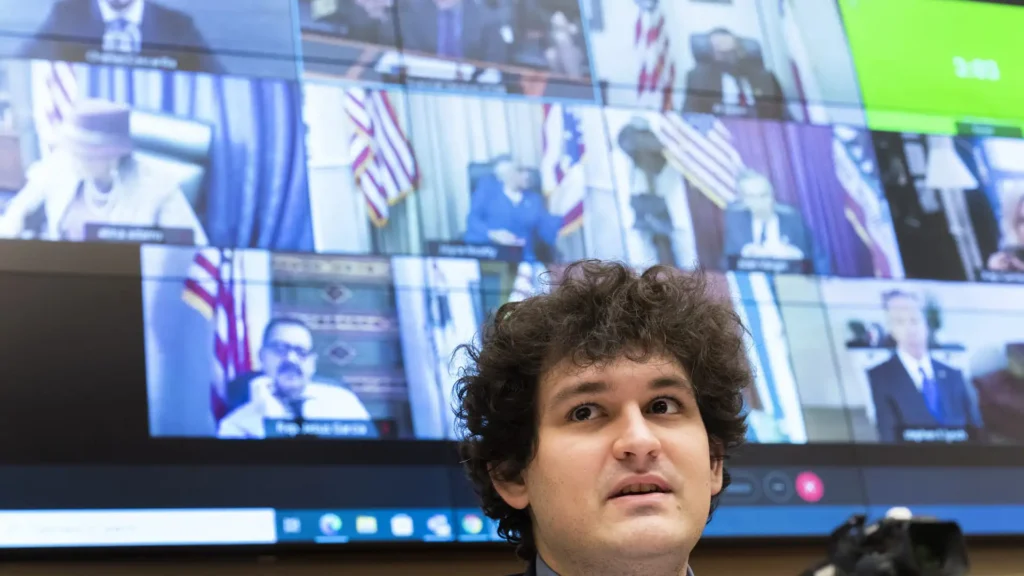
Sam Bankman-Fried has asked the US Supreme Court to overturn his fraud conviction and grant him a new trial, challenging evidentiary decisions that helped secure his 25-year prison sentence.

The former FTX chief also wants the court to strike down an approximately $11 billion forfeiture order, which his lawyers claim violates the Eighth Amendment’s prohibition against excessive fines.

A federal jury convicted Bankman-Fried in 2023 on seven counts of fraud, conspiracy, and money laundering.

Prosecutors accused him of secretly transferring billions of dollars in FTX customer funds to Alameda Research, where the trading firm used the money for investments, loan repayments, political donations, real estate and personal expenses.

The Supreme Court must first agree to hear the case before considering Bankman-Fried’s arguments. Filing the petition does not suspend his sentence or overturn the lower courts’ decisions.

Try Our Recommended Crypto Exchanges
Sponsored
Disclosure
Opened in 2011
Promotions
Get $10 in Bitcoin when you register through a referral link from an existing member.
Coins
Bitcoin Ethereum Tether Build'N'Build USD Coin +81
Promotions
Receive up to $100,000 worth of exclusive gifts for newcomers upon registration.
Coins
Bitcoin Ethereum Tether USD Coin Solana +76
Opened in 2017
Promotions
Unlock 1,500+ cryptocurrencies and seamless instant swaps in the all-in-one crypto super app ChangeNOW
Coins
Bitcoin Ethereum Tether Build'N'Build USD Coin +217

Bankman-Fried Seeks New Trial Over Loss Evidence

Bankman-Fried’s petition centers on how the trial court handled evidence concerning losses suffered by FTX customers.

His lawyers argue that prosecutors presented evidence suggesting customers had lost billions while the court prevented the defense from demonstrating that FTX and Alameda held assets that could eventually cover those losses.

The petition describes the two companies as “temporarily illiquid” and claims they always held enough valuable assets to make customers whole.

It also points to subsequent bankruptcy distributions, through which eligible creditors have received repayments with interest.

Veteran Supreme Court attorney Jeffrey Fisher said prosecutors pursued a fraud theory that did not require proof of an ultimate financial loss. Under those circumstances, he argued, evidence suggesting that customers lost money unfairly prejudiced the jury.

Bankman-Fried’s lawyers contend that the court should either have excluded the government’s loss evidence or allowed the defense to present evidence pointing toward eventual repayment.

Prosecutors, however, maintained that Bankman-Fried committed fraud when he transferred customer assets to Alameda without authorization, regardless of whether those investments later gained value.

Supreme Court Ruling Complicates His Appeal

The US Court of Appeals for the Second Circuit rejected Bankman-Fried’s arguments in June and upheld his conviction, sentence and forfeiture order.

Its decision relied heavily on the Supreme Court’s 2025 ruling in Kousisis v. United States. That case involved contractors who used false certifications to obtain a government bridge-painting contract while failing to meet requirements related to disadvantaged businesses.

The Supreme Court unanimously ruled that a material deception designed to obtain money or property could support a federal fraud conviction even when the defendant did not intend to inflict net economic harm.

Applying that precedent, the Second Circuit concluded that Bankman-Fried’s belief that FTX customers could eventually recover their money did not provide a defense.

Customers had not authorized FTX to transfer their deposits to Alameda or use them for other purposes.

Bankman-Fried now raises a narrower question: If prosecutors did not need to prove financial losses, should they have introduced evidence about those losses at trial?

$11 Billion Forfeiture Faces Constitutional Challenge

The petition separately challenges the $11 billion forfeiture imposed as part of Bankman-Fried’s sentence.

His lawyers argue that the amount bears no reasonable relationship to remaining customer losses and violates the Eighth Amendment’s Excessive Fines Clause.

They also claim the judgment could prevent Bankman-Fried from earning a living after his release.

The Second Circuit previously rejected that argument. It ruled that federal forfeiture law calculates financial penalties based on proceeds connected to criminal conduct rather than only on the losses victims ultimately retain.

Bankman-Fried must now persuade at least four of the nine Supreme Court justices to hear his appeal. The court is expected to decide later this year whether to review the case, but it has not yet considered the merits of his claims.

Disclaimer: The information provided in this article is for informational purposes only. It is not intended to be, nor should it be construed as, financial advice. We do not make any warranties regarding the completeness, reliability, or accuracy of this information. All investments involve risk, and past performance does not guarantee future results. We recommend consulting a financial advisor before making any investment decisions.
Giuseppe Ciccomascolo

Giuseppe Ciccomascolo began his career as an investigative journalist in Italy, where he contributed to both local and national newspapers, focusing on various financial sectors.

Upon relocating to London, he worked as an analyst for Fitch's CapitalStructure and later as a Senior Reporter for Alliance News. In 2017, Giuseppe transitioned to covering cryptocurrency-related news, producing documentaries and articles on Bitcoin and other emerging digital currencies. He also played a pivotal role in establishing the academy for a cryptocurrency exchange website. Crypto remained his primary area of interest throughout his tenure as a writer for ThirdFloor.

Related

Survey Icon
Help us improve
1 of 4
Is this your first time here?
What brought you here today?
What are you most interested in?
Would you be interested in:
Thank you icon
Thank you for your feedback!
DMCA.com Protection Status