Key Takeaways
Robinhood’s recently unveiled Robinhood Chain has sparked debate across the crypto industry, not because of how much revenue it generates for Ethereum, but because of how little it currently pays the network in fees.
Robinhood Chain users generated roughly $843,000 in transaction fees while the Layer-2 network paid only around $1,600 to Ethereum for data availability and settlement.
Critics have pointed to the imbalance as evidence that Layer-2 networks extract value from Ethereum without giving much back.
However, focusing solely on fee generation may miss the larger strategic picture.
+70
Shiba Inu
Bitcoin
PAX Gold
Ampleforth
Ethereum
Cardano
EOS
Solana
Avalanche
Dogecoin
Ripple
TRON
Bitcoin Cash
Ocean Protocol
Litecoin
Reserve Rights
Ontology
Bitcoin SV
Ethereum Classic
Kusama
Dash
Neo
Chainlink
Qtum
Polkadot
VeChain
Stellar
Tezos
Zcash
Zilliqa
Status
JUST
Cosmos
Ravencoin
Trust Wallet Token
ARPA Chain
Nervos Network
Storj
Beam
NKN
Algorand
Celer Network
THORChain
Fantom
Optimism
Aptos
APEcoin
Wrapped Bitcoin
Compound
Monero
Basic Attention Token
Arweave
Aergo
Decentraland
SushiSwap
Conflux Network
NEAR Protocol
Polkastarter
Ankr
Maker
Artificial Superintelligence Alliance
Mask Network
Cronos
Internet Computer
Badger DAO
USD Coin
BakeryToken
Alpaca Finance
Aave
Treasure
BitTorrent
FLUX
Bancor
IoTex
Build'N'Build
+76
Bitcoin
Ethereum
Tether
USD Coin
Solana
Ripple
Dogecoin
Cardano
Toncoin
Shiba Inu
Avalanche
TRON
Chainlink
Polygon Matic
Polkadot
Wrapped Bitcoin
Litecoin
Dai
NEAR Protocol
Bitcoin Cash
Stellar
Cosmos
Filecoin
Ethereum Classic
Aptos
Hedera Hashgraph
Immutable
Optimism
Arbitrum
VeChain
The Sandbox
Decentraland
Axie Infinity
Injective Protocol
Render
The Graph
Aave
Chiliz
Helium
PAX Gold
Compound
Lido DAO Token
Sui
Conflux Network
Lido Staked ETH
OKB
Uniswap
Pepe
Ondo
Mantle
First Digital USD
XDC Network
Artificial Superintelligence Alliance
Jupiter
Quant
Worldcoin
Bonk
Tether Gold
JITO
JasmyCoin
Core
Floki Inu
Ethereum Name Service
SushiSwap
1inch Network
Tezos
Algorand
Flow
Trust Wallet Token
Curve DAO Token
MultiversX
Basic Attention Token
Enjin Coin
Ethena
Ethena Staked USDe
Build'N'Build
Kava.io
Celestia
Sei
IOTA
Frax
+217
Bitcoin
Ethereum
Tether
Build'N'Build
USD Coin
Solana
Ripple
Dogecoin
Cardano
Toncoin
Shiba Inu
Avalanche
TRON
Chainlink
Polkadot
Polygon Matic
Wrapped Bitcoin
Litecoin
Dai
NEAR Protocol
Bitcoin Cash
Monero
Stellar
Cosmos
Filecoin
Ethereum Classic
Aptos
Hedera Hashgraph
Immutable
Optimism
Arbitrum
VeChain
The Sandbox
Decentraland
Axie Infinity
Injective Protocol
Render Token
The Graph
Maker
Aave
Chiliz
Helium
PAX Gold
Compound
Lido DAO Token
THORChain
Stacks
Arweave
Sui
Conflux Network
Lido Staked ETH
Bitget Token
Wrapped Ethereum
OKB
Uniswap
Pepe
Ondo
Mantle
First Digital USD
Bittensor
Kaspa
Celestia
XDC Network
Artificial Superintelligence Alliance
Jupiter
Quant
Worldcoin
PayPal USD
Bonk
Flare
Tether Gold
Sei
JITO
JasmyCoin
PancakeSwap
Core
Floki Inu
Ethereum Name Service
SushiSwap
Kava.io
1inch Network
Tezos
Algorand
Flow
Trust Wallet Token
Curve DAO Token
KuCoin Token
MultiversX
Gitcoin
Zcash
IOTA
Basic Attention Token
Frax
Ethena
Ethena USDe
Fasttoken
Pi Network
SATS
Adventure Gold
Audius
Alchemy Pay
Arkham
API3
Bounce Token
Altlayer
Aergo
Amp
Aevo
ARPA Chain
Astar
Ark
Ankr
AirSwap
Alpaca Finance
Blur
Badger DAO
Bancor
BakeryToken
Biconomy
Chromia
Celer Network
Celo
Shentu
Civic
Convex Finance
Cartesi
Cyber
COTI
DigiByte
DIA
ether.fi
FUNToken
FLUX
Firo
Ampleforth
Golem
GMX
Gnosis
Moonbeam
Holo
IoTex
ICON
Illuvium
JUST
Kadena
Liquity
Livepeer
Lisk
Memecoin
Manta Network
Treasure
Mask Network
MetisDAO
Origin Protocol
ORDI
Ontology
Osmosis
Powerledger
Phala Network
Pendle
Portal
Pyth Network
ConstitutionDAO
Polkastarter
Qtum
iExec RLC
Rocket Pool
Reserve Rights
Ronin
Ravencoin
Starknet
Storj
Status
Spell Token
Sun (New)
SuperVerse
Toko Token
Theta Fuel
Tellor
Tensor
LayerZero
Usual
Eigenlayer
Hamster Kombat
Catizen
Berachain
KAITO
Pudgy Penguins
Solayer
Bio Protocol
ChainGPT
Cookie DAO
Solv Protocol
Alchemix
Bitcoin SV
Movement
DeXe
Binance Staked SOL
Nexo
Wrapped eETH
Hyperliquid
Casper
Zilliqa
Secret
Nervos Network
TrueUSD
BitTorrent
Mina
Dash
STEPN
Gemini Dollar
UNUS SED LEO
Synthetix
APEcoin
Gala
Theta Network
Fantom
Cronos
Internet Computer
Binance USD
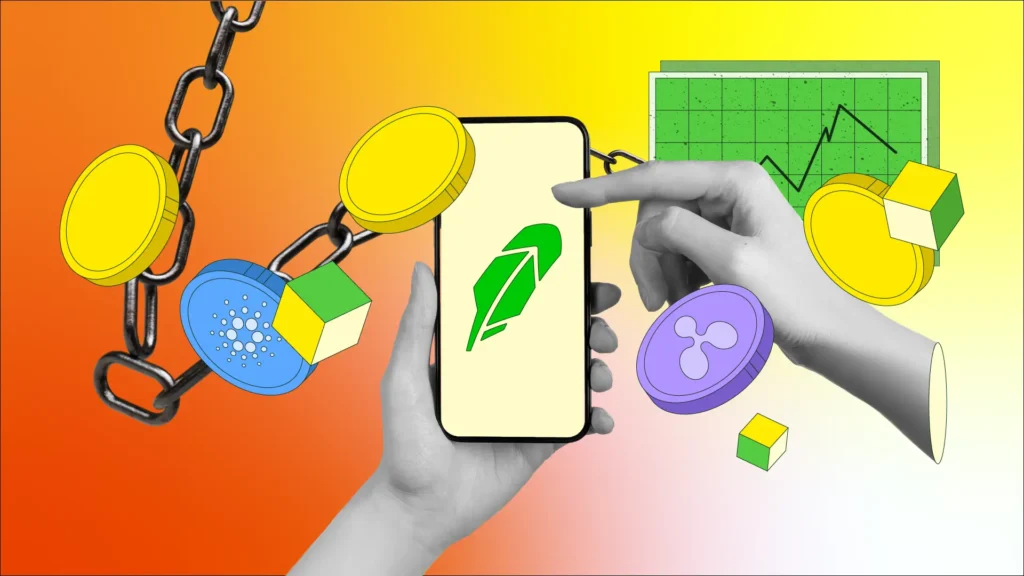
Robinhood Chain is an Ethereum Layer-2 blockchain that Robinhood developed to power tokenized real-world assets and onchain financial products.
The first major use case is tokenized US equities.
Instead of purchasing conventional broker-held shares, eligible users can own blockchain-based representations of publicly traded companies.
These assets are designed to move beyond the limitations of traditional brokerage accounts. In fact, they enable 24/7 transfers, self-custody, and future interoperability with decentralized applications.
Robinhood has positioned the network as a bridge between traditional finance and blockchain infrastructure. This makes tokenized stocks available to users in markets where direct access to US equities has historically been limited.
The approach differs from simply offering crypto trading inside a brokerage app.
Rather than keeping users inside a closed financial ecosystem, Robinhood Chain introduces them to assets that exist natively on blockchain infrastructure.
Much of the criticism surrounding Robinhood Chain centers on Ethereum’s economics.
Because Layer-2 networks batch thousands of transactions before settling them on Ethereum, they dramatically reduce users’ costs while paying relatively modest fees to the underlying blockchain.
In Robinhood Chain’s case, approximately $843,000 in user fees translated into only about $1,600 paid to Ethereum during the observed period.
Robinhood Chain Brings More Than Fees to Ethereum
Robinhood Chain generated about $843,000 in fees paid by users while paying roughly $1,600 to Ethereum for data availability and settlement. Some critics use this gap to argue that Robinhood creates little value for Ethereum.… pic.twitter.com/gfOasnekh4
— Ethereum Daily (@ETH_Daily) July 14, 2026
On the surface, that appears to support arguments that Layer-2s capture most of the economic value while Ethereum receives only a small share.
But Ethereum’s long-term thesis has never relied exclusively on maximizing transaction fees.
Instead, the network increasingly functions as a secure settlement layer supporting a growing ecosystem of Layer-2 applications that compete to attract users, developers, and assets.
From that perspective, Robinhood Chain could expand Ethereum’s addressable market far more than it expands short-term fee revenue.
Millions of Robinhood customers who have little or no experience with blockchain may interact with Ethereum infrastructure for the first time. They won’t need to understand bridges, wallets, or gas fees.
That kind of user acquisition may ultimately prove more valuable than a temporary spike in Layer-1 revenue.
The biggest opportunity lies in what happens after users purchase tokenized stocks.
For many international investors, buying US equities has traditionally required local brokerage relationships, limited trading hours, and expensive cross-border financial infrastructure.
Robinhood’s tokenized assets remove many of those barriers while introducing investors to blockchain-based ownership.
🔥 Robinhood Chain has overtaken Ethereum in 24-hour DEX trading volume, driven largely by activity on Uniswap pic.twitter.com/XvoSEJnCed
— Ethereum Daily (@ETH_Daily) July 13, 2026
Once those users are comfortable managing assets onchain, the broader Ethereum ecosystem becomes significantly more accessible.
Tokenized stocks could eventually serve as collateral in lending protocols and trade on decentralized exchanges. They may also interact with stablecoins or become part of broader decentralized investment strategies.
A user who initially joins Robinhood Chain to buy shares of Apple or Nvidia may later discover decentralized borrowing, automated market makers, perpetual futures or tokenized Treasury products.
That progression is what makes Robinhood Chain strategically significant.
Rather than competing directly with Ethereum, the network may serve as a distribution layer, continuously feeding new users into Ethereum’s broader financial ecosystem.
The debate, therefore, should not be on how much Robinhood Chain pays Ethereum today. The more important question is whether it can onboard millions of traditional investors into onchain finance.
Giuseppe Ciccomascolo began his career as an investigative journalist in Italy, where he contributed to both local and national newspapers, focusing on various financial sectors.
Upon relocating to London, he worked as an analyst for Fitch's CapitalStructure and later as a Senior Reporter for Alliance News. In 2017, Giuseppe transitioned to covering cryptocurrency-related news, producing documentaries and articles on Bitcoin and other emerging digital currencies. He also played a pivotal role in establishing the academy for a cryptocurrency exchange website. Crypto remained his primary area of interest throughout his tenure as a writer for ThirdFloor.
You’re All Set!
Thanks for signing up. We’ll be in touch soon with the latest insights.