Key Takeaways
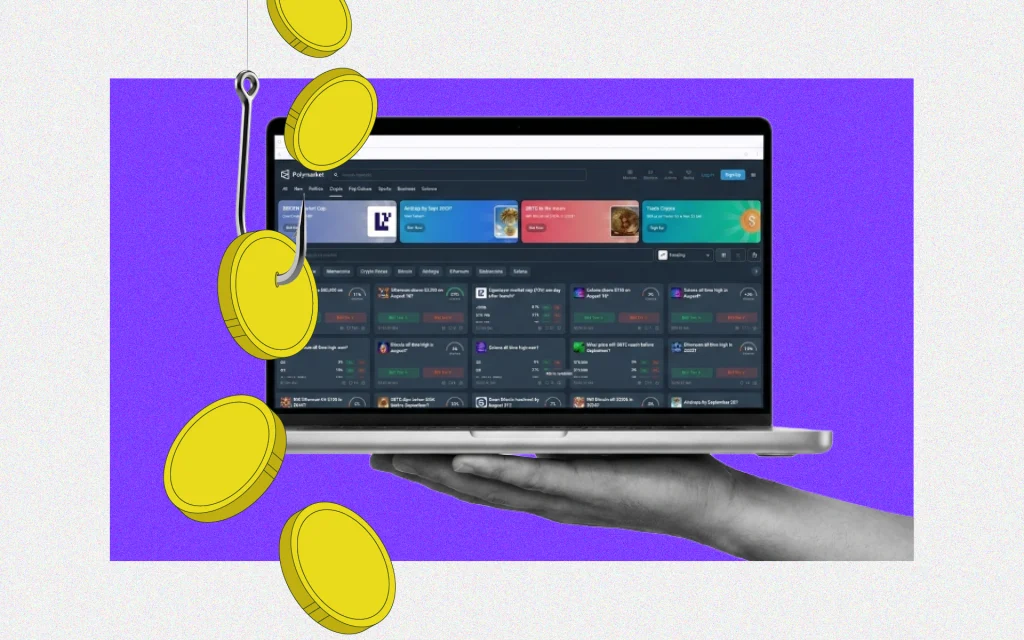
Prediction market platform Polymarket is facing one of its largest security incidents to date after blockchain intelligence firms traced roughly $3.1 million in stolen user funds to a sophisticated phishing attack that compromised the platform’s frontend through a third-party vendor.
Blockchain security firm AMLBot said attackers drained approximately $3.1 million worth of PUSD from 11 user wallets on Polygon before rapidly laundering the proceeds through multiple blockchain networks.
The stolen assets were converted into ETH and consolidated across three newly created Ethereum wallets, where nearly 1,892 ETH currently remains under observation.
The incident has renewed concerns over frontend attacks targeting decentralized applications, highlighting how compromised third-party software can expose users even when a protocol’s smart contracts remain secure.
+70
Shiba Inu
Bitcoin
PAX Gold
Ampleforth
Ethereum
Cardano
EOS
Solana
Avalanche
Dogecoin
Ripple
TRON
Bitcoin Cash
Ocean Protocol
Litecoin
Reserve Rights
Ontology
Bitcoin SV
Ethereum Classic
Kusama
Dash
Neo
Chainlink
Qtum
Polkadot
VeChain
Stellar
Tezos
Zcash
Zilliqa
Status
JUST
Cosmos
Ravencoin
Trust Wallet Token
ARPA Chain
Nervos Network
Storj
Beam
NKN
Algorand
Celer Network
THORChain
Fantom
Optimism
Aptos
APEcoin
Wrapped Bitcoin
Compound
Monero
Basic Attention Token
Arweave
Aergo
Decentraland
SushiSwap
Conflux Network
NEAR Protocol
Polkastarter
Ankr
Maker
Artificial Superintelligence Alliance
Mask Network
Cronos
Internet Computer
Badger DAO
USD Coin
BakeryToken
Alpaca Finance
Aave
Treasure
BitTorrent
FLUX
Bancor
IoTex
Build'N'Build
+76
Bitcoin
Ethereum
Tether
USD Coin
Solana
Ripple
Dogecoin
Cardano
Toncoin
Shiba Inu
Avalanche
TRON
Chainlink
Polygon Matic
Polkadot
Wrapped Bitcoin
Litecoin
Dai
NEAR Protocol
Bitcoin Cash
Stellar
Cosmos
Filecoin
Ethereum Classic
Aptos
Hedera Hashgraph
Immutable
Optimism
Arbitrum
VeChain
The Sandbox
Decentraland
Axie Infinity
Injective Protocol
Render
The Graph
Aave
Chiliz
Helium
PAX Gold
Compound
Lido DAO Token
Sui
Conflux Network
Lido Staked ETH
OKB
Uniswap
Pepe
Ondo
Mantle
First Digital USD
XDC Network
Artificial Superintelligence Alliance
Jupiter
Quant
Worldcoin
Bonk
Tether Gold
JITO
JasmyCoin
Core
Floki Inu
Ethereum Name Service
SushiSwap
1inch Network
Tezos
Algorand
Flow
Trust Wallet Token
Curve DAO Token
MultiversX
Basic Attention Token
Enjin Coin
Ethena
Ethena Staked USDe
Build'N'Build
Kava.io
Celestia
Sei
IOTA
Frax
+217
Bitcoin
Ethereum
Tether
Build'N'Build
USD Coin
Solana
Ripple
Dogecoin
Cardano
Toncoin
Shiba Inu
Avalanche
TRON
Chainlink
Polkadot
Polygon Matic
Wrapped Bitcoin
Litecoin
Dai
NEAR Protocol
Bitcoin Cash
Monero
Stellar
Cosmos
Filecoin
Ethereum Classic
Aptos
Hedera Hashgraph
Immutable
Optimism
Arbitrum
VeChain
The Sandbox
Decentraland
Axie Infinity
Injective Protocol
Render Token
The Graph
Maker
Aave
Chiliz
Helium
PAX Gold
Compound
Lido DAO Token
THORChain
Stacks
Arweave
Sui
Conflux Network
Lido Staked ETH
Bitget Token
Wrapped Ethereum
OKB
Uniswap
Pepe
Ondo
Mantle
First Digital USD
Bittensor
Kaspa
Celestia
XDC Network
Artificial Superintelligence Alliance
Jupiter
Quant
Worldcoin
PayPal USD
Bonk
Flare
Tether Gold
Sei
JITO
JasmyCoin
PancakeSwap
Core
Floki Inu
Ethereum Name Service
SushiSwap
Kava.io
1inch Network
Tezos
Algorand
Flow
Trust Wallet Token
Curve DAO Token
KuCoin Token
MultiversX
Gitcoin
Zcash
IOTA
Basic Attention Token
Frax
Ethena
Ethena USDe
Fasttoken
Pi Network
SATS
Adventure Gold
Audius
Alchemy Pay
Arkham
API3
Bounce Token
Altlayer
Aergo
Amp
Aevo
ARPA Chain
Astar
Ark
Ankr
AirSwap
Alpaca Finance
Blur
Badger DAO
Bancor
BakeryToken
Biconomy
Chromia
Celer Network
Celo
Shentu
Civic
Convex Finance
Cartesi
Cyber
COTI
DigiByte
DIA
ether.fi
FUNToken
FLUX
Firo
Ampleforth
Golem
GMX
Gnosis
Moonbeam
Holo
IoTex
ICON
Illuvium
JUST
Kadena
Liquity
Livepeer
Lisk
Memecoin
Manta Network
Treasure
Mask Network
MetisDAO
Origin Protocol
ORDI
Ontology
Osmosis
Powerledger
Phala Network
Pendle
Portal
Pyth Network
ConstitutionDAO
Polkastarter
Qtum
iExec RLC
Rocket Pool
Reserve Rights
Ronin
Ravencoin
Starknet
Storj
Status
Spell Token
Sun (New)
SuperVerse
Toko Token
Theta Fuel
Tellor
Tensor
LayerZero
Usual
Eigenlayer
Hamster Kombat
Catizen
Berachain
KAITO
Pudgy Penguins
Solayer
Bio Protocol
ChainGPT
Cookie DAO
Solv Protocol
Alchemix
Bitcoin SV
Movement
DeXe
Binance Staked SOL
Nexo
Wrapped eETH
Hyperliquid
Casper
Zilliqa
Secret
Nervos Network
TrueUSD
BitTorrent
Mina
Dash
STEPN
Gemini Dollar
UNUS SED LEO
Synthetix
APEcoin
Gala
Theta Network
Fantom
Cronos
Internet Computer
Binance USD
According to AMLBot, the attack relied on phishing techniques combined with malicious EIP-7702 delegated execution to trick users into signing wallet approvals that ultimately emptied their accounts.
Rather than exploiting Polymarket’s underlying smart contracts, attackers compromised a third-party vendor and inserted malicious code into software running on parts of the platform’s frontend.
Polymarket Under Attack
Polymarket users were drained of ~$3.1M in PUSD on Polygon via phishing / malicious EIP-7702 delegated execution.
Funds were converted to USDC.e via Relay, bridged to Ethereum, swapped to ETH, and consolidated at… pic.twitter.com/bG3GYZZ1D9
— AMLBot (@AMLBotHQ) June 27, 2026
The code tricked some users into approving wallet transactions that transferred their assets to the attackers.
Blockchain investigators traced the stolen PUSD as attackers moved it from Polygon through Relay, swapped it for USDC.e, and bridged it to Ethereum. They then exchanged the funds for ETH and consolidated nearly all of it into three newly created wallets.
AMLBot identified the largest address as holding approximately 1,788.5 ETH, while two additional wallets currently contain roughly 100 ETH and 3.4 ETH, respectively. The company said it continues actively monitoring the addresses for any attempts to move or launder the funds.
The attack resembles previous supply-chain compromises in the crypto industry, including the 2024 incident affecting decentralized exchange aggregator 1inch, where attackers exploited the widely used Lottie Player library to inject wallet-draining code into the platform’s web interface.
Polymarket acknowledged the incident shortly after investigators identified it, confirming that a compromised third-party dependency injected malicious code into parts of its frontend.
The company removed the affected dependency, contained the attack, and stressed that the incident did not affect its core protocol or smart contracts.
On June 25th, #Polymarket was hit by a phishing attack, causing ~$3M in losses across multiple users.
We saw a lot of people tracing the funds through bridges from #Polygon to #Ethereum, and from $USDC to $ETH, mostly successfully. Two wallets have been reported holding almost… pic.twitter.com/NENrGLOMpm
— Noxos Intelligence (@NoxosIntel) June 27, 2026
“We’ve contained it and removed the affected dependency,” the company said, adding that it had begun contacting affected users and would refund victims in full.
Earlier estimates placed the losses at approximately $2.94 million, but AMLBot’s latest forensic analysis raised the total to roughly $3.1 million across 11 compromised wallets.
Security researchers noted that frontend attacks are particularly dangerous because users often have little indication that anything is wrong.
While the website may appear entirely legitimate, malicious JavaScript loaded through compromised third-party libraries can generate fraudulent wallet prompts that closely resemble legitimate transaction requests.
The phishing incident comes during an increasingly difficult period for Polymarket, which has faced several security-related controversies over the past year.
In March, blockchain investigator ZachXBT flagged a separate security incident after an over $520,000 drain from two Polygon smart contracts. Polymarket later maintained that user funds remained safe in that case.
#PeckShieldAlert Specter has reported that a #phishing campaign appears to be targeting #Polymarket users, with ~$3M worth of $PUSD drained.
The attacker bridged the stolen funds from #Polygon to #Ethereum and swapped them into ~1,893 $ETH. pic.twitter.com/Li4nZY1me4
— PeckShieldAlert (@PeckShieldAlert) June 25, 2026
The platform also confirmed a Discord security incident in December after users reported suspicious login attempts and missing funds.
According to previous industry reports, DefiLlama records the latest exploit as the 89th crypto security breach during the second quarter, making it the busiest quarter on record by the number of incidents.
The attack also arrives as prediction markets face heightened political scrutiny in Washington. US lawmakers have questioned regulators over alleged deceptive advertising practices by prediction market platforms, adding further pressure on the sector as it continues to expand into mainstream financial markets.
Giuseppe Ciccomascolo began his career as an investigative journalist in Italy, where he contributed to both local and national newspapers, focusing on various financial sectors.
Upon relocating to London, he worked as an analyst for Fitch's CapitalStructure and later as a Senior Reporter for Alliance News. In 2017, Giuseppe transitioned to covering cryptocurrency-related news, producing documentaries and articles on Bitcoin and other emerging digital currencies. He also played a pivotal role in establishing the academy for a cryptocurrency exchange website. Crypto remained his primary area of interest throughout his tenure as a writer for ThirdFloor.
You’re All Set!
Thanks for signing up. We’ll be in touch soon with the latest insights.