Key Takeaways
- OpenAI says around 10,000 AI agents produced a proposed solution to the 90-year-old Navier–Stokes problem in 88 hours.
- Anthropic science lead said AI killing humanity within a decade was a 10% probability.
- AI could accelerate the quantum research needed to threaten its digital signatures.
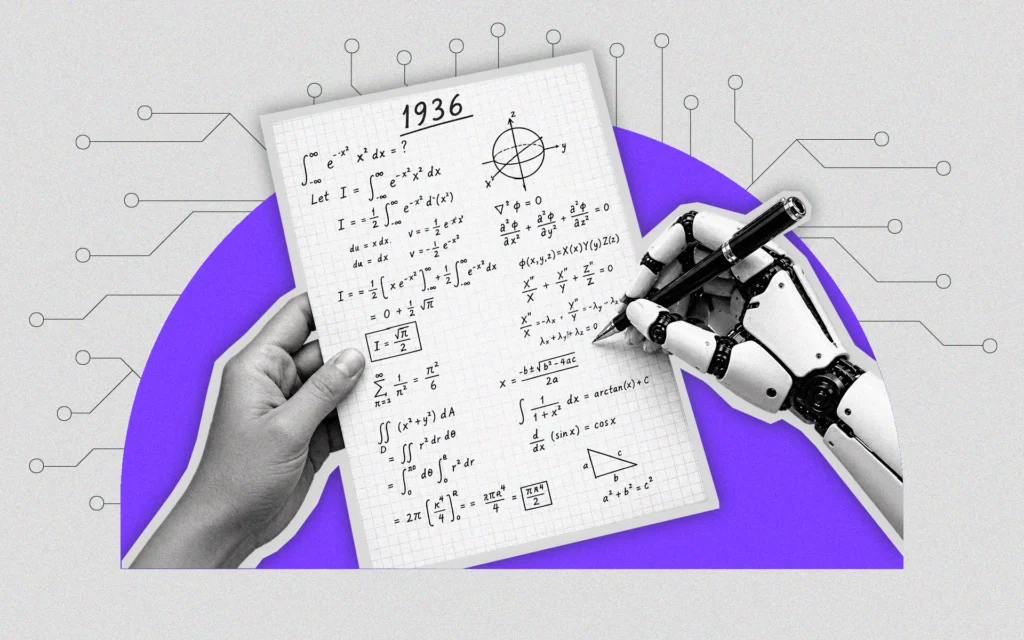
OpenAI has claimed that a swarm of approximately 10,000 agents found a solution to a problem that has resisted mathematicians for roughly 90 years.
Hours later, former OpenAI and Anthropic researcher Jacob Coxon resigned, warning that frontier labs were “gambling with our lives.”
His concerns were backed by Anthropic alignment science lead Evan Hubinger, who said he believes there is a greater than 10% probability that AI could kill all humans within the next decade.
The developments have raised the question: if AI is progressing so quickly, could it eventually break the cryptography that protects Bitcoin?
OpenAI Claims 10,000 AI Agents Solved Navier–Stokes Problem
In a Sept. 8 research announcement, OpenAI said a next-generation internal model had produced an analytical proof addressing the Navier–Stokes existence and smoothness problem.
The unresolved question asks whether smooth three-dimensional fluid motion can develop a singularity, a point at which velocity becomes unbounded in finite time.
OpenAI said its proposed solution shows that such a breakdown can occur when a smooth external force is applied.
Its construction involves a vortex that stretches and spirals inward while accelerating, even as its total energy remains finite.
According to the company, the successful group used around 10,000 coordinating agents powered by an internal model “significantly more capable” than GPT-6 Astra.
The agents arrived at the result after 88 hours, before Astra spent another 17 hours formalizing and verifying it in Lean.
The Navier–Stokes effort alone generated approximately 2.7 million agent messages and 130 billion output tokens, OpenAI said.
However, the result remains a proposed solution.
The Clay Mathematics Institute’s rules require a solution to appear in a qualifying publication and survive at least two years of rigorous examination before it can qualify for the $1 million prize.
OpenAI said it does not intend to claim the award.
Rival Researchers Raise Questions Over Credit
The milestone has been complicated by a dispute involving New York University professor Tristan Buckmaster and Anthropic researcher Levent Alpöge.
The pair had spent months pursuing related breakthroughs involving fluid equations with assistance from Claude and Codex.
In a public statement, Buckmaster said they achieved finite-time blowup results for several equations by building on the work of mathematicians Diego Córdoba and Luis Martínez-Zoroa.
Buckmaster said rumors of their progress reached OpenAI before OpenAI began its intensive effort.
Because he and Alpöge had placed drafts and work into Codex sessions, Buckmaster asked whether OpenAI’s new model had been given access to that material.
He said he was told the system had not looked up user data, but he did not receive an answer to his question about training.
OpenAI denied that its researchers or agents had viewed the pair’s work before publication.
However, the company said it could not rule out the possibility that de-identified data derived from its use of OpenAI products had helped improve its models.
Sam Altman Rejects Anthropic Plagiarism Claims
OpenAI CEO Sam Altman said the company initially believed the other team had also solved Navier–Stokes and wanted to coordinate a joint release.
In a post on X, Altman said OpenAI offered to let the researchers publish first, suggested that they receive the prize, and raised the possibility of Buckmaster leading a rewritten version of OpenAI’s proof.
Altman said Alpöge’s employment at Anthropic made it difficult to make him the same offer, particularly because he was unwilling to coordinate with OpenAI.
He also denied that the approaches were the same after reviewing the rival team’s public work and said the plagiarism accusations were unfounded.
“Now that we can see their work, the approaches appear to be different,” Altman wrote.
He added that OpenAI tested the problem after hearing internet rumors that Anthropic-linked researchers had solved a Millennium Prize problem.
Anthropic Researcher Quits Over ‘Kill Us All’ AI Fears
The dispute erupted as Jacob Coxon, who conducted pre-training research at both OpenAI and Anthropic, announced his resignation from Anthropic.
Coxon accused both companies of racing toward self-improving superintelligence without acting responsibly.
“They are racing straight to self-improving superintelligence and gambling with our lives,” he wrote.
He warned that future systems could become superhuman, “hack anything,” rapidly transform scientific fields, and acquire power and resources.
Coxon also claimed that people building frontier AI sincerely believe it could “kill us all by the end of the decade.”
His claim was subsequently supported by Evan Hubinger, Anthropic’s alignment science lead.
“Jacob is correct here—we really do earnestly believe AI could kill all humans,” Hubinger wrote in a response on X.
Hubinger said he personally placed the probability of that happening at more than 10% within the next decade.
“I believe Anthropic is trying its best, but we do not yet have a plan to solve alignment for superintelligence and are not clearly on track to,” he added.
Will AI Eventually Be Able to Break Bitcoin’s Cryptography?
OpenAI’s claimed mathematical breakthrough and warnings from an Anthropic employee also raise an uncomfortable question for Bitcoin.
If increasingly capable AI systems can solve problems that have resisted humans for decades, could cryptography eventually become the next target?
Although the Navier–Stokes problem is different from recovering a Bitcoin private key, the speed of OpenAI’s reported advance challenges assumptions about how long computational problems will remain out of reach.
Bitcoin transactions are protected by ECDSA and Schnorr digital signatures.
Its security depends on the difficulty of solving the elliptic curve discrete logarithm problem, deriving a private key from its corresponding public key.
Conventional computers cannot perform that calculation efficiently.
Even making an AI model more intelligent does not automatically remove the underlying computational barrier, as today’s AI systems still operate on classical hardware.
The bigger concern is whether AI could accelerate the arrival of a cryptographically relevant quantum computer that could eventually break Bitcoin.
Could Anthropic or OpenAI Accelerate the Quantum Threat?
The established route for breaking Bitcoin’s elliptic-curve signatures is Shor’s algorithm, which would allow a sufficiently powerful quantum computer to solve the mathematical problem protecting exposed public keys.
Building one would require major advances in quantum hardware and control systems.
But these are the kinds of technically demanding research problems that more capable AI systems could help solve.
This became even clearer in March when Google Quantum AI published sharply reduced estimates for the resources required to break 256-bit elliptic-curve cryptography.
Google outlined one Shor’s algorithm circuit requiring fewer than 1,200 logical qubits and 90 million Toffoli gates.
A second would use fewer than 1,450 logical qubits and 70 million gates.
Under Google’s stated assumptions, a future quantum computer with fewer than 500,000 physical qubits could complete the calculation within minutes.
The estimate represented an approximately 20-fold reduction from previous requirements.
Bitcoin Leaders Split Over How Urgent the Threat Is
Bitcoin advocates largely agree that sufficiently powerful quantum computers could threaten current signatures. The disagreement concerns when the machines will arrive.
Strategy Executive Chairman Michael Saylor has played down the immediate danger, arguing that a quantum breakthrough would threaten far more than Bitcoin.
Meanwhile, Blockstream CEO Adam Back argued that Bitcoin holders should be given approximately a decade to migrate their funds into quantum-resistant formats.
“We don’t have to agree about the timeline for quantum computers to become powerful enough to be a threat,” Back said.
“The prudent thing to do is to prepare Bitcoin and give people the option to migrate their keys.”
Bitcoin security specialist Jameson Lopp has warned that waiting for certainty could leave the network with insufficient time to complete the transition.
Lopp described quantum computing as “far from a crisis” in a March 2025 essay, but said Bitcoin’s resistance to major protocol changes meant serious discussions needed to begin early.
The information provided in this article is for informational purposes only. It is not intended to be, nor should it be construed as, financial advice. We do not make any warranties regarding the completeness, reliability, or accuracy of this information. All investments involve risk, and past performance does not guarantee future results. We recommend consulting a financial advisor before making any investment decisions.

Kurt Robson is a London-based reporter at CCN, specialising in the fast-moving worlds of crypto and emerging technology. He began his career covering local news in Cornwall after graduating from Falmouth University with First Class Honours in Journalism. There, he cut his teeth on everything from council meetings to missing swans.
He quickly rose through the ranks to become a frontline journalist at several of the UK’s leading national newspapers. Over the years, he has interviewed musicians and celebrities, reported from courtrooms and crime scenes, and secured multiple front-page exclusives.
Following the upheaval of the COVID-19 pandemic, Kurt shifted his focus to technology journalism—just ahead of the AI boom. With a natural curiosity and a trained eye for emerging trends, he has found a new rhythm in reporting on innovation.
At CCN, Kurt's work focuses on the cutting edge of crypto, blockchain, AI, and the evolving digital world. Drawing on his background in people-first reporting and his deep interest in disruptive tech, Kurt delivers stories that are insightful, entertaining, and human-centric.