The National Cryptocurrency Association (NCA) has urged the US Treasury Department to strengthen consumer protections under its proposed GENIUS Act regulations, warning that stablecoin holders need clearer safeguards as the new federal framework takes shape.
In comments submitted to Treasury, the NCA called for protections that would allow consumers to redeem, sell, or convert stablecoins if their regulatory status changes, as well as mechanisms to recover stolen funds.
The organization also emphasized the importance of preserving self-custody and peer-to-peer transactions, arguing that consumer protections should not unnecessarily restrict how Americans use digital assets.
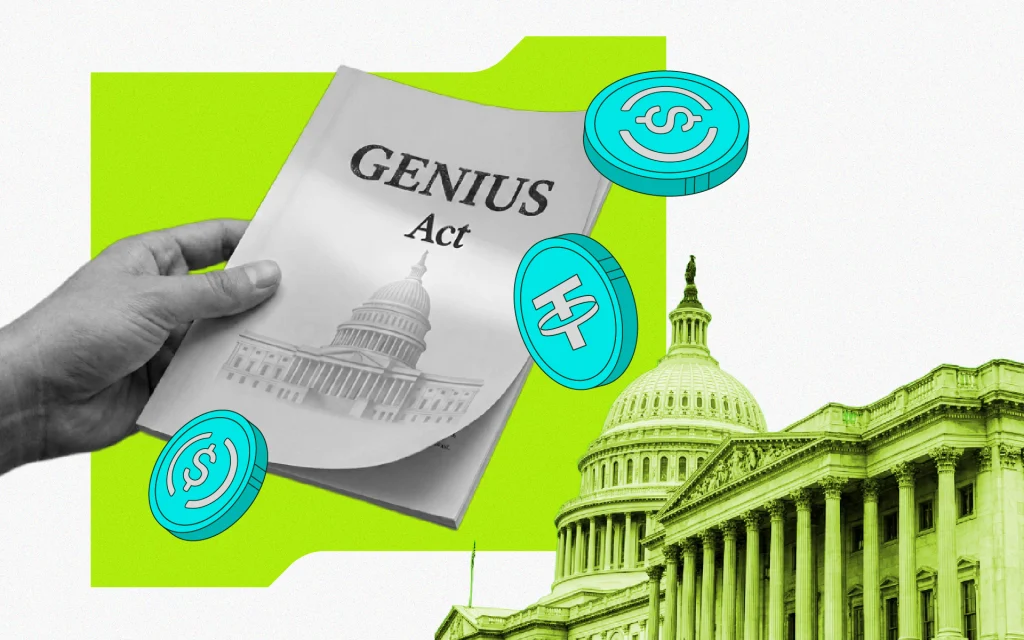
The submission comes as regulators prepare to implement the GENIUS Act, the landmark stablecoin legislation signed into law in July 2025.
+245
Ethereum
Tether
Build'N'Build
USD Coin
Solana
Ripple
Dogecoin
Cardano
Toncoin
Shiba Inu
Avalanche
TRON
Chainlink
Polygon Matic
Polkadot
Wrapped Bitcoin
Litecoin
Dai
NEAR Protocol
Bitcoin Cash
Monero
Stellar
Cosmos
Filecoin
Ethereum Classic
Aptos
Hedera Hashgraph
Immutable
Optimism
Arbitrum
VeChain
The Sandbox
Decentraland
Axie Infinity
Injective Protocol
Render Token
The Graph
Maker
Aave
Chiliz
Helium
PAX Gold
Compound
Lido DAO Token
THORChain
Stacks
Arweave
Sui
Conflux Network
Lido Staked ETH
Bitget Token
Wrapped Ethereum
OKB
Uniswap
Pepe
Ondo
Mantle
First Digital USD
Bittensor
Kaspa
Celestia
XDC Network
Artificial Superintelligence Alliance
Jupiter
Quant
Worldcoin
PayPal USD
Bonk
Rocket Pool ETH
Flare
Tether Gold
Sei
JITO
JasmyCoin
PancakeSwap
Core
Floki Inu
Ethereum Name Service
SushiSwap
Kava.io
1inch Network
Tezos
Algorand
Flow
Trust Wallet Token
Curve DAO Token
KuCoin Token
MultiversX
GateToken
Zcash
IOTA
Basic Attention Token
Enjin Coin
Frax
Ethena
Ethena USDe
Ethena Staked USDe
BlackRock USD Institutional Digital Liquidity Fund
Fasttoken
Pi Network
SATS
Adventure Gold
Audius
Acala Token
Alchemy Pay
Arkham
API3
Bounce Token
Bitcoin
Altlayer
Aergo
Amp
Aevo
ARPA Chain
Astar
Ark
Ankr
AirSwap
Axelar
Alpaca Finance
SingularityNET
Blur
Beam
Badger DAO
Bancor
BakeryToken
Biconomy
Chromia
Tranchess
Celer Network
Celo
Shentu
Civic
Convex Finance
Cartesi
Cyber
COTI
DigiByte
DIA
Dymension
dYdX
ether.fi
FUNToken
FLUX
Firo
Ampleforth Governance Token
Golem
GMX
Gnosis
Gitcoin
Moonbeam
Holo
IoTex
ICON
Illuvium
JUST
Kadena
Kusama
Liquity
Livepeer
Lisk
Memecoin
Manta Network
Treasure
Mask Network
MetisDAO
NKN
Neutron
Ocean Protocol
Origin Protocol
ORDI
Ontology
Osmosis
Powerledger
Phala Network
Pendle
Portal
Pyth Network
ConstitutionDAO
Polkastarter
Qtum
iExec RLC
Rocket Pool
Reserve Rights
Ronin
Ravencoin
Starknet
Storj
Status
Spell Token
Sun (New)
Saga
SuperVerse
Toko Token
Theta Fuel
Tellor
Tensor
Unstoppable Ecosystem Token
Wrapped BNB
LayerZero
Scroll
Usual
Cetus Protocol
Eigenlayer
Hamster Kombat
Catizen
Berachain
KAITO
Pudgy Penguins
Vana
Solayer
Bio Protocol
ChainGPT
Cookie DAO
Solv Protocol
Alchemix
Bitcoin SV
Usual USD
Movement
DeXe
Kelp DAO Restaked ETH
Binance Staked SOL
Nexo
Solv Protocol BTC
Tokenize Xchange
Wrapped eETH
Hyperliquid
Casper
Zilliqa
Secret
Nervos Network
TrueUSD
EOS
BitTorrent
Mina
Dash
STEPN
Gemini Dollar
UNUS SED LEO
Synthetix
Neo
APEcoin
Gala
Theta Network
Fantom
Cronos
Internet Computer
Binance USD
+96
Bitcoin
Ethereum
Tether
Build'N'Build
USD Coin
Solana
Ripple
Dogecoin
Cardano
Toncoin
Shiba Inu
Avalanche
TRON
Chainlink
Polygon Ecosystem Token
Polkadot
Wrapped Bitcoin
Litecoin
Dai
NEAR Protocol
Bitcoin Cash
Monero
Stellar
Cosmos
Filecoin
Ethereum Classic
Aptos
Hedera Hashgraph
Immutable
Optimism
Arbitrum
VeChain
The Sandbox
Decentraland
Axie Infinity
Injective Protocol
Render Token
The Graph
Maker
Aave
Chiliz
Helium
PAX Gold
Compound
Lido DAO Token
THORChain
Stacks
Arweave
Sui
Conflux Network
Lido Staked ETH
Bitget Token
Wrapped Ethereum
OKB
Uniswap
Pepe
Ondo
Mantle
First Digital USD
Bittensor
Kaspa
Celestia
XDC Network
Artificial Superintelligence Alliance
Jupiter
Quant
Worldcoin
PayPal USD
Bonk
Rocket Pool ETH
Flare
Tether Gold
Sei
JITO
JasmyCoin
PancakeSwap
Core
Floki Inu
Ethereum Name Service
SushiSwap
Kava.io
1inch Network
Tezos
Algorand
Flow
Trust Wallet Token
Curve DAO Token
KuCoin Token
MultiversX
GateToken
Zcash
IOTA
Basic Attention Token
Enjin Coin
Frax
Ethena
Ethena USDe
Ethena Staked USDe
BlackRock USD Institutional Digital Liquidity Fund
Fasttoken
Pi Network
+95
Bitcoin
Ethereum
Tether
Build'N'Build
USD Coin
Solana
Ripple
Dogecoin
Cardano
Toncoin
Shiba Inu
Avalanche
TRON
Chainlink
Polygon Ecosystem Token
Polkadot
Wrapped Bitcoin
Litecoin
Dai
NEAR Protocol
Bitcoin Cash
Monero
Cosmos
Filecoin
Ethereum Classic
Aptos
Hedera Hashgraph
Immutable
Optimism
Arbitrum
VeChain
The Sandbox
Decentraland
Axie Infinity
Injective Protocol
Render Token
The Graph
Maker
Aave
Chiliz
Helium
PAX Gold
Compound
Lido DAO Token
THORChain
Stacks
Arweave
Sui
Conflux Network
Lido Staked ETH
Bitget Token
Wrapped Ethereum
OKB
Uniswap
Pepe
Ondo
Mantle
First Digital USD
Bittensor
Kaspa
Celestia
XDC Network
Artificial Superintelligence Alliance
Jupiter
Quant
Worldcoin
PayPal USD
Bonk
Rocket Pool ETH
Flare
Tether Gold
Sei
JITO
JasmyCoin
PancakeSwap
Core
Floki Inu
Ethereum Name Service
SushiSwap
Kava.io
1inch Network
Tezos
Algorand
Flow
Trust Wallet Token
Curve DAO Token
KuCoin Token
MultiversX
GateToken
Zcash
IOTA
Basic Attention Token
Enjin Coin
Frax
Ethena
Ethena USDe
Ethena Staked USDe
BlackRock USD Institutional Digital Liquidity Fund
Fasttoken
Pi Network
The NCA’s recommendations focus on ensuring that consumers are not unexpectedly disadvantaged when new stablecoin regulations take effect.
One central concern involves stablecoins that lose their permitted regulatory status under the forthcoming framework.
The association wants holders to have sufficient time to redeem, sell, or convert their tokens, rather than face immediate restrictions that could render their funds inaccessible.
📣 Today NCA submitted comments to @USTreasury on its proposed GENIUS Act rules for payment stablecoins.
Stablecoins are becoming part of everyday life for consumers and businesses. Our comments focus on protecting holders as the new rules take effect: giving them time to… pic.twitter.com/SM0kLdJRlB
— National Cryptocurrency Association (@NatCryptoAssoc) October 19, 2026
Such protections could become particularly important for consumers holding stablecoins issued by companies that fail to meet new US regulatory requirements.
The NCA also called for mechanisms to return stolen stablecoins to victims, highlighting the challenges consumers face when funds are transferred through blockchain networks.
However, implementing recovery procedures could prove complicated, particularly for decentralized transactions and assets held outside custodial platforms.
Another priority is protecting self-custody, which allows individuals to control their digital assets without relying on intermediaries.
The association argues that peer-to-peer stablecoin transfers should remain available as regulators establish new compliance requirements.
Its recommendations reflect a broader concern that rules designed to protect consumers could inadvertently limit their ability to access and control digital assets.
The NCA is not alone in seeking changes to Treasury’s proposal.
The Blockchain Association submitted a separate comment letter on Oct. 19, supporting the government’s broader objectives while requesting narrower definitions and clearer compliance obligations.
The organization wants Treasury to clarify which companies qualify as digital asset service providers.
It argues that self-custody software providers, blockchain validators, and firms trading their own assets should not automatically be subject to obligations intended for businesses that provide services to customers.
1/ We filed comments today on @USTreasury's proposed rule implementing Section 3 of the GENIUS Act, covering who can issue, offer, and sell payment stablecoins in the U.S.
We applaud Treasury’s implementation efforts. Our letter seeks clearer lines so the final rule matches what… pic.twitter.com/EIhz5wcf4q
— Blockchain Association (@BlockchainAssn) October 19, 2026
The group also raised concerns about criminal liability associated with unlawful stablecoin issuance.
It recommended limiting liability to cases involving actual knowledge and substantial assistance, rather than potentially capturing ordinary secondary-market transactions.
Foreign stablecoin issuers represent another area of disagreement.
The association wants platforms to be able to rely on official regulatory information rather than conduct extensive independent investigations into overseas issuers.
It also questioned how geographic restrictions could operate in decentralized environments where participants may interact only through blockchain addresses.
The requests illustrate the industry’s effort to distinguish regulated financial intermediaries from decentralized infrastructure.
The Treasury proposal, published on Aug. 18, seeks to implement Section 3 of the GENIUS Act, establishing restrictions on who may issue, offer, and sell payment stablecoins in the US.
The legislation creates a federal regulatory framework requiring payment stablecoin issuers to operate under appropriate federal or qualifying state supervision.
Its implementation is scheduled for Jan. 18, 2027, or 120 days after relevant federal regulators finalize implementing rules, whichever comes first.
The GENIUS Act established the framework. Now, Treasury’s rules must ensure that Americans are not stranded holding stablecoins if regulations change, have pathways to recover stolen funds, and can self-custody if they choose. https://t.co/tG4NknCzFF
— Stuart Alderoty (@s_alderoty) October 19, 2026
Other agencies are developing complementary regulations.
The Federal Reserve published its own proposal in September, addressing supervisory responsibilities and requirements for entities under its jurisdiction.
That consultation remains open until Nov. 30.
Meanwhile, Treasury’s Section 3 proposal attracted more than 100 public submissions during the consultation period.
For stablecoin issuers and cryptocurrency platforms, the final regulations will determine how the industry’s compliance obligations operate in practice.
For consumers, the consequences could be equally significant.
The NCA’s recommendations highlight an unresolved challenge: ensuring stablecoins become safer and more widely accepted without undermining the flexibility, accessibility, and individual control that helped drive their adoption.
Giuseppe Ciccomascolo began his career as an investigative journalist in Italy, where he contributed to both local and national newspapers, focusing on various financial sectors.
Upon relocating to London, he worked as an analyst for Fitch's CapitalStructure and later as a Senior Reporter for Alliance News. In 2017, Giuseppe transitioned to covering cryptocurrency-related news, producing documentaries and articles on Bitcoin and other emerging digital currencies. He also played a pivotal role in establishing the academy for a cryptocurrency exchange website. Crypto remained his primary area of interest throughout his tenure as a writer for ThirdFloor.
You’re All Set!
Thanks for signing up. We’ll be in touch soon with the latest insights.