Key Takeaways
- The crypto market suffered a flash crash on Monday, with BTC and ETH breaking below key support levels.
- Over $534 million in leveraged positions were liquidated in less than 24 hours.
- Ethereum traders were hit hardest, losing nearly double the amount of BTC traders.
The crypto market was riding high and buzzing with excitement, with Bitcoin (BTC), Ethereum (ETH), and several altcoins hovering near record territory.
However, just as momentum was building, a sudden shift in global politics brought everything crashing down.
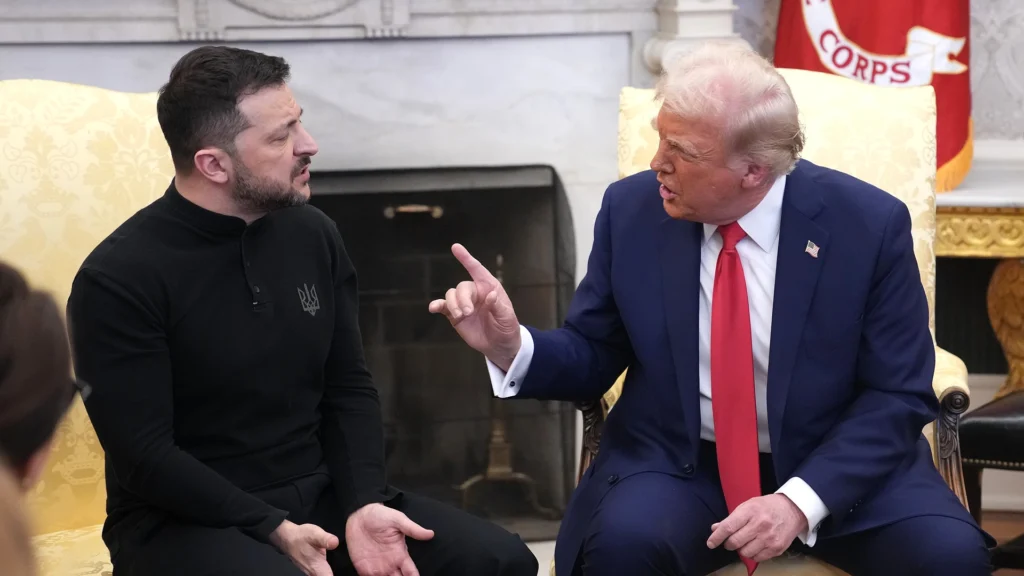
Hours before President Donald Trump was set to meet with world leaders—including Ukraine’s President Volodymyr Zelensky—to push for an end to the Russia-Ukraine war, the crypto market slipped below key support levels, triggering a wave of liquidations.
$534 Million Liquidated in Monday’s Flash Crash
According to Coinglass data, over $534 million in leveraged positions were wiped out during Monday’s flash crash.
Long traders bore the brunt of the losses, accounting for $448 million, while shorts lost $86 million.
In total, 127,029 traders were liquidated over the past 24 hours. The single largest liquidation order took place on Binance, where a BTC/USDT long valued at $4.03 million was wiped out.
Bitcoin traders lost around $111 million, with $105 million of that coming from long positions.
Ethereum traders, however, saw even heavier losses—over $211 million in total liquidations, including $170 million in longs and $40 million in shorts.
Ethereum Traders Hit Harder
While both BTC and ETH saw sharp losses, Ethereum’s traders were hit especially hard.
Liquidations on ETH were nearly double those of Bitcoin, underscoring how leveraged ETH positions had piled up following July’s strong rally.
Ethereum is still holding above $4,300, but analysts warn that another breakdown could put pressure on the broader market, especially if leveraged long positions continue to unwind.
Trump’s Peace Talks Loom
The crash come just before Trump’s highly anticipated talks on a potential peace deal between Russia and Ukraine.
Many in the crypto community had expected such a breakthrough to be bullish for markets—reasoning that just as the war’s outbreak drove crypto prices lower, peace could deliver the opposite effect.
Instead, Bitcoin and Ethereum lost momentum ahead of the talks, erasing weeks of gains.
Analysts suggest that macroeconomic factors like sticky inflation, fading hopes for aggressive Fed rate cuts, and heavy profit-taking after a strong summer rally also played a role.

Prashant Jha is a seasoned crypto journalist based in Delhi, India, with a Bachelor’s Degree in Computer Science Engineering. Passionate about the evolving world of blockchain and cryptocurrencies, he has been a dedicated voice in the industry since 2018. Prashant’s expertise lies in regulatory reporting, where he unravels complex legal and financial developments with clarity and precision. Before joining CCN in 2024, he honed his craft at Cointelegraph, establishing himself as a trusted name in crypto journalism.
His coverage spans major industry events, including the high-profile collapses of FTX, Three Arrows Capital (3AC), and LUNA, offering readers insightful analyses of their regulatory and market implications. Prashant’s technical background enables him to bridge the gap between intricate blockchain technology and its real-world applications, making his work accessible to novices and experts.
Beyond his professional pursuits, Prashant is an avid music enthusiast, often exploring diverse genres to unwind. A sports lover, he has a particular passion for cricket and frequently engages in discussions about the game. His multifaceted interests and sharp journalistic instincts make him a valuable contributor to CCN, where he continues shaping the crypto landscape's narrative.