Key Takeaways
- nGRND plans to tokenize verified underground gold reserves while leaving the metal in what Chair David Lucatch called “nature’s vault.”
- The company intends to limit risk by tokenizing only a small portion of each verified reserve
- Revenue from alternative land-use programs could be shared with token holders.
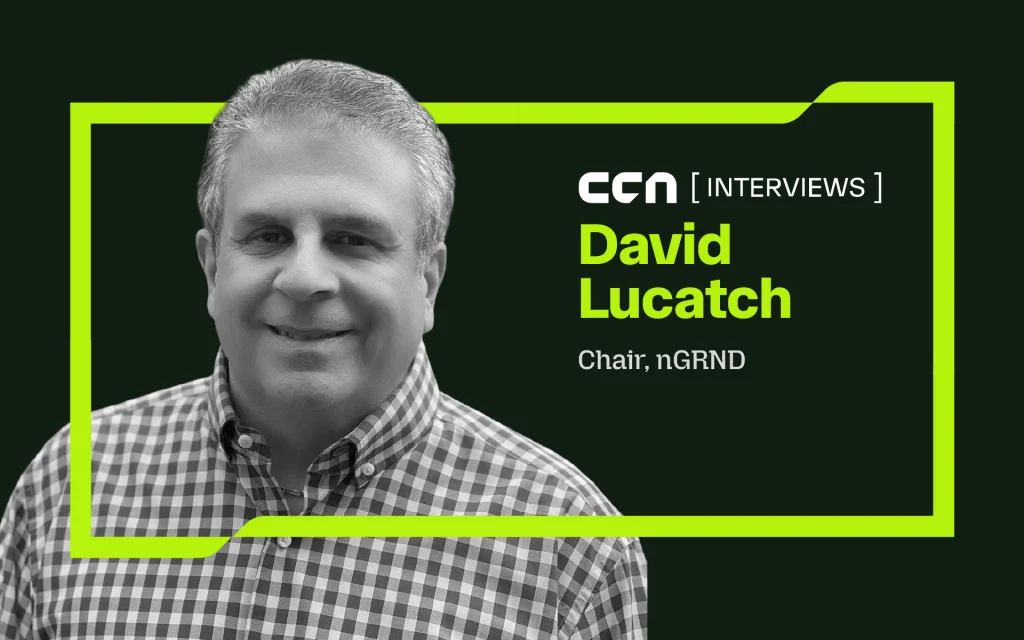
Gold does not need to be dug out of the ground to create value, according to nGRND Chair David Lucatch.
Lucatch told CCN at the Blockchain Futurist Conference in Toronto that the company was developing a tokenization model based on verified in-ground gold resources.
Instead of extracting the metal, nGRND intends to keep it in what Lucatch described as “nature’s vault,” while generating additional revenue from alternative uses of the land above it.
However, the model raises questions about verification, investor protection, and how an asset that may never be extracted should be valued.
Why Dig Up Gold Just To Store It Again?
Lucatch argued that the traditional gold market contained a fundamental contradiction: land is disrupted to extract the metal, only for much of it to be stored elsewhere.
“When gold comes out of the ground, you either wear it or you put it in a vault,” he said.
“We destroy the land to take the gold out of the ground to put it back into stored value.”
nGRND’s alternative is to leave verified resources in the ground while creating a digital asset linked to their value.
Lucatch described the approach as “creating value without extraction,” arguing that leaving gold beneath the land could preserve its store-of-value qualities without the environmental damage associated with mining.
“We preserve the gold in the ground,” he said. “It’s as if it’s in nature’s vault.”
What Backs a Token if the Gold Is Never Extracted?
The value of nGRND’s model depends on proving that the gold exists, even if investors never see or physically possess it.
Lucatch compared the structure with publicly listed exploration companies, whose shares can rise in value after they identify in-ground resources —even before those resources are mined.
“People buy my shares because the gold is in the ground, because I’ve proven the gold is in the ground,” he said.
nGRND plans to use the same geological reporting standards followed by Canadian public mining companies.
That includes Canada’s National Instrument 43-101, which sets disclosure requirements for companies reporting mineral exploration results and resources.
According to Lucatch, qualified persons sign off on reports verifying the amount and classification of gold contained within a property.
The main difference, he argued, is accessibility.
Shares in a conventional mining company may be readily available to potential investors only in specific jurisdictions, whereas tokenization could provide exposure to investors worldwide.
What Happens if the Gold Estimate Is Wrong?
Tokenizing in-ground reserves introduces an obvious risk: geological estimates can change.
If a property contains less gold than initially estimated, token holders could find themselves exposed to an asset with weaker backing than expected.
Lucatch said nGRND intended to manage that risk by issuing tokens against only a small proportion of each verified resource.
“We don’t take all the gold; we only take a small percentage,” he said. “We take rights over all of the gold, but we’re hedging it to ensure that it’s not oversold.”
The company recently secured rights connected to a property containing roughly 386,000 ounces of gold, according to Lucatch. However, he said nGRND would initially tokenize only 77,000 ounces to begin with.
“Start small,” he said.
As the geological classification and confidence in the property improve, the company could gradually increase the amount of gold represented through its platform.
Lucatch said this conservative approach was intended to create a buffer against uncertainty in reserve estimates.
Nevertheless, token holders would still depend on the quality of the geological reports, the project structure and nGRND’s ability to enforce its rights over the resources.
Gold Valued at 10% of the Spot Price
nGRND also intends to value the in-ground gold at a steep discount to metal that has already been extracted and can be physically delivered and stored.
Lucatch said the company values its gold at approximately 10% of the prevailing spot price.
“We’re pricing the gold at far lower than the spot price,” he said. “Ten percent of the spot is where we begin to value our gold.”
The discount reflects the difference between verified underground resources and refined bullion that can be immediately bought, sold or delivered.
Lucatch said nGRND’s fractional issuance and discounted valuation were part of a wider effort to build confidence among token holders and other stakeholders.
“We are conservative in our entire approach,” he said.
Will Tokenization Make Gold More Speculative?
Gold’s scarcity has helped establish it as a store of value, a characteristic frequently compared with Bitcoin’s fixed supply of 21 million coins.
However, converting in-ground resources into tradable tokens could arguably make them behave more like speculative financial instruments than physical commodities.
Lucatch rejected the idea that tokenization would fundamentally change gold’s role.
“I think gold has always been a bit of a speculative instrument,” he said. “I think Bitcoin’s been a bit of a speculative instrument.”
He argued that nGRND would tokenize only a nominal amount relative to total global gold resources and supply.
The model also has parallels with existing gold investment products, including exchange-traded funds and certificates, which provide economic exposure without requiring every investor to hold physical bullion.
“Even gold bullion today is sold as certificates,” Lucatch said. “It’s not physical gold; it’s certificate gold.”
Environmental Claims Will Rely on Third-Party Verification
nGRND wants to create additional value from the land above its in-ground resources through environmental, social and governance programs.
However, Lucatch stressed that the company directly develops alternative land-use programs.
Instead, third-party specialists would conduct feasibility studies, develop land-use initiatives and measure their impact.
“We bring in third-party experts to do feasibility studies on the land [and] create qualified ESG-based programs that have measured impact and revenues,” he said.
Revenue generated through the projects would then be shared with token holders and participating Indigenous communities.
Supporting Communities Where Mining Is Not Economical
Lucatch said the model could be particularly useful in areas where gold deposits are known to exist but cannot currently be mined economically.
In such cases, tokenization and alternative land-use programs could theoretically generate revenue without waiting for extraction to become commercially viable.
Lucatch said nGRND was examining one property where nearby Indigenous communities required investment, but the underlying gold was not presently economical to extract.
“By doing what we do, we can help support those people in the region as well,” he said.
“If you can be a good company, have good stewardship, good opportunities, good participation and create value for your entire ecosystem, that’s really what success looks like.”
Top Trending Crypto Articles
The information provided in this article is for informational purposes only. It is not intended to be, nor should it be construed as, financial advice. We do not make any warranties regarding the completeness, reliability, or accuracy of this information. All investments involve risk, and past performance does not guarantee future results. We recommend consulting a financial advisor before making any investment decisions.

Kurt Robson is a London-based reporter at CCN, specialising in the fast-moving worlds of crypto and emerging technology. He began his career covering local news in Cornwall after graduating from Falmouth University with First Class Honours in Journalism. There, he cut his teeth on everything from council meetings to missing swans.
He quickly rose through the ranks to become a frontline journalist at several of the UK’s leading national newspapers. Over the years, he has interviewed musicians and celebrities, reported from courtrooms and crime scenes, and secured multiple front-page exclusives.
Following the upheaval of the COVID-19 pandemic, Kurt shifted his focus to technology journalism—just ahead of the AI boom. With a natural curiosity and a trained eye for emerging trends, he has found a new rhythm in reporting on innovation.
At CCN, Kurt's work focuses on the cutting edge of crypto, blockchain, AI, and the evolving digital world. Drawing on his background in people-first reporting and his deep interest in disruptive tech, Kurt delivers stories that are insightful, entertaining, and human-centric.

Dr. Guneet Kaur is a senior editor at CCN.com and a Science Fellow at Exponential Science. She is a fintech and blockchain expert with extensive experience in digital finance education, blockchain ecosystems, and cryptocurrency markets. She has worked with global media such as Cointelegraph, as well as education and blockchain platforms, to design and lead strategic content and learning initiatives. As an educator and assessor for top-tier executive programs, she bridges real-world fintech trends with academic insight.
Dr. Kaur is also a published researcher and peer reviewer across fintech and data science journals, including Financial Innovation Journal and International Journal of Big Data Intelligence and Applications. Her work spans data-driven analysis, Web3 innovation, and technical content development. With a strong foundation in both industry and academia, she translates complex financial technologies into practical applications, empowering learners, professionals, and institutions across the rapidly evolving digital finance landscape.