Key Takeaways
- Friday’s market crash demonstrates that Bitcoin is still a highly volatile asset.
- Nonetheless, a recent survey found that 66% of crypto investors plan to increase their holdings.
- Some analysts believe Bitcoin has outgrown its tendency for prolonged bearish periods.
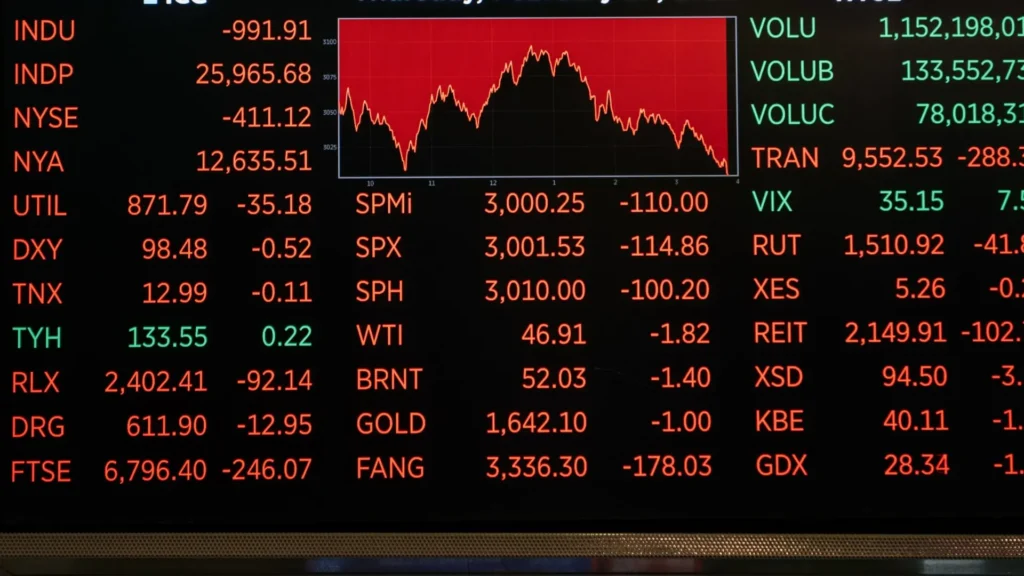
A market rout on Friday, Oct. 10, liquidated positions worth more than $19 billion in 24 hours—the worst leverage flush in the history of crypto. But in a market that has experienced more than its fair share of black swan events, many investors take mass liquidations and double-digit intraday price swings in their stride.
A recent survey of over 3,000 crypto investors conducted by Bitget found that 66% plan to increase their holdings over the next six months. For this cohort, the expectation of long-term growth outweighs the risk of short-term losses.
Crypto Remains Volatile Despite Mainstream Adoption
According to one theory, institutional demand for crypto should have the effect of taming notoriously volatile markets.
Exchange-traded funds (ETFs) and crypto treasury companies are certainly less prone to panic selling than individual investors. Yet, so far, the institutional dollars that have poured into Bitcoin and Ether have failed to act as a meaningful price ballast.
When tracked over the course of years, crypto volatility is declining. But events like Friday’s crash remain common. For instance, so far in 2025, there have been 21 occasions when the price of Bitcoin moved more than seven percent in 24 hours.
This tendency for dramatic price swings is exactly what attracts leverage traders to crypto.
With $5.36 billion wiped out, BTC led the latest cascade of liquidations, closely followed by ETH. Meanwhile, roughly $9 billion in altcoin liquidations suggests there is significant interest in even more volatile assets and high-risk, high-reward leverage strategies.
These figures may not even reflect the full extend of the losses. According to Hyperliquid CEO Jeff Yan, centralized exchanges underreport liquidations, which he speculated are much worse that the available data shows.
Has Bitcoin Broken the 4-Year Cycle?
Since Bitcoin’s inception, long term market trends have been anchored in the cryptocurrency’s four-year halving cycle. This has led to the development of a theory that divides the cycle into four phases: accumulation, bull market, distribution, and bear market.
Bear markets are prolonged downturns, often catalyzed by black swan events like the Mt. Gox hack in 2014 and the Terra/Luna collapse in 2022.
According to one interpretation of the four year cycle, we are currently in the distribution phase, which is characterized by retail adoption as a wider set of investors are drawn to Bitcoin after witnessing the previous bull run.
If that is the case, Friday’s crash could signal a turning point that precipitates the next bear market.
However, a growing number of voices in the space believe the four year cycle may no longer apply.
In his analysis, Arthur Hayes observed that in the past, Bitcoin’s bear runs coincided with fiscal tightening among major economies. Highlighting monetary policy in the U.S. and China, he argued that at the present moment, an increase in the overall supply of dollars and renminbi will translate into continued demand for BTC as a hedge against inflation.
This view seems to be shared by the crypto investors surveyed by Bitget, who don’t seem to be concerned about a looming drawback.
Of those surveyed, 66% plan to double down on crypto investments in 2026. Meanwhile, bullish sentiment informs expectations, with 59% expecting the BTC market to climb above $150,000 “in the next bull cycle.”
Top Trending Crypto Articles

James Morales is CCN’s blockchain and crypto policy reporter. He has been working in the news media since 2020, writing about topics such as payments, banking and financial technology. These days, he likes to explore the latest blockchain innovations and the evolving landscape of global crypto regulation.
With an educational background in social anthropology and media studies, James uses his platform as a journalist to explore how new technologies work, why they matter and how they might shape our future.